Product guide
Knit Triangle Scarves: Styles, Sizes, Yarns and How to Wear Them
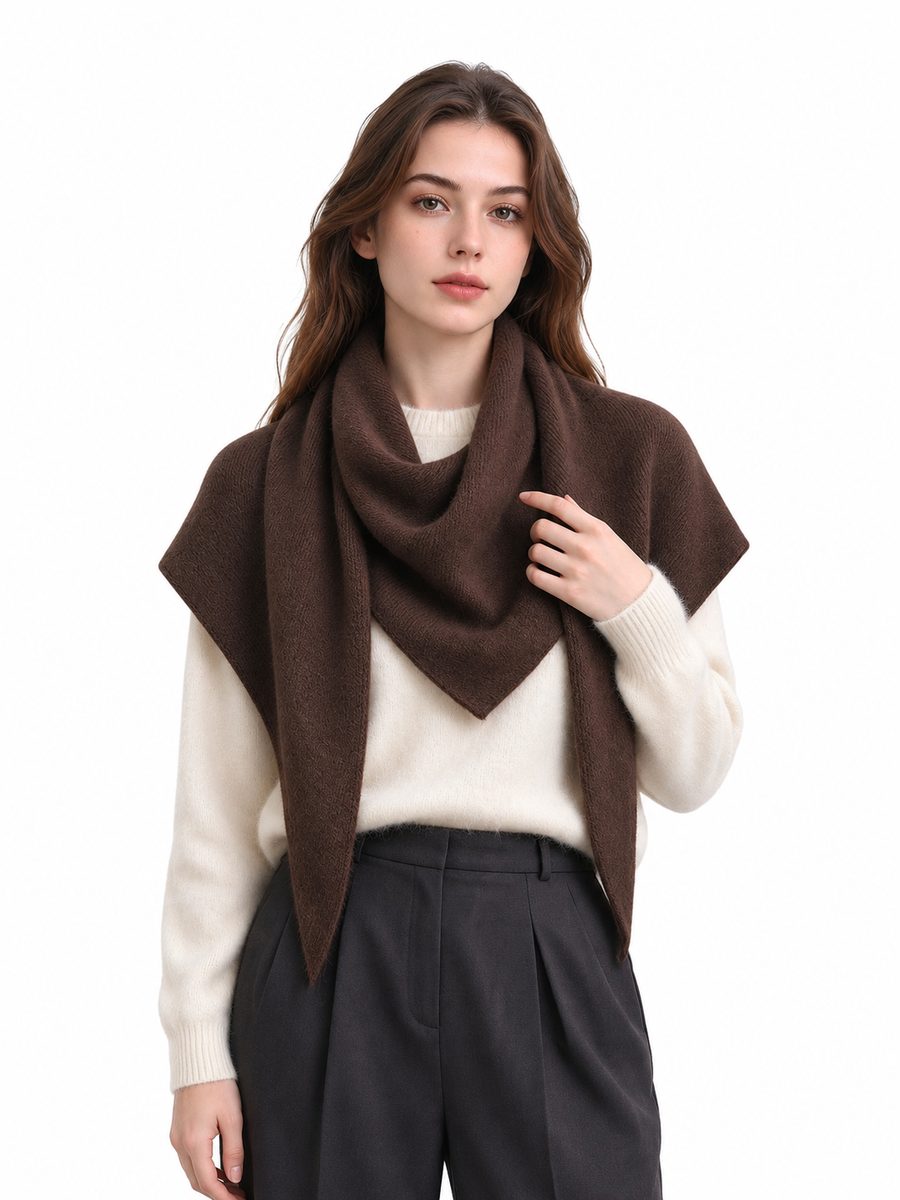
A triangle scarf is a knitted triangle worn around the neck or shoulders, with the point at the front or the back. Small ones are worn like a bandana; large ones wrap the shoulders like a shawl. Here are the names buyers use, the common sizes and yarns, eight ways to wear one, and how we develop triangle scarves for brands.
 By Marcia Lee, Business Manager at Knitwear World · Published November 2026
Names
Triangle scarf, bandana or shawl?
Shops and tech packs use several names for the same shape. The size usually decides which one fits:
| Name | Used for |
|---|---|
| Triangle scarf · knit triangle scarf · triangular scarf | The general names, for any size. |
| Bandana scarf | Small styles tied close around the neck; the name used most for the smallest sizes. |
| Triangle neck scarf · knit triangle neckerchief | Small and medium styles worn around the neck. |
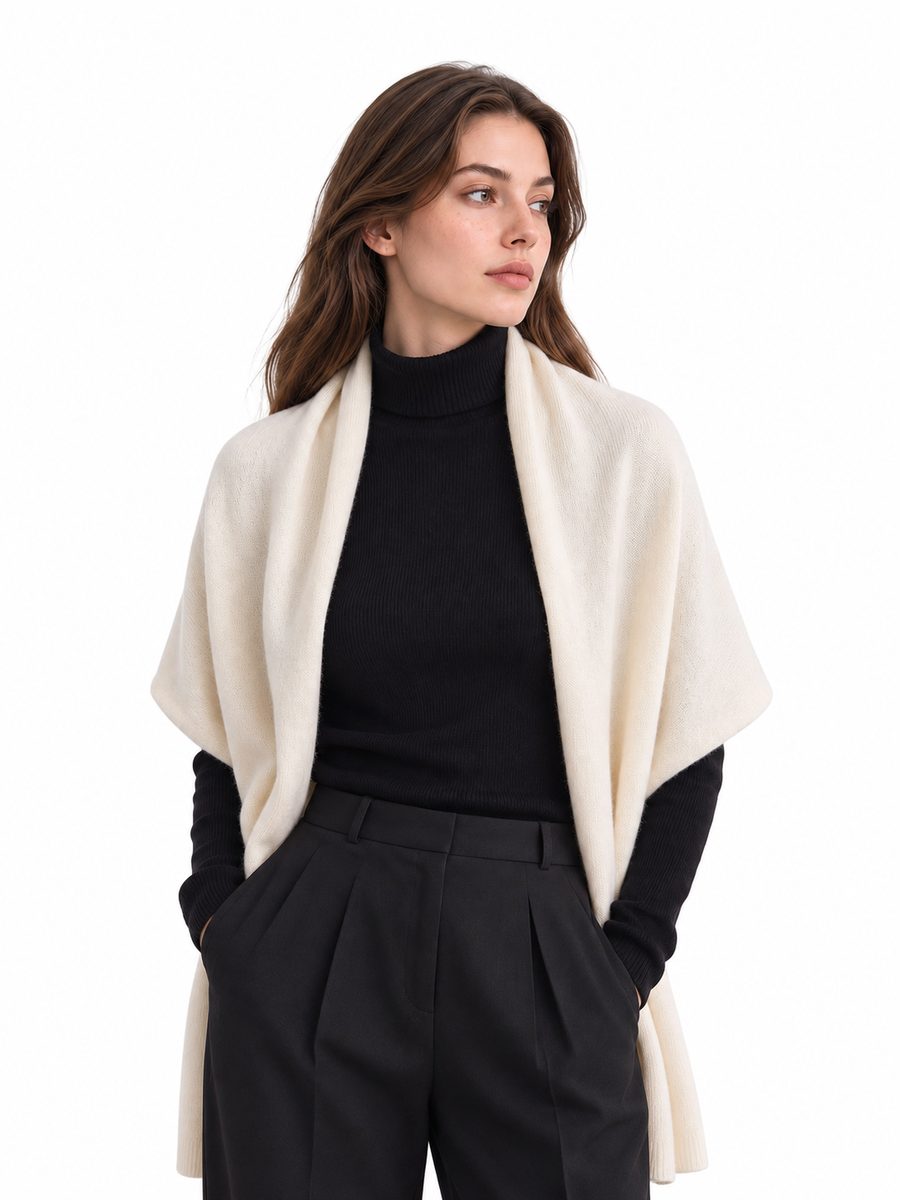
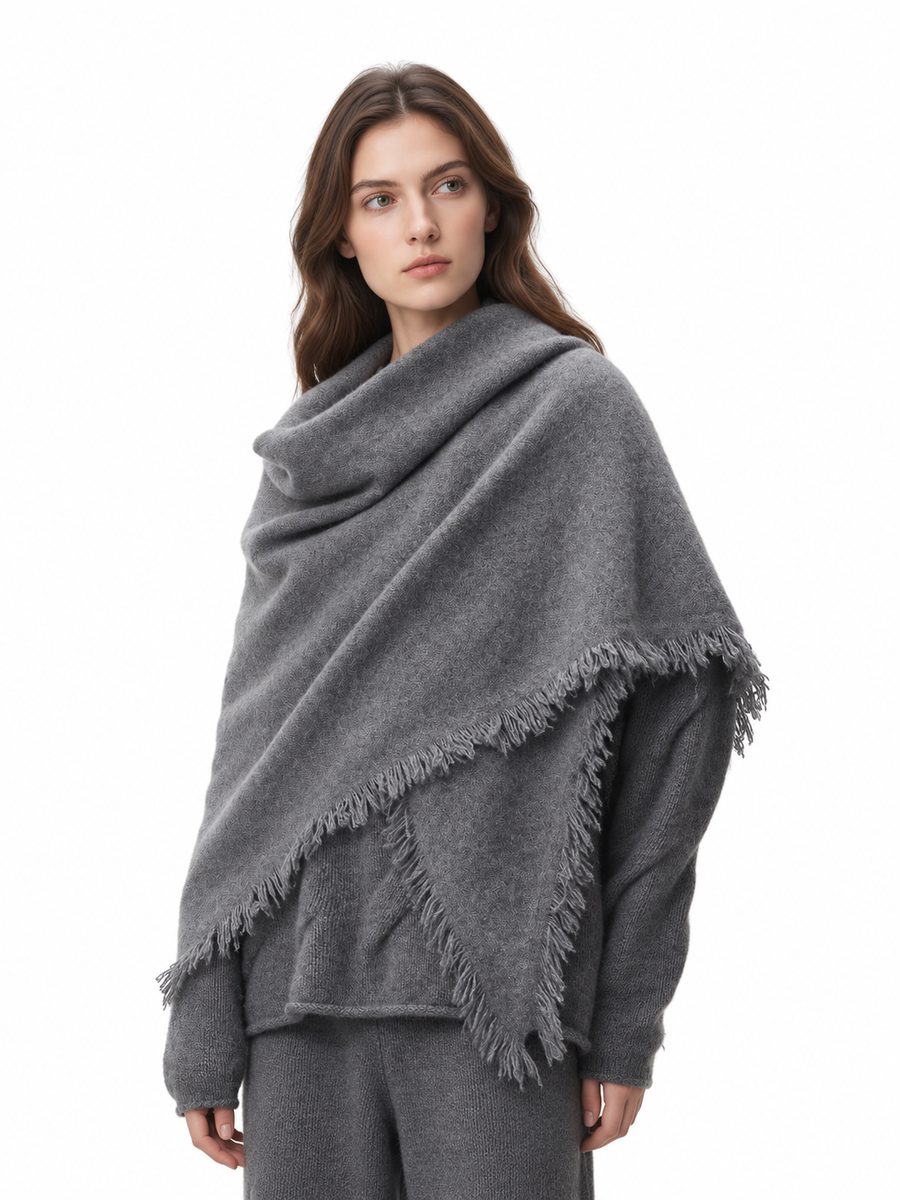
| Triangle shawl · knit triangle wrap | Large styles that can be worn over the shoulders. |
| Shawlette | A small shawl: a knitted triangle between a scarf and a shawl. |
The older words describe the same idea. A kerchief, from the Old French couvre-chef, “cover head”, is a triangular or square cloth tied around the head or neck. Bandana comes from the Sanskrit bandhana, “a bond”, and bandanas are often printed with paisley, a motif that knitted triangle scarves borrow as jacquard. A shawl is usually rectangular but can also be square or triangular.
Sizes
Triangle scarf sizes.
A triangle scarf is measured flat, after finishing. These are the three common sizes:
| Width | Height | Worn as | |
|---|---|---|---|
| Small (bandana, neckerchief) | 100–120 cm (40–47 in) | 25–35 cm (10–14 in) | Tied close at the neck, as a headscarf or as an accent |
| Medium (everyday) | 140–170 cm (55–67 in) | 30–50 cm (12–20 in) | Around the neck, loosely tied, or as a light shawl |
| Large (shawl) | 170–200+ cm (67–80+ in) | 50–70 cm (20–28 in) | Over the shoulders as a shawl, for more warmth |
The small size is the most popular right now. The medium size is the one you see most in online shops and knitting patterns, and the large size is close to a small shawl.
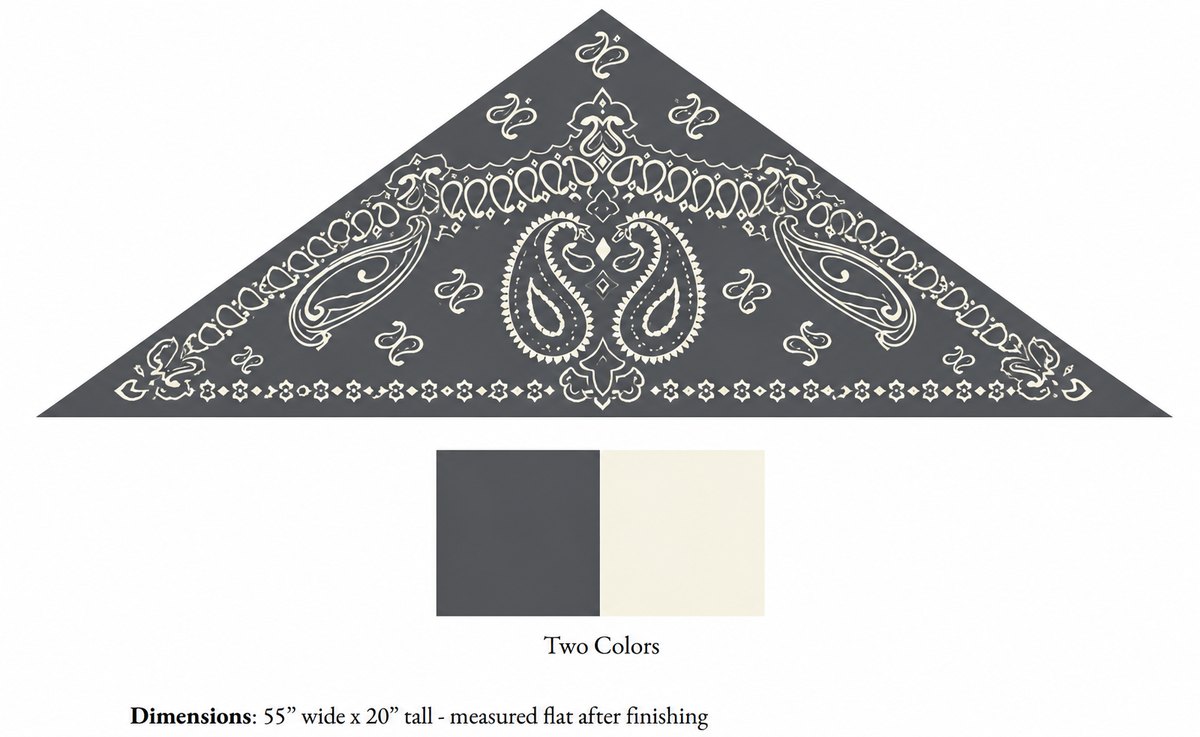
Give us the width and height in your brief, in centimetres or inches.
Yarns
The best yarns for a knit triangle scarf.
A triangle scarf sits against the neck, so softness comes first. These are the yarns we use most:
| Feel | Best for | |
|---|---|---|
| Merino wool | Soft and kind to the skin, warm, drapes well | Everyday scarves worn against the neck |
| Cashmere and cashmere blends | Very soft, light and luxurious | Premium scarves |
| Wool blends | Good value and hard-wearing | Everyday styles |
| Mohair-silk | A soft halo; light and airy; looks good in photos | Fashion styles, very popular in recent seasons |
| Cotton and cotton blends | Breathable, not itchy, wearable most of the year | Light spring and autumn styles |
| Alpaca | Very warm and light | Thick winter styles |
| Acrylic and acrylic blends | Low cost, easy care, many colours | Machine-washable styles at a lower price |
Read more about merino wool, cashmere, mohair and acrylic. Soft, airy yarns can pill, so agree a pilling standard before bulk.
Details
Fringe, jacquard and other details.
We can add any of these to a knit triangle scarf:
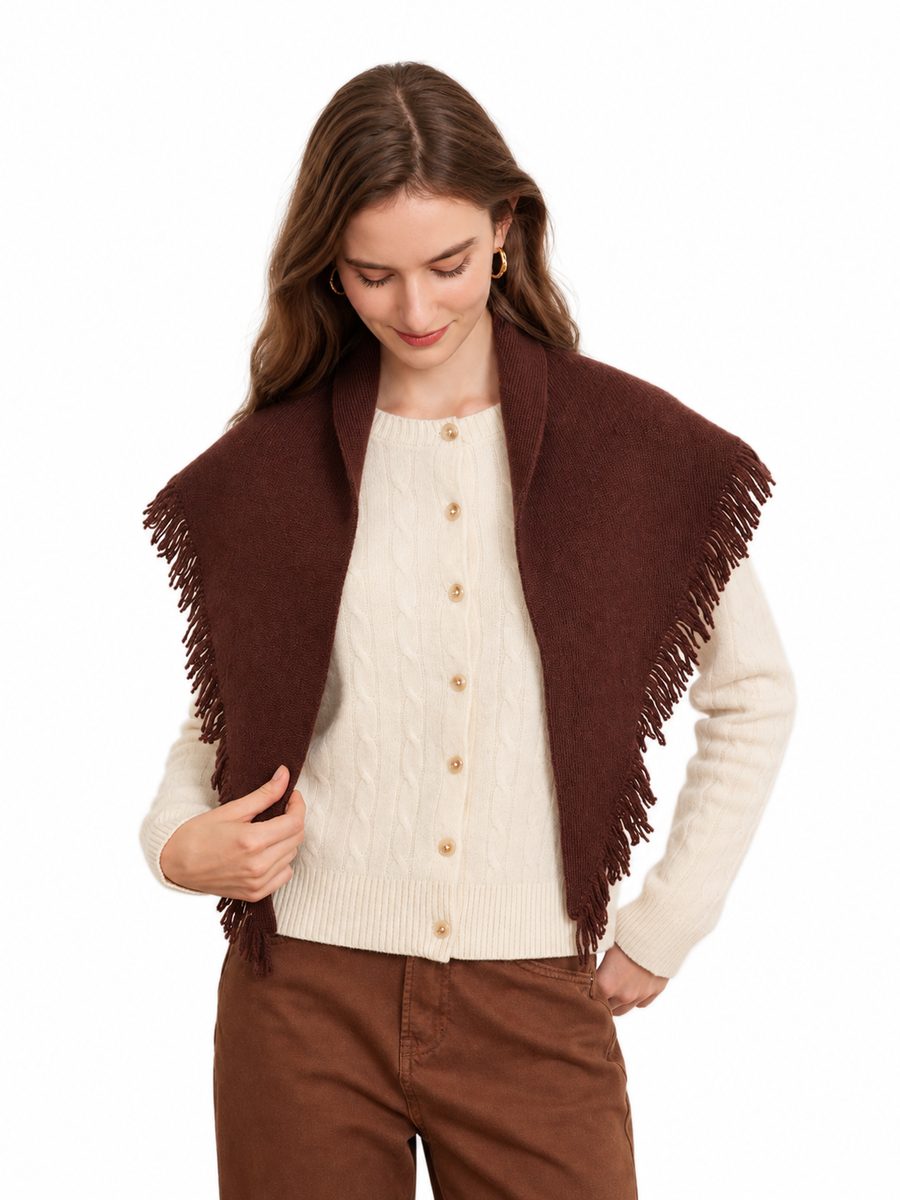
- Fringe along the edges.
- Brushing, for a softer, fuzzier surface.
- Jacquard patterns such as paisley, including double-face jacquard, where the colours reverse on the back.
- Contrast tipping, stripes, rib and embroidery.
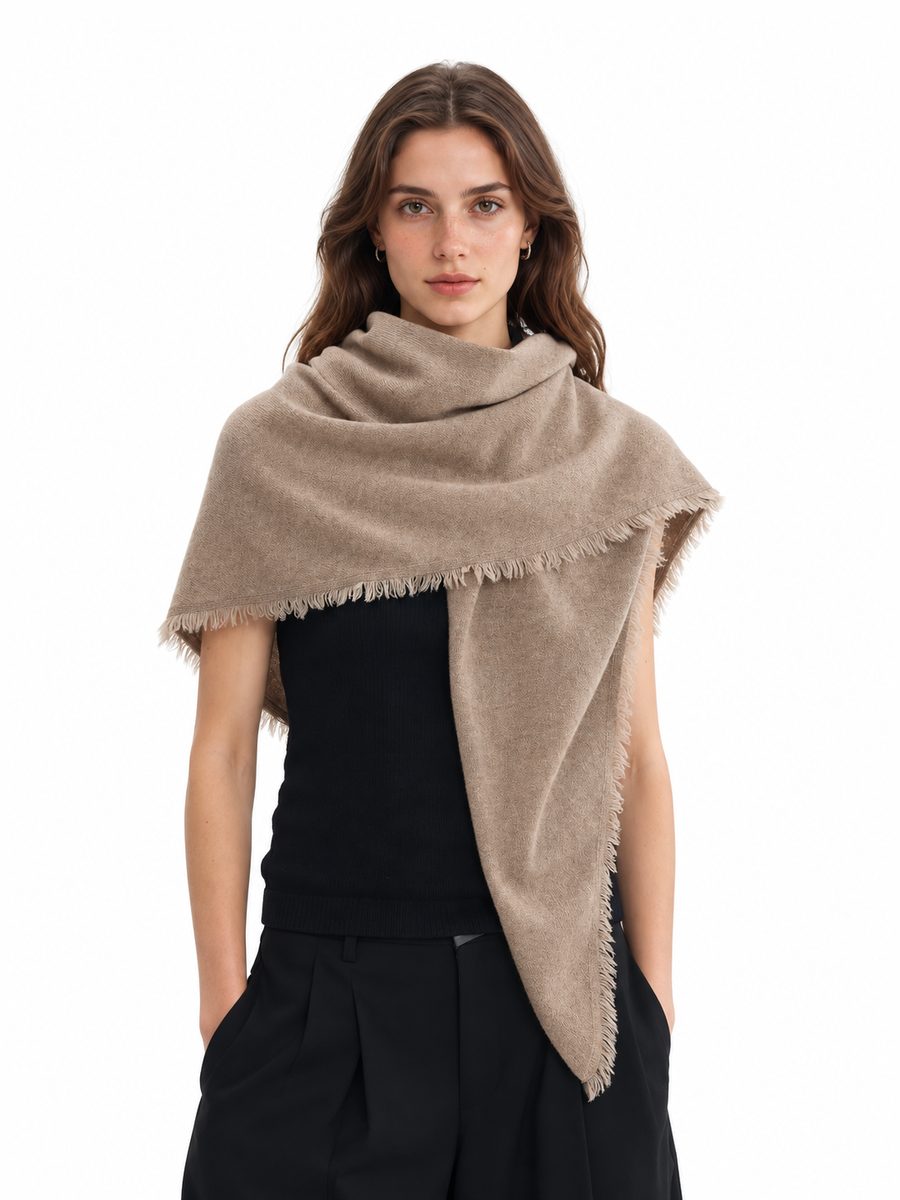
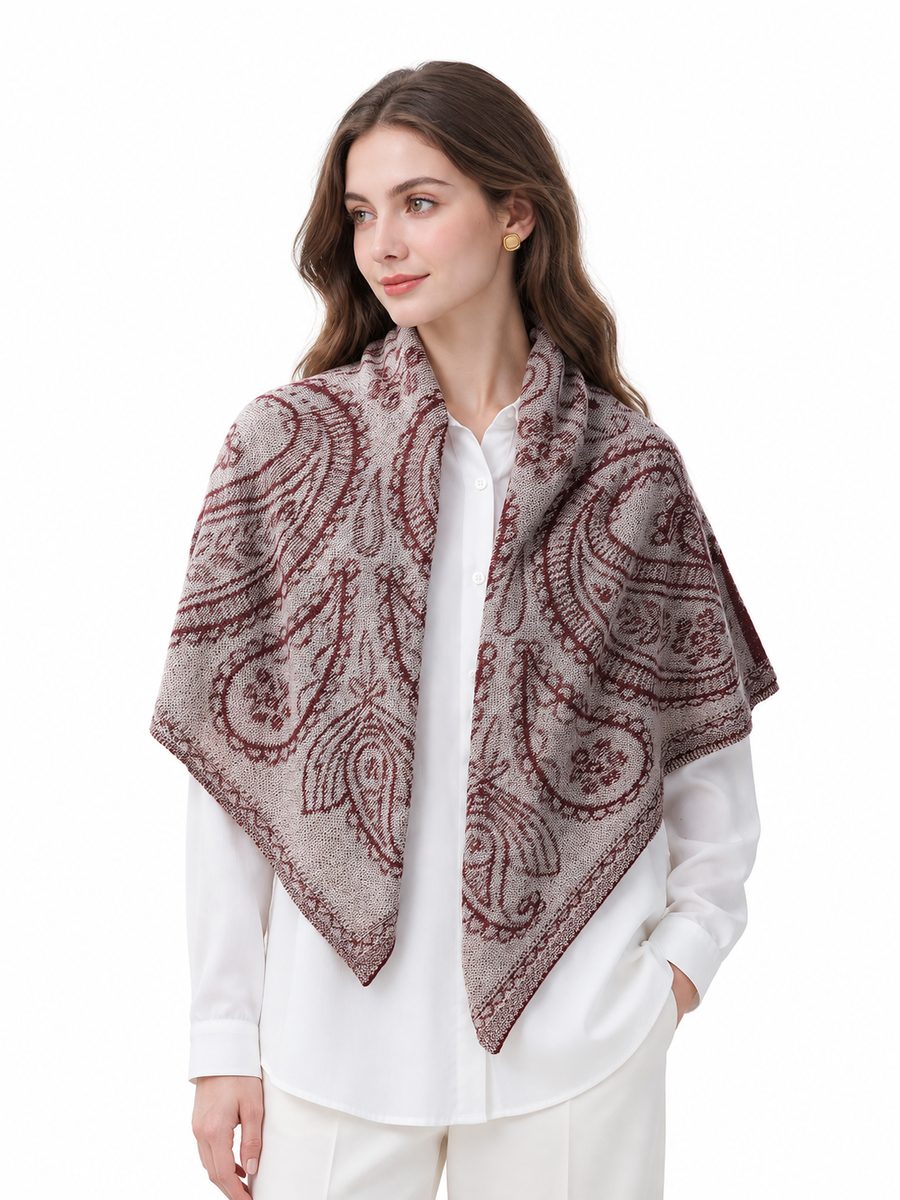
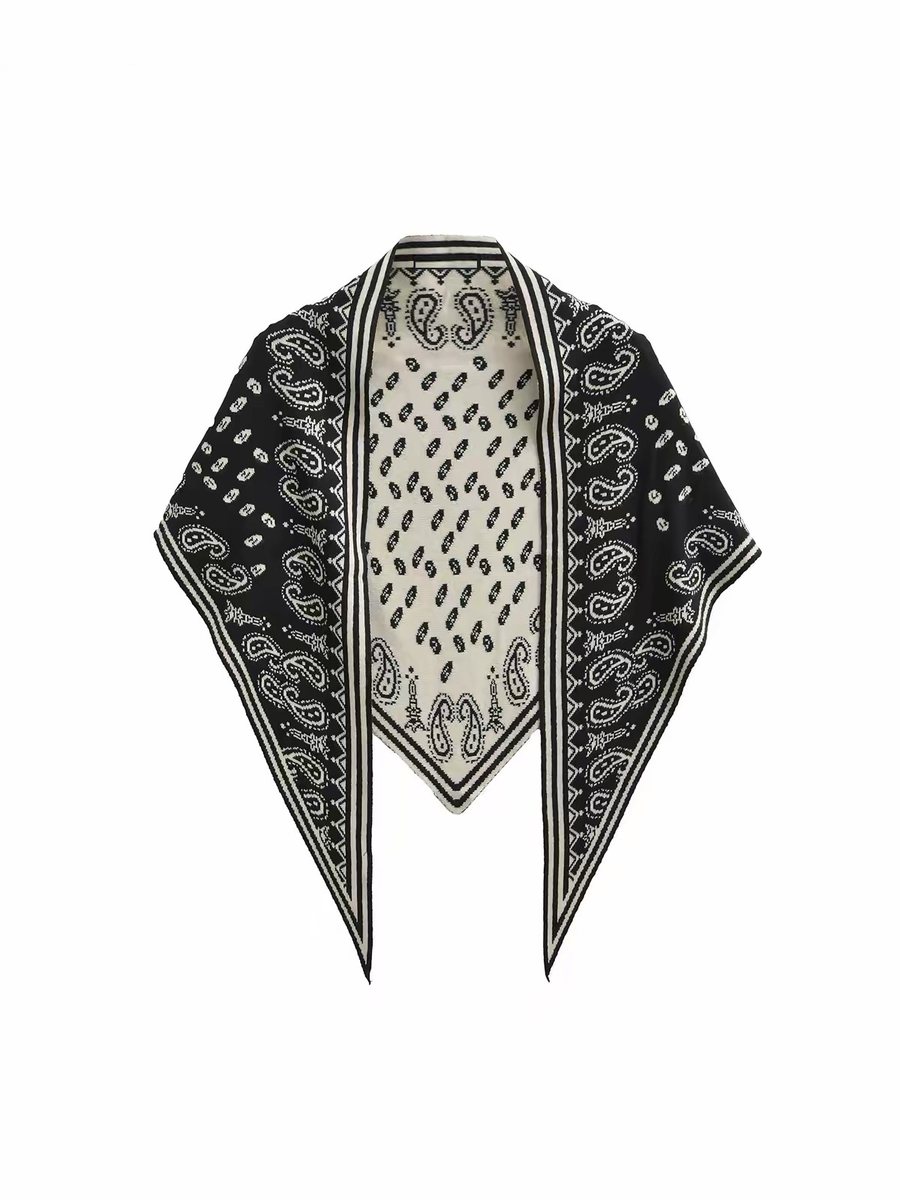
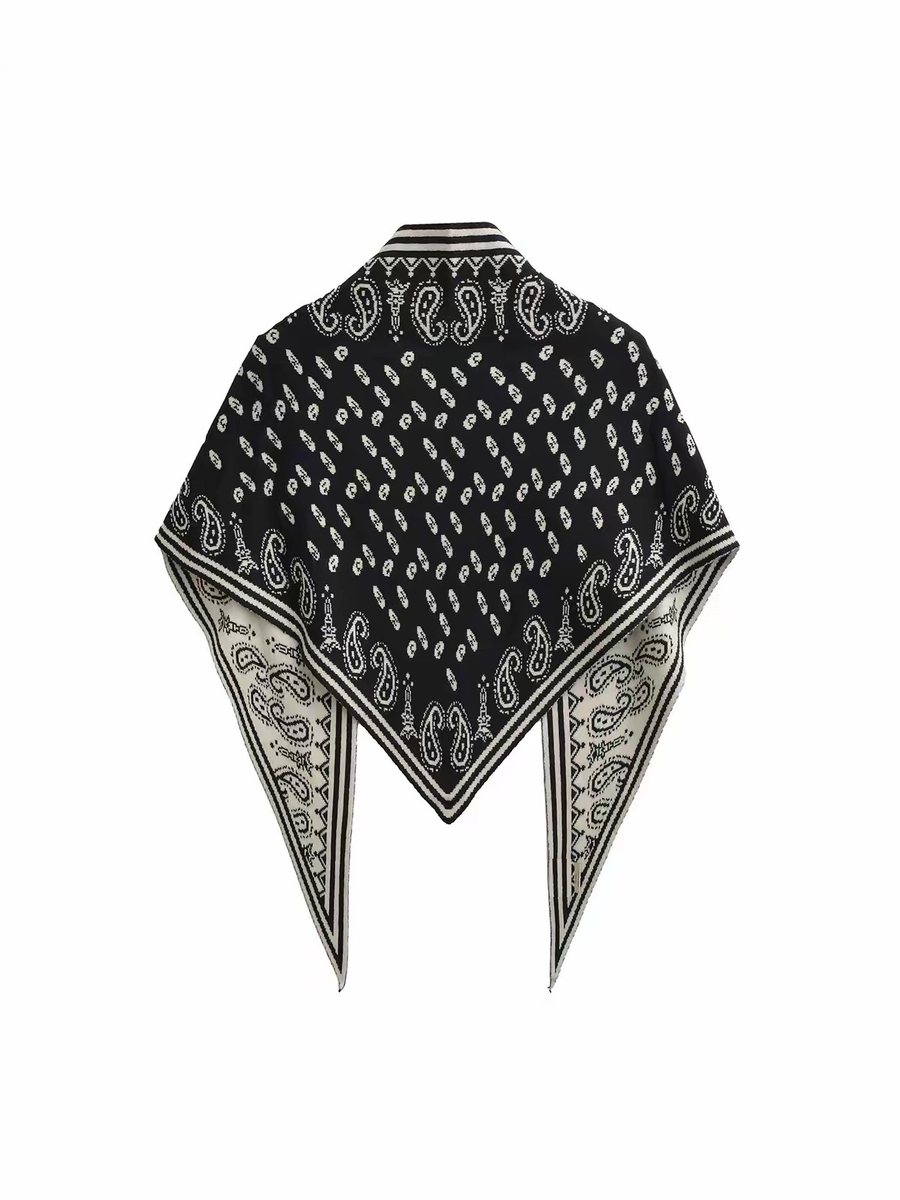
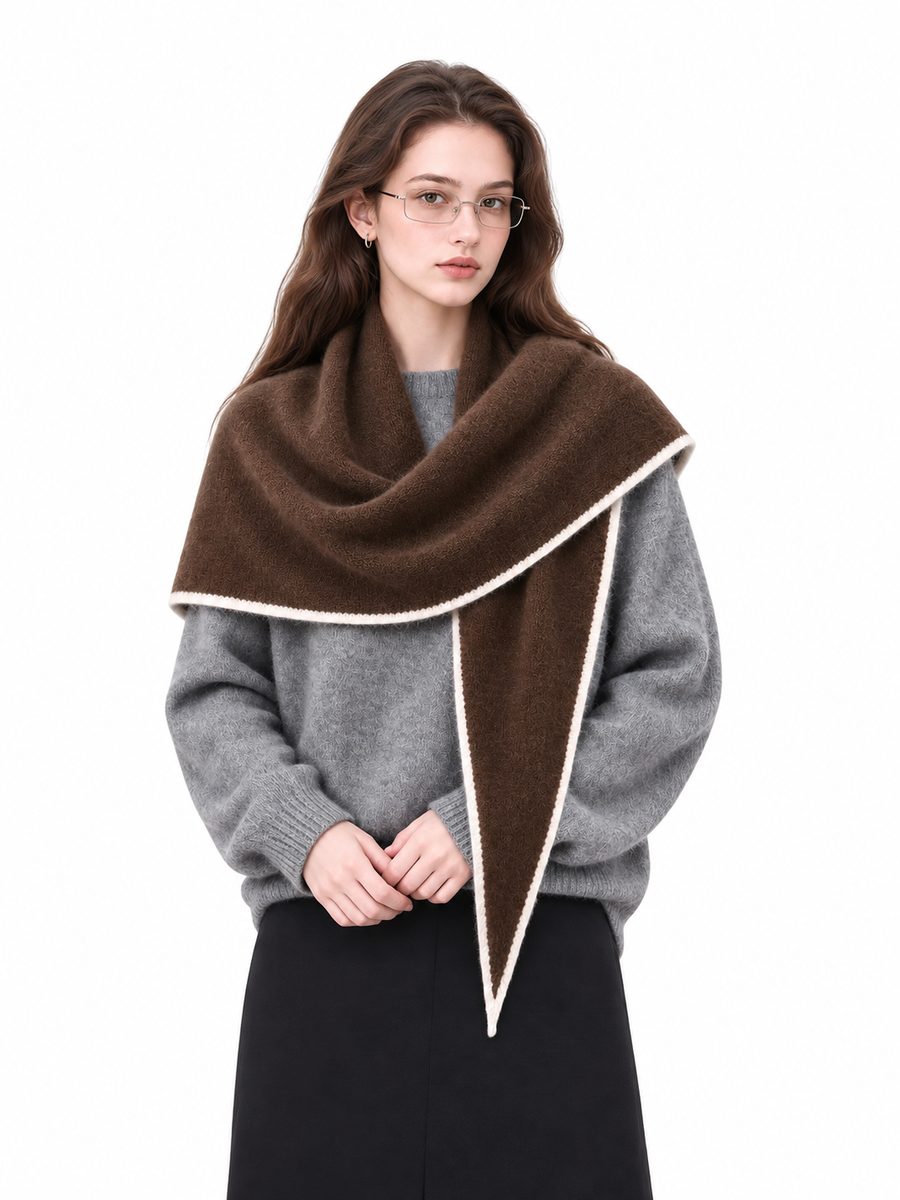
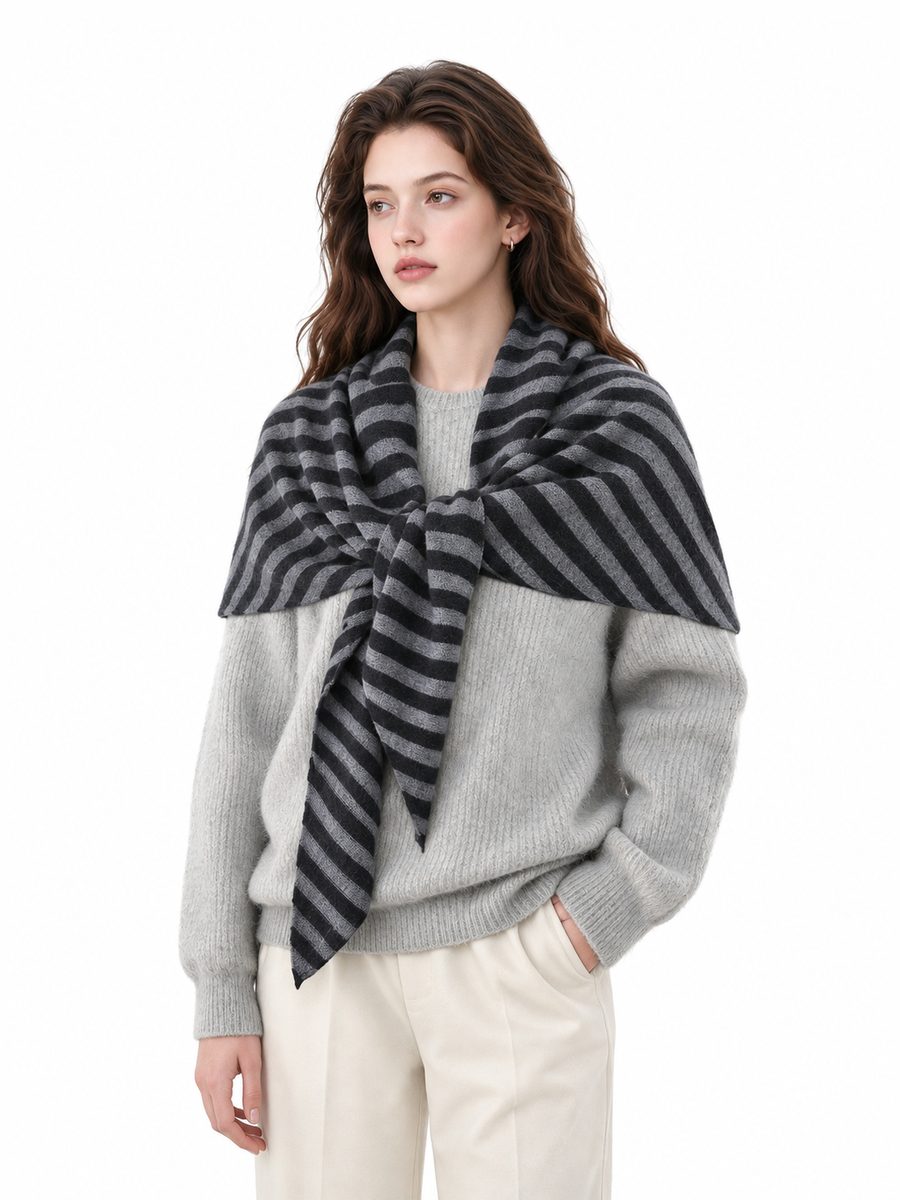
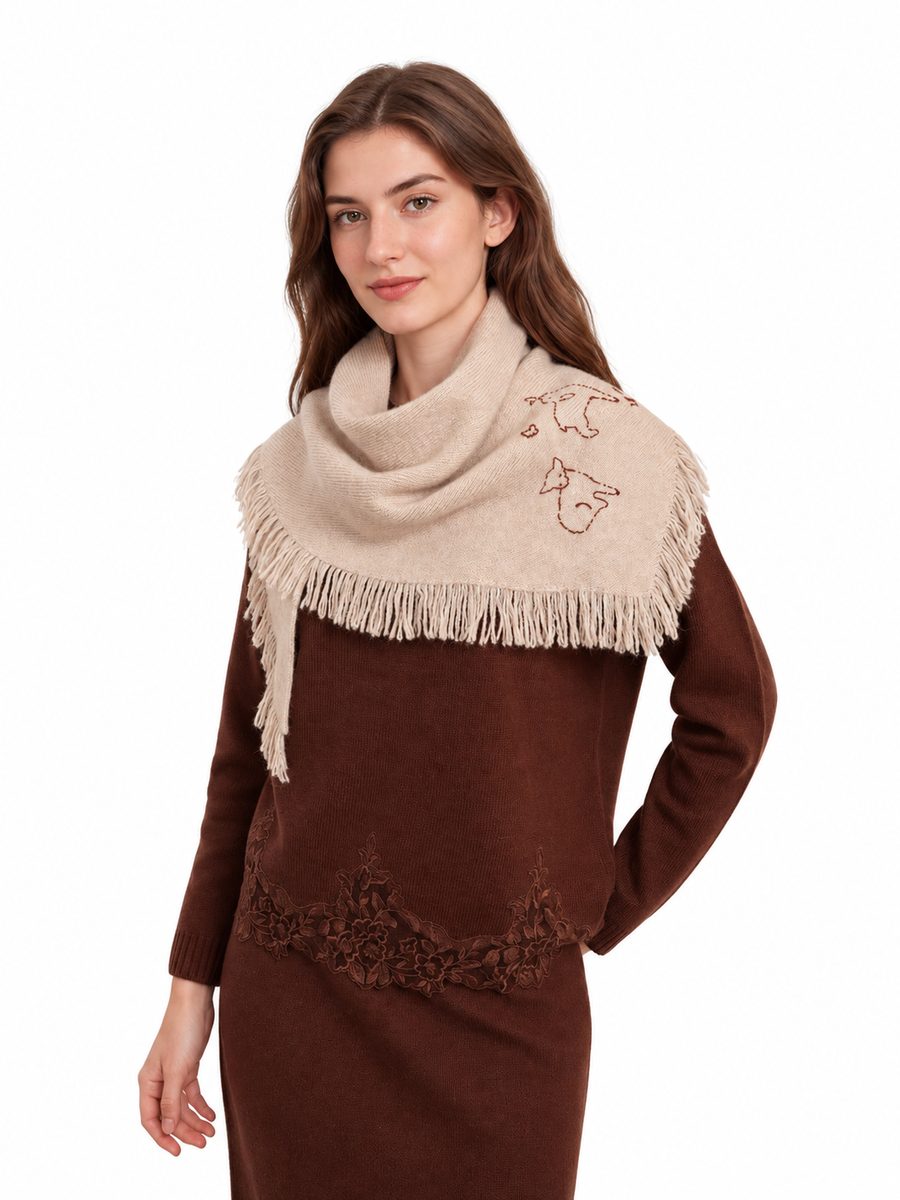
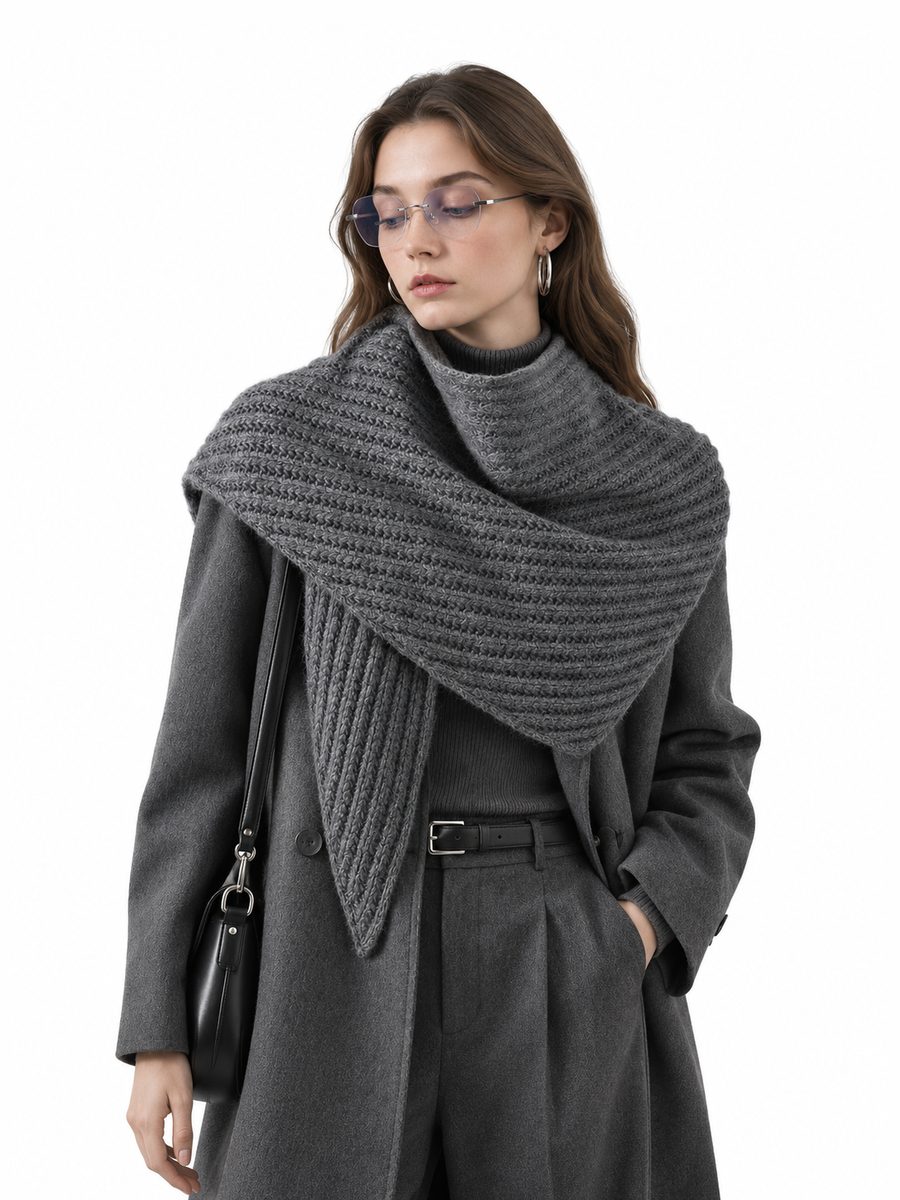
See how jacquard knitwear is made and the types of knit stitches.
Styling
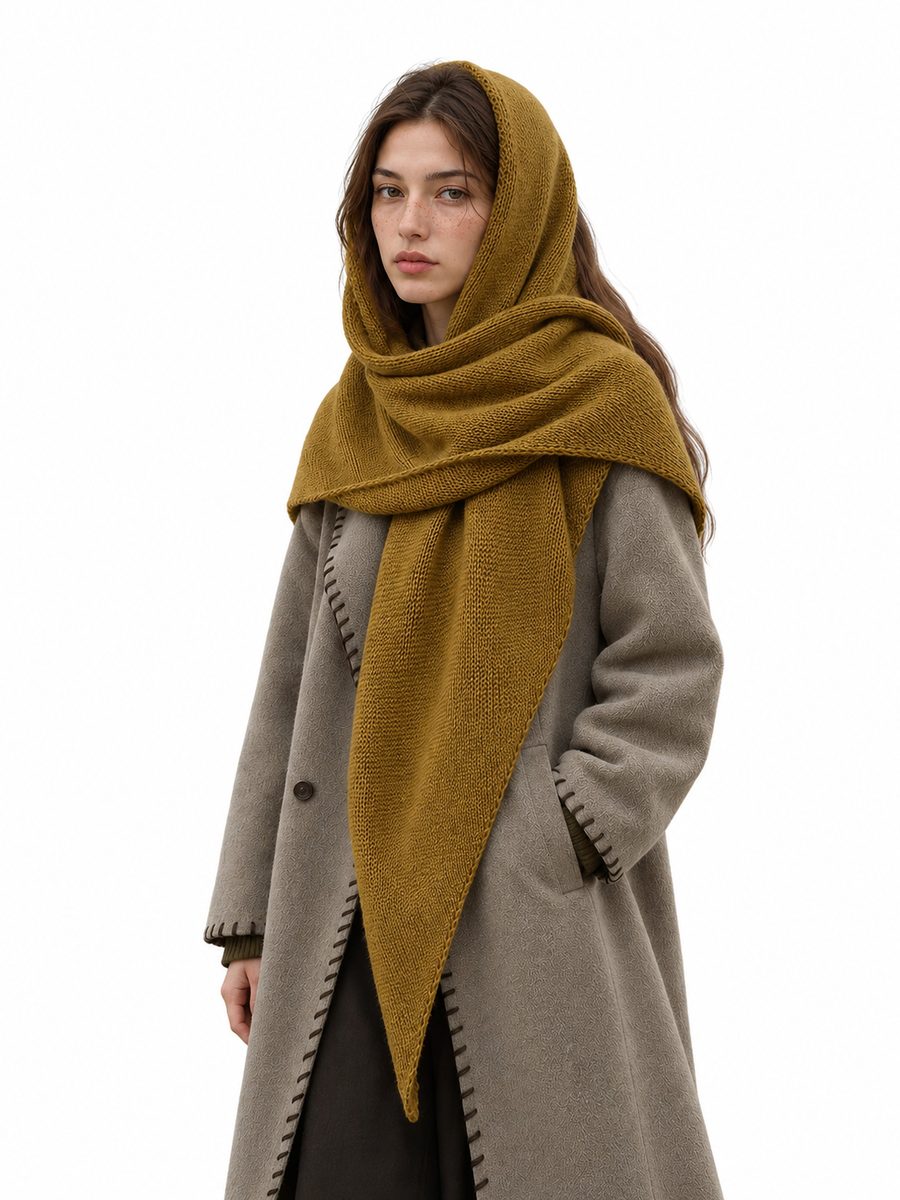
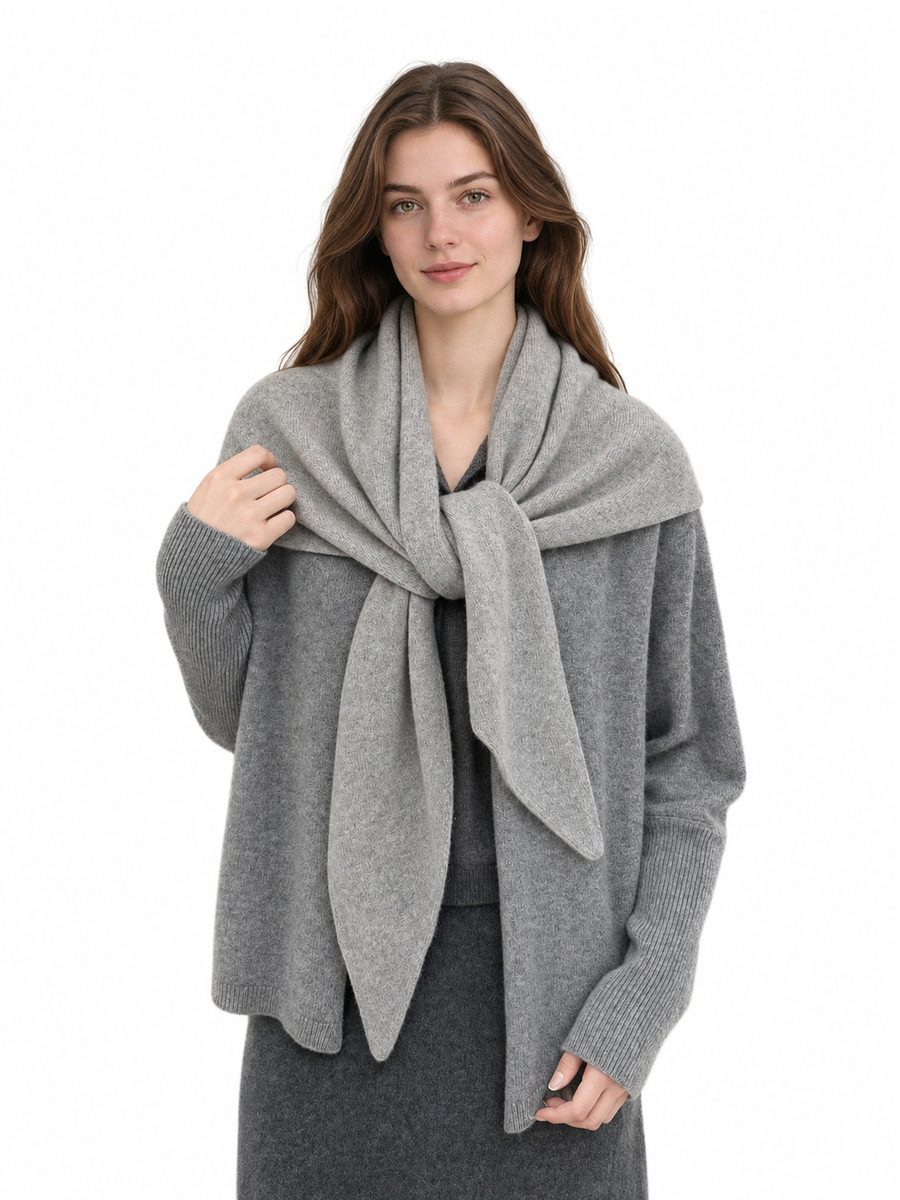
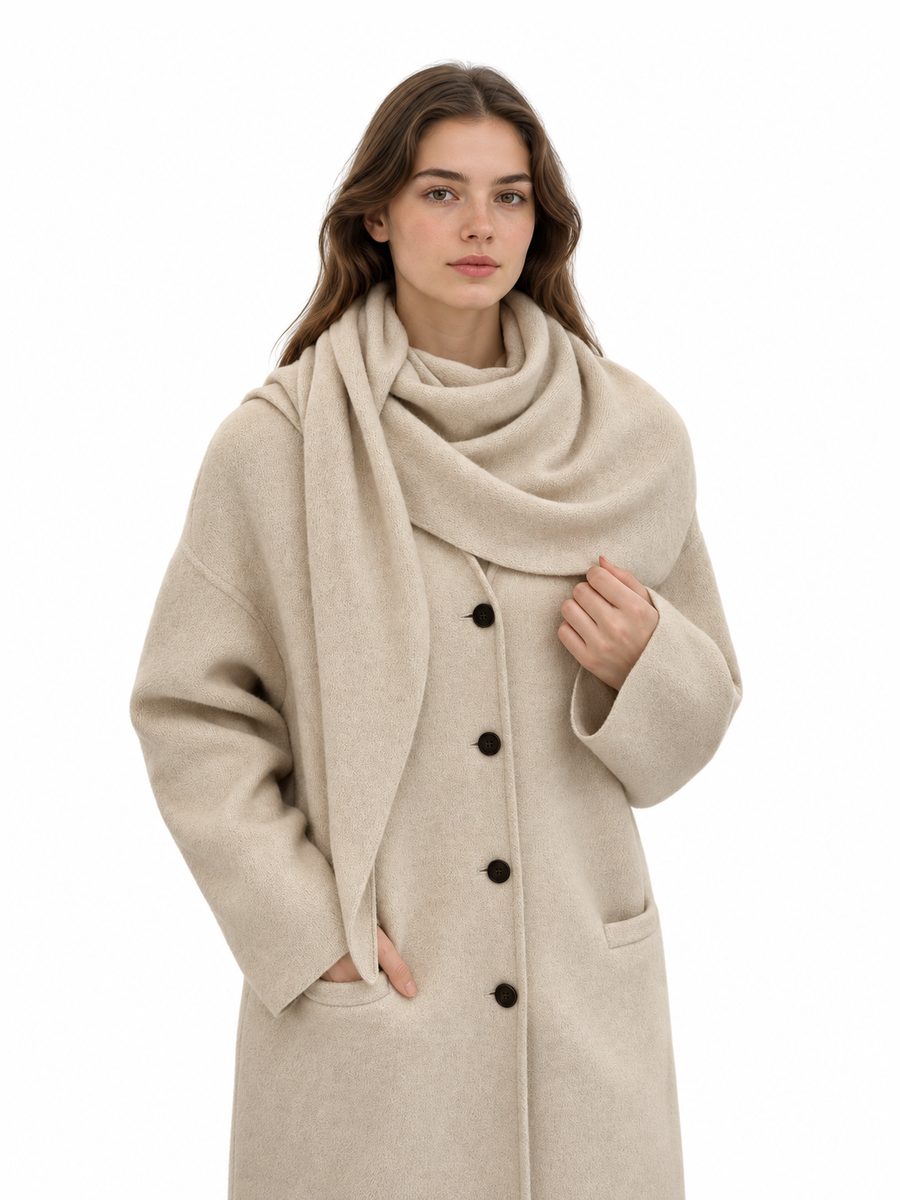
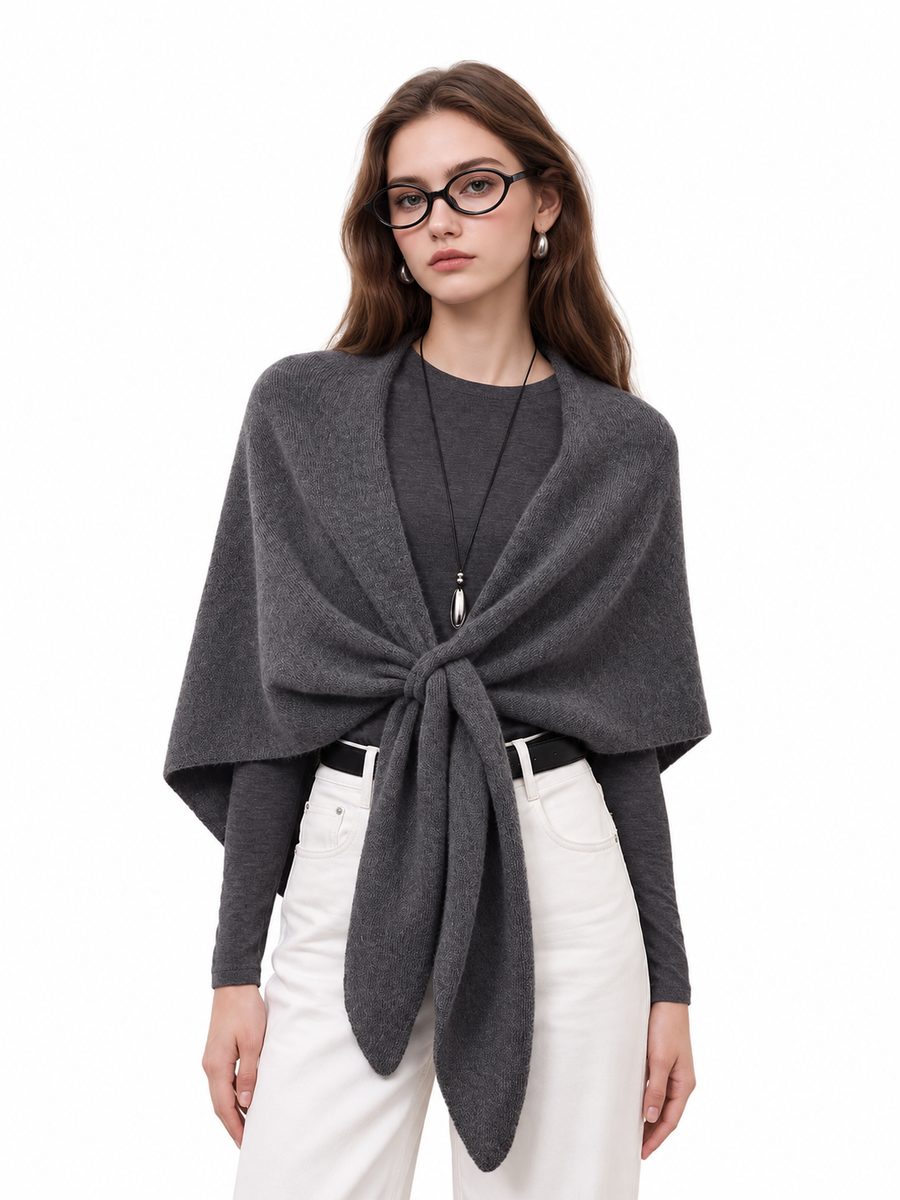
How to wear a triangle scarf: 8 ways.
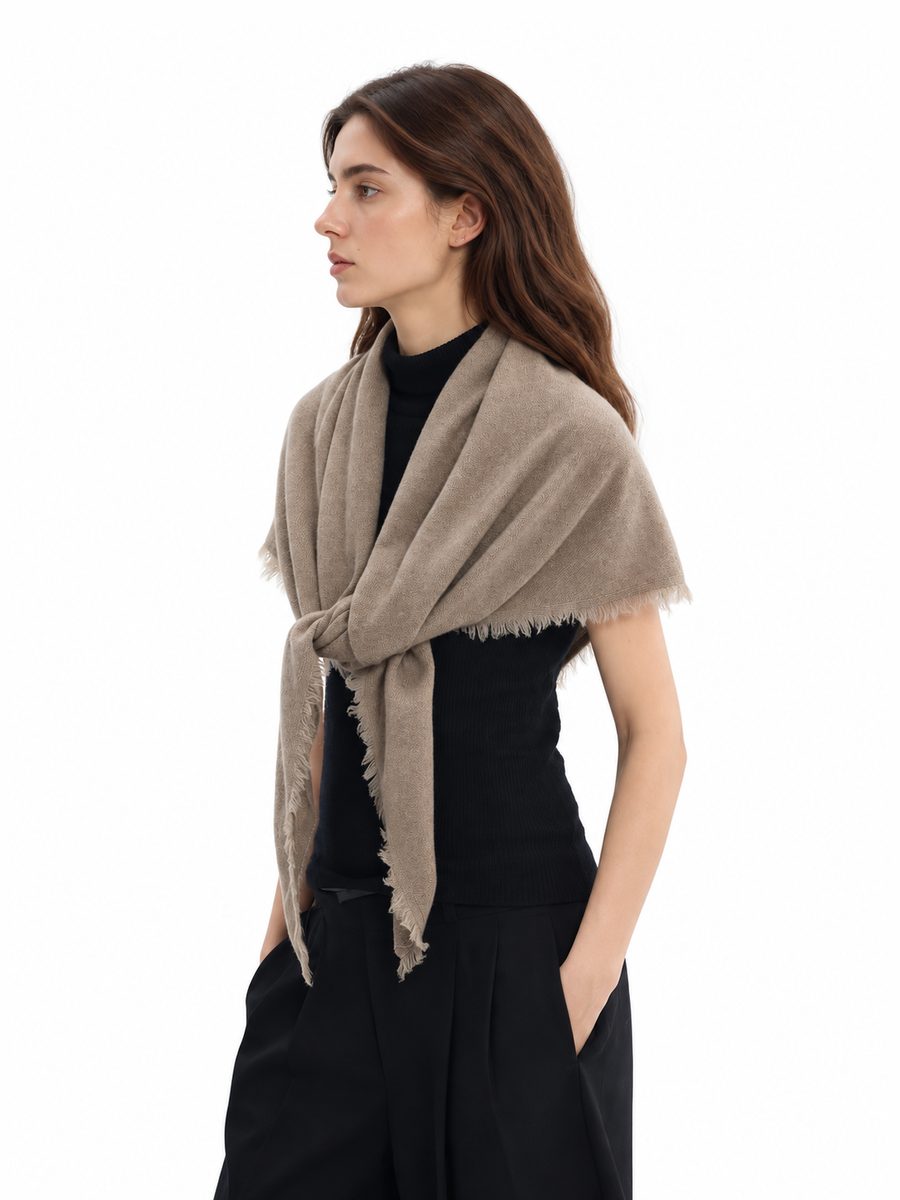
The small size is usually worn bandana style: point at the front, ends wrapped around the neck. Larger sizes give more options:
- Draped open: over the shoulders, both ends hanging down the front.
- Over a coat: drape it over the shoulders and knot the ends at the chest.
- Over one shoulder: wrap it around the neck and throw one end back over the shoulder.
- As a hood: put the long edge over the head and wrap the ends around the neck.
- Knotted off-centre: tie the ends in a loose knot just to one side.
- Wrapped around the neck: wrap it round once and let one end hang down the front.
- As a shrug: knot a large triangle at the waist.
- Point at the back: drape it over the shoulders and knot the ends at the front.
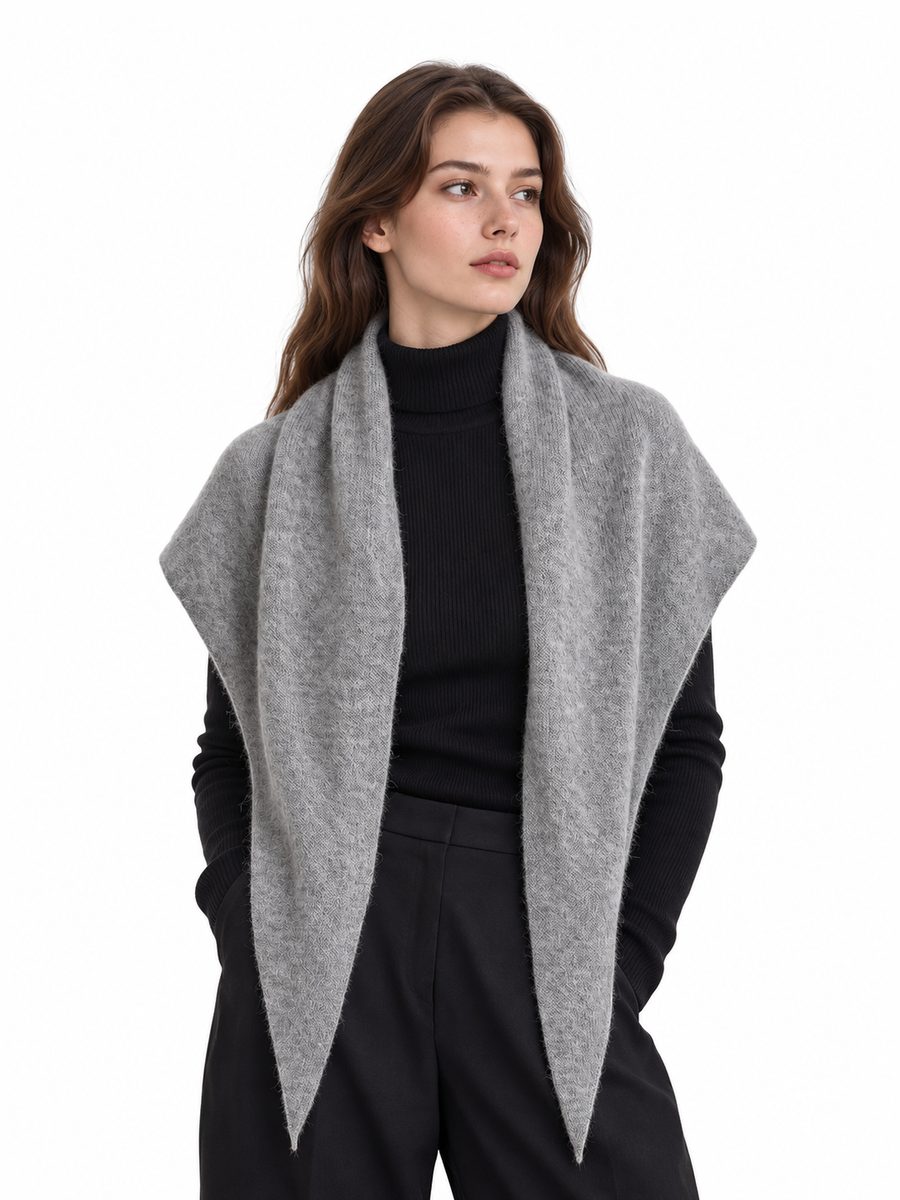
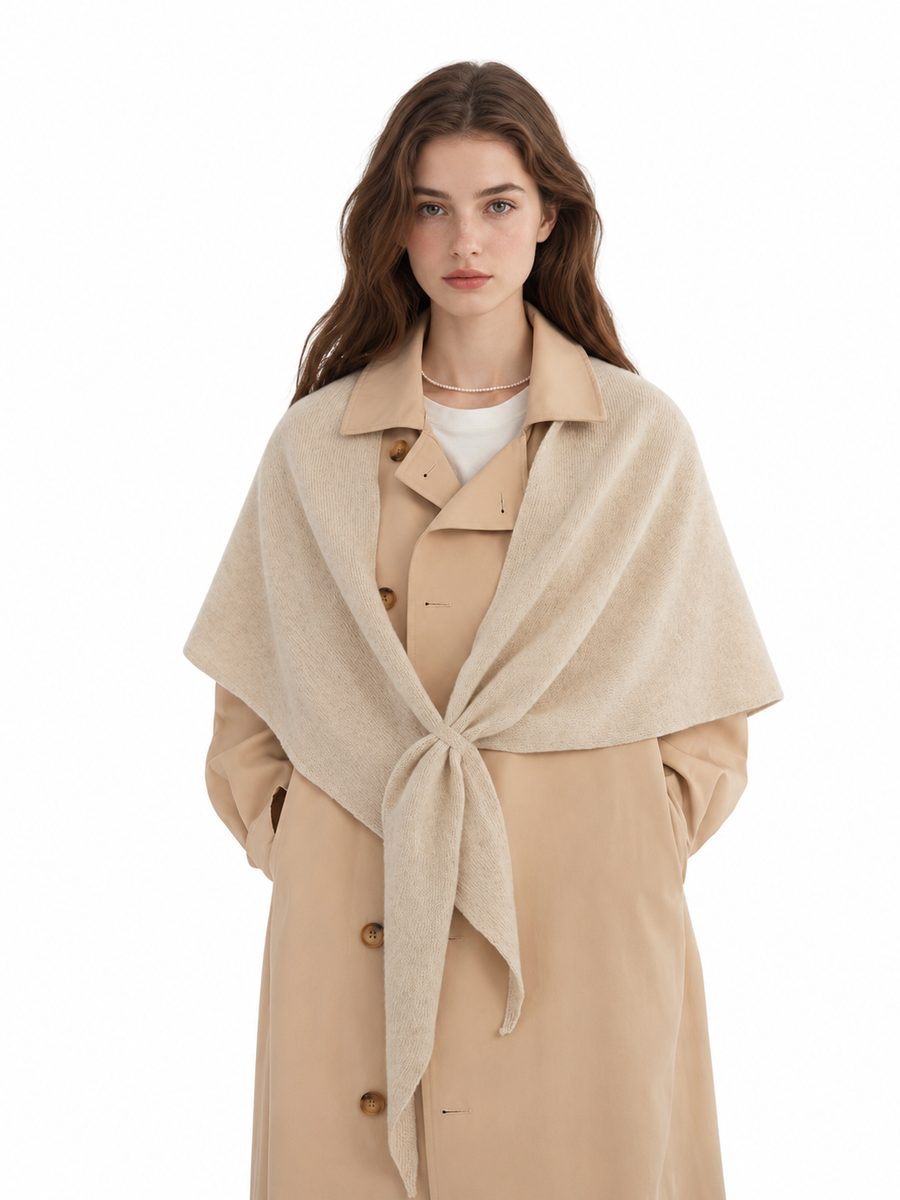
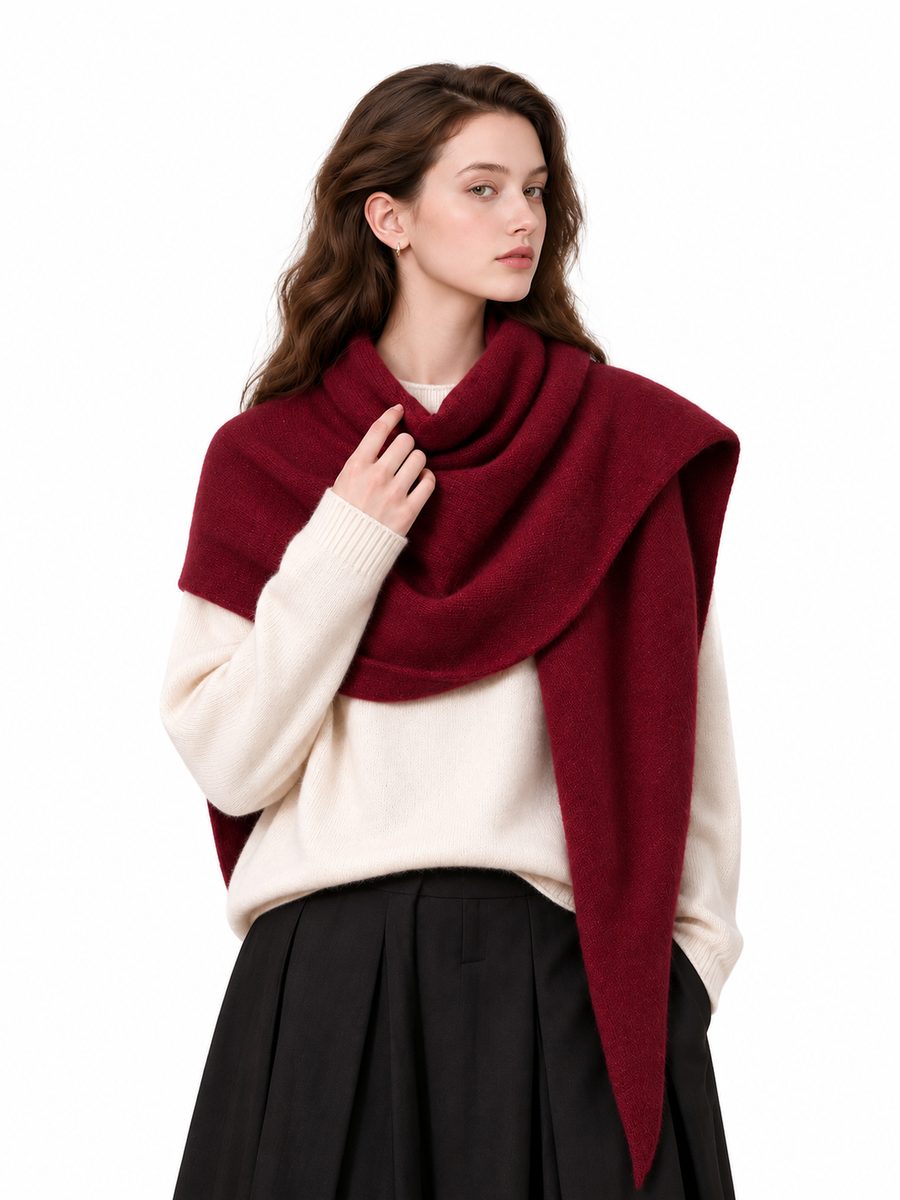
In our factory
Developing triangle scarves with us.
Many of our customers are developing triangle scarves this season. Here is how we work:
- Send a photo, sketch or sample, with the size and yarn you want.
- First sample in 3–7 days.
- Minimum order: 800 pieces per style, with at least 200 pieces per colour.
- Colours dyed to your shades, or chosen from stock yarn colours.
- Fringe, brushing and jacquard are all available.
Ask about triangle scarves →See our knit scarves and wraps →
FAQ
Triangle scarf questions.
What is a triangle scarf called?
A triangle scarf, triangular scarf or knit triangle scarf. Small styles are often sold as bandana scarves or neckerchiefs, large ones as triangle shawls or wraps, and a small shawl as a shawlette.
What size is a triangle scarf?
Small (bandana) styles are about 100–120 cm wide and 25–35 cm tall, the everyday medium size 140–170 cm by 30–50 cm, and shawl sizes 170–200 cm or more by 50–70 cm. Width is the longest edge; height runs from its middle to the point, measured flat.
Are triangle scarves in style?
Yes. In the US, Google searches for “triangle scarf” in November 2025 were about eight times those in November 2023, and searches in October 2026 were about double October 2025 (Google Trends).
What is the best yarn for a triangle scarf?
Merino wool and cashmere blends for softness against the neck, mohair-silk for a light, airy look, wool blends for value, cotton for spring and autumn, alpaca for warmth, and acrylic blends for easy care at a lower price.
What is the minimum order for custom triangle scarves?
800 pieces per style, with at least 200 pieces per colour. A first sample takes 3–7 days, and fringe, brushing and jacquard are all available.
Sources
Sources.
- Wikipedia, “Kerchief” (a triangular or square cloth tied around the head, face or neck; from the Old French couvre-chef, “cover head”). Read
- Wikipedia, “Bandana” (from the Sanskrit bandhana, “a bond”; often printed in paisley). Read
- Wikipedia, “Shawl” (usually rectangular, but can be square or triangular). Read
- Merriam-Webster, “neckerchief” (a kerchief for the neck). Read
- YourDictionary, “shawlette” (a small shawl). Read
- Google Trends, “triangle scarf”, United States, past five years. Read
Keep reading
Start a project
Send us your triangle scarf idea.
Or start from one of our styles: see our knit scarves and wraps →