Costing
How Much Does It Cost to Make a Sweater?
There is no single price for a sweater. This guide explains what a factory price is made of, which choices move it up or down, why small orders cost more per piece, and what to send to get an accurate quotation.
 By Marcia Lee, Business Manager at Knitwear World · Published November 2026
The short answer
The price depends on yarn, weight, knitting time and quantity.
Two sweaters that look similar in a photo can differ a lot in cost. A factory price is built from the yarn, the weight of the garment, the time it takes to knit, link, wash and iron it, the details and trims, and the quantity the set-up costs are spread over. Change any of these and the price changes.
That is why a factory cannot give a reliable price from a picture alone. With a reference, a yarn direction, a quantity and a target price, it can.
Cost breakdown
What a sweater price is made of.
A sweater goes through several steps in the factory, and each one is a cost in the price:
| Cost | What it covers |
|---|---|
| Yarn | The yarn used in the garment, including normal knitting waste. Usually the largest single cost. |
| Knitting | Machine time to knit the panels. Fine gauges, dense stitches and multi-colour patterns take longer. |
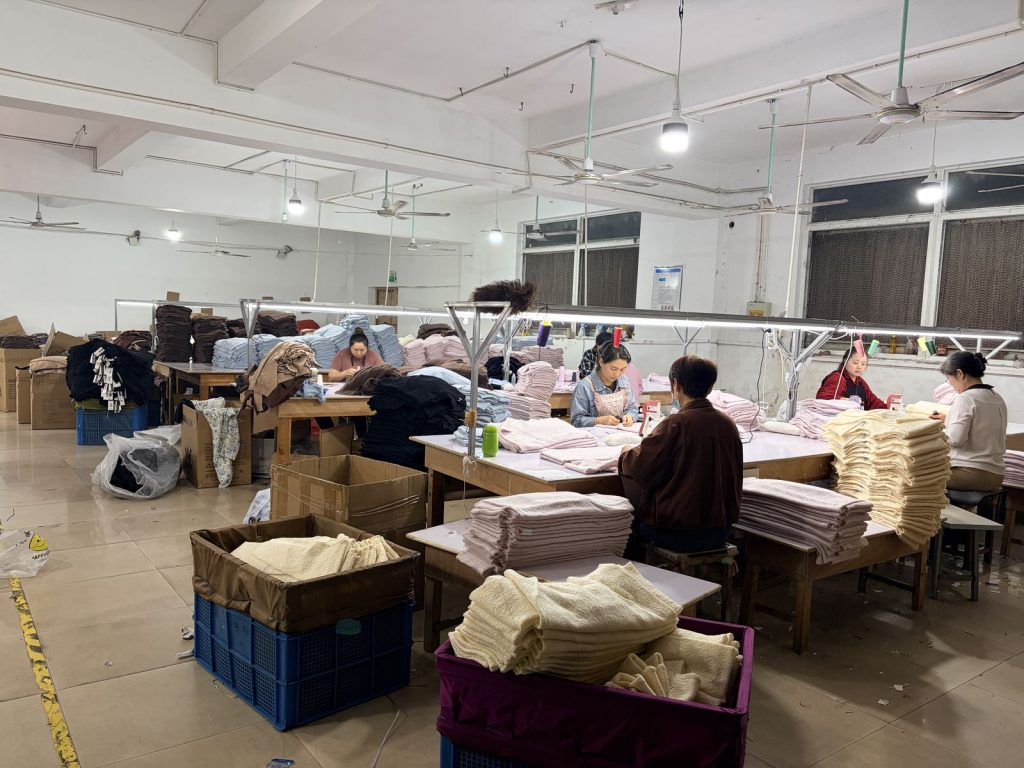
| Linking (looping) | After the panels are knitted, they are joined loop by loop on linking machines. This is skilled hand work, and more panels, collars and trims mean more linking time. |
| Washing and milling | The garment is washed, and wool styles are milled, to release shrinkage and give the final hand-feel. |
| Ironing (pressing) | Each sweater is steam-pressed to its final size and shape. |
| Trims, labels and packing | Buttons, zips, labels, hangtags, polybags and cartons. |
| Inspection | Checking measurements and appearance before packing. |
Linking, washing and ironing are easy to overlook, because they happen after knitting. On styles with many panels or special finishes they are a real part of the price.
Price factors
What moves the price up or down.
| Factor | Raises the price | Lowers the price |
|---|---|---|
| Yarn | Cashmere, fine merino, certified or fancy yarns | Cotton–acrylic and wool blends |
| Garment weight | Chunky, long or oversized styles that use more yarn | Lighter, shorter or closer fits |
| Gauge and knitting time | Fine gauges and dense stitches that take longer to knit and link | Mid gauges and plain stitches |
| Linking, washing and ironing | Many panels, collars, plackets and pockets to link; special washes or finishes | Simple shapes with standard washing and pressing |
| Pattern and stitch | Multi-colour jacquard, intarsia, cables and mixed stitches | Plain knits, simple ribs, stripes |
| Details and trims | Zips, special buttons, embroidery, patches, linings, pockets | Clean constructions with standard trims |
| Quantity | Small runs: set-up costs are spread over fewer pieces | Larger quantities per style and per colour |
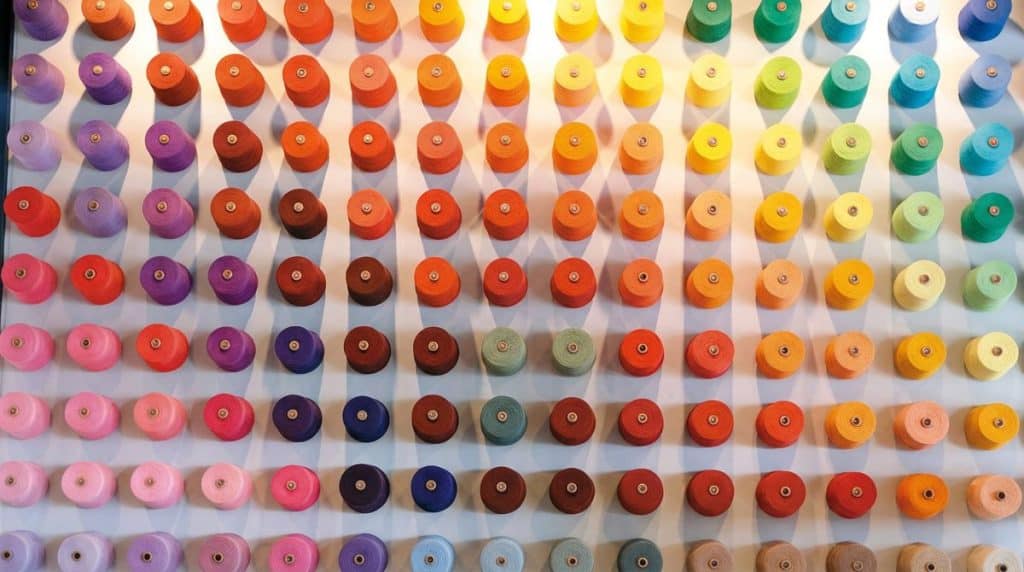
| Colours | Many colourways in small lots; dyed-to-order yarn with a mill minimum | Fewer colours, or colours the mill already stocks |
| Packing and testing | Special packaging, hangtags and third-party lab tests | Standard polybag and carton packing |
Yarn is the largest part of the cost of most sweaters, so composition and garment weight usually matter most. Our guide to the best yarn for sweaters compares the main yarn families by price level, and sweater gauge explained shows how gauge changes weight and knitting time.
Small orders
Why a small order costs more per piece.
Every style has set-up costs that do not depend on the quantity: programming the pattern, setting up the machines, sampling and matching colours. On a small order these costs are spread over fewer pieces, so the unit price is higher.
Our standard MOQ is 300 pcs per style, from 50 pcs per colour. Sampling and trial orders under 300 pcs are welcome at a higher unit price, and we quote according to the quantity per style and colour. Dyed-to-order yarn can add a mill minimum per colour. See knitwear MOQ explained.
Reading a quotation
What a factory price includes.
| Item | What it means for the price |
|---|---|
| Included in FOB | Our FOB price normally includes the main label, care label, hangtag, individual polybag, export carton and quality inspection. |
| Trade term | We normally quote FOB Shanghai or Ningbo; EXW and CIF are available. An FOB price covers the garment and delivery to the port in China. Sea or air freight, insurance and import duties are paid separately by the buyer. |
| Samples | An FOB quotation does not include sample fees. For new customers, the sample fee is generally 1.5× the FOB unit price, depending on the garment, and it is credited against your bulk order. For customers who have ordered with us before, we may provide samples free of charge, depending on the yarn and the development cost. The buyer pays the courier cost. |
| Payment | Normally T/T 30% deposit and 70% balance against copy B/L; L/C at sight is available. Final terms depend on the order and customer profile. |
| What is quoted | A quotation is for a defined yarn, weight, size range, quantity and packing. If one of these changes after sampling, the price is confirmed again. |
When you compare quotations from different factories, check that they are for the same composition, garment weight, quantity and trade term. A lower price often means a lighter garment or a different yarn.
Saving cost
How to lower the price without lowering the quality.
- Give a target price early. Quantity and target price decide which yarn and gauge we propose, so we can design to the price instead of quoting and re-quoting.
- Use a blend. A wool or cashmere blend keeps much of the hand-feel at a lower yarn cost. See cashmere vs merino wool.
- Watch the weight. A small change in length, sleeve volume or stitch density changes the yarn used in every piece.
- Simplify the pattern. Fewer colours in a jacquard, or a placed motif instead of an all-over pattern, shortens knitting time.
- Concentrate quantities. Fewer colourways with more pieces each cost less than many small lots.
- Plan the calendar. Bulk production normally takes 30–40 days after the pre-production sample and colours are approved. Leaving enough time avoids air freight.
Getting a quotation
What to send for an accurate price.
- Style pictures: a tech pack, sketch or reference photos, front and back
- Yarn information: composition and count, or the hand-feel and market you are aiming at
- Garment weight: the target weight per piece, or the weight of your reference sweater
- Size specification: a measurement chart and the size range
- Packing information: labels, hangtags, polybag and carton requirements
- Quantity and timing: quantity per style and per colour, target price and delivery date
You do not need all of these to start. Send what you have and we will ask for the rest in our first reply, normally within 24 business hours. The first sample is normally ready 3–5 days after the details are confirmed.
Request a quotation, or ask a quick question first.
Start a project