Design guide
Types of Knit Stitches for Sweaters.
The stitch decides how a sweater looks, how it stretches, what it weighs and how long it takes to knit. Here are the stitches we knit most often on our computerized flat knitting machines, with photos from our sample collection and tips on naming them in your brief.
 By Marcia Lee, Business Manager at Knitwear World · Published November 2026
At a glance
Four stitch families.
Most sweaters combine stitches from more than one family, for example a cable body with rib trims. Each family changes the look, the stretch, the weight and the knitting time.
- Plain and rib: jersey and rib, the base of most sweaters.
- Cables, tuck and textures: raised stitches in one colour; heavier and slower to knit.
- Open stitches: pointelle, open-knit, mesh and dropped stitches; lighter and airier.
- Colour stitches: jacquard, Fair Isle, argyle and intarsia.
Plain and rib
Jersey and rib: the base of most sweaters.
Jersey
Also called single jersey or plain knit: smooth V-shaped stitches on the face and small loops on the back. It is the lightest construction and the base of most fine-gauge essentials. Jersey edges curl, so they are finished with rib or a tubular edge.
Rib
Columns of knit and purl stitches side by side: 1×1 rib alternates one and one, 2×2 rib two and two. Rib stretches across and springs back, so it is used for cuffs, hems and necklines, and for fitted bodies. In a low gauge, a chunky rib gives a bold winter look. Rib in cotton or viscose recovers less than rib in wool, so cuffs and hems can loosen over time.
Textured rib
Rib combined with other stitches, such as tuck or purl, for more surface depth while keeping some stretch.
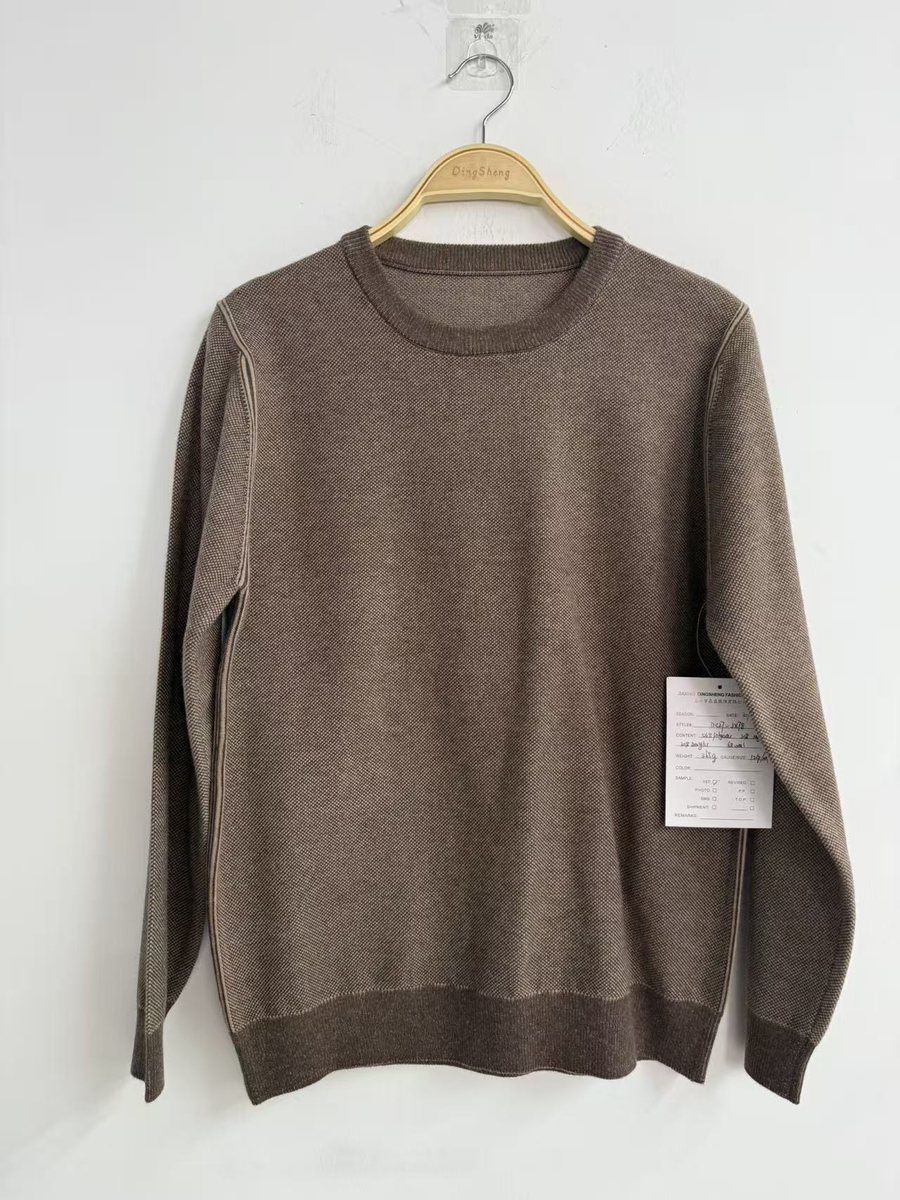
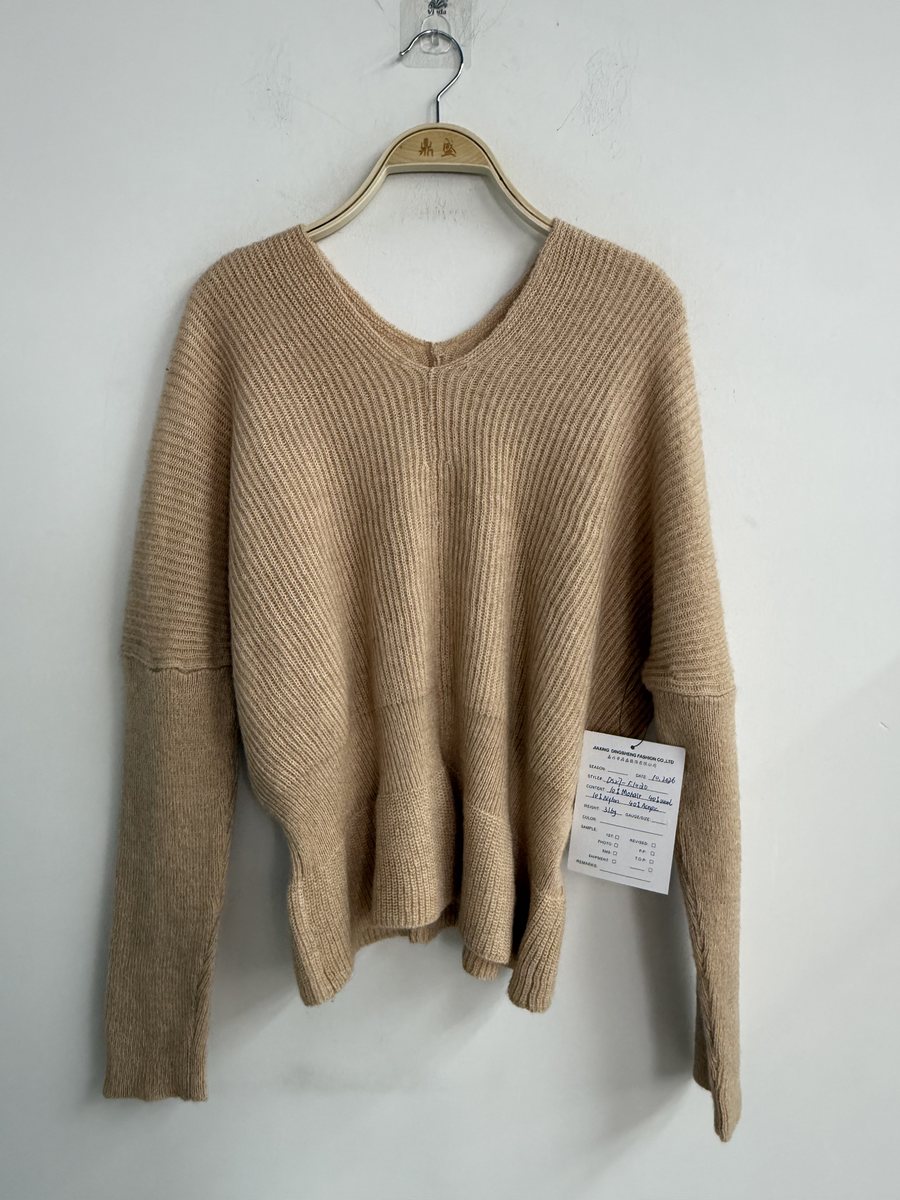
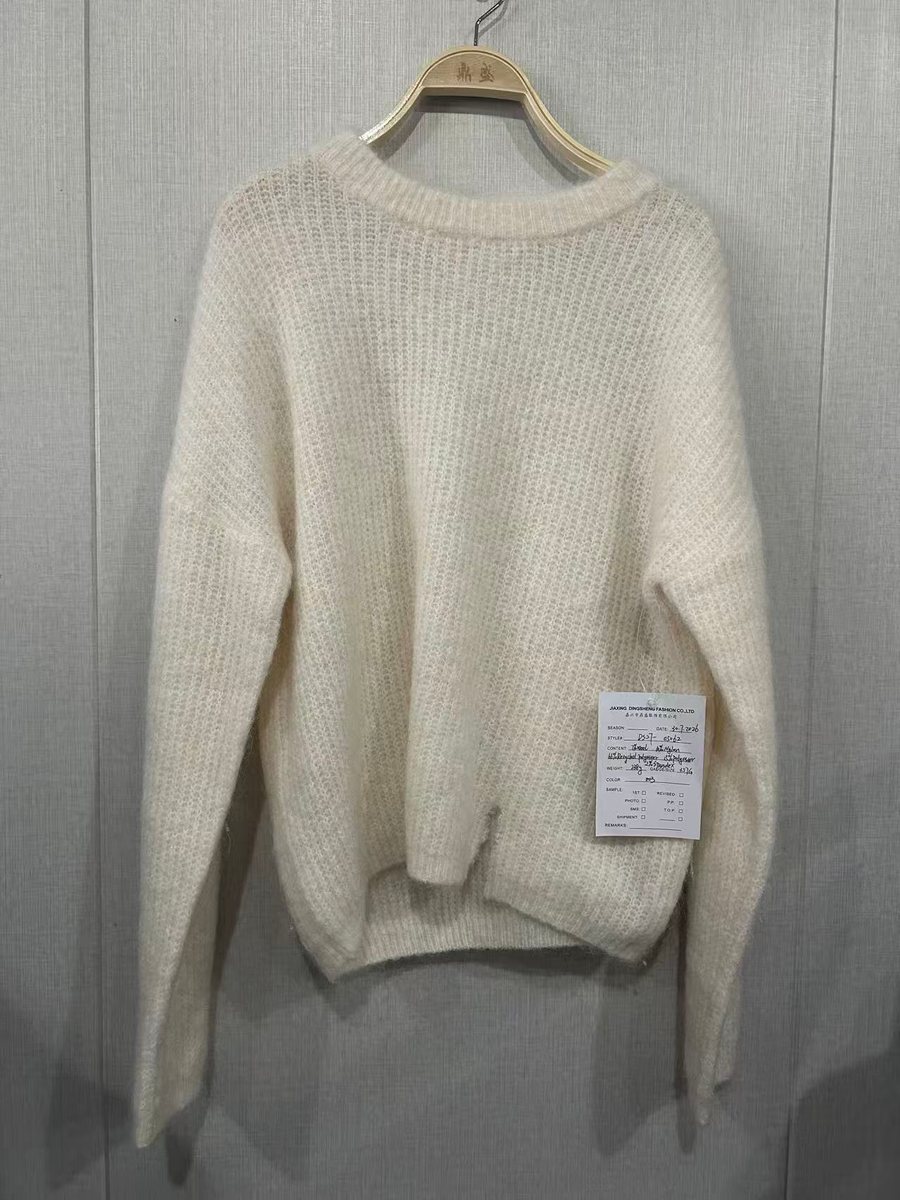
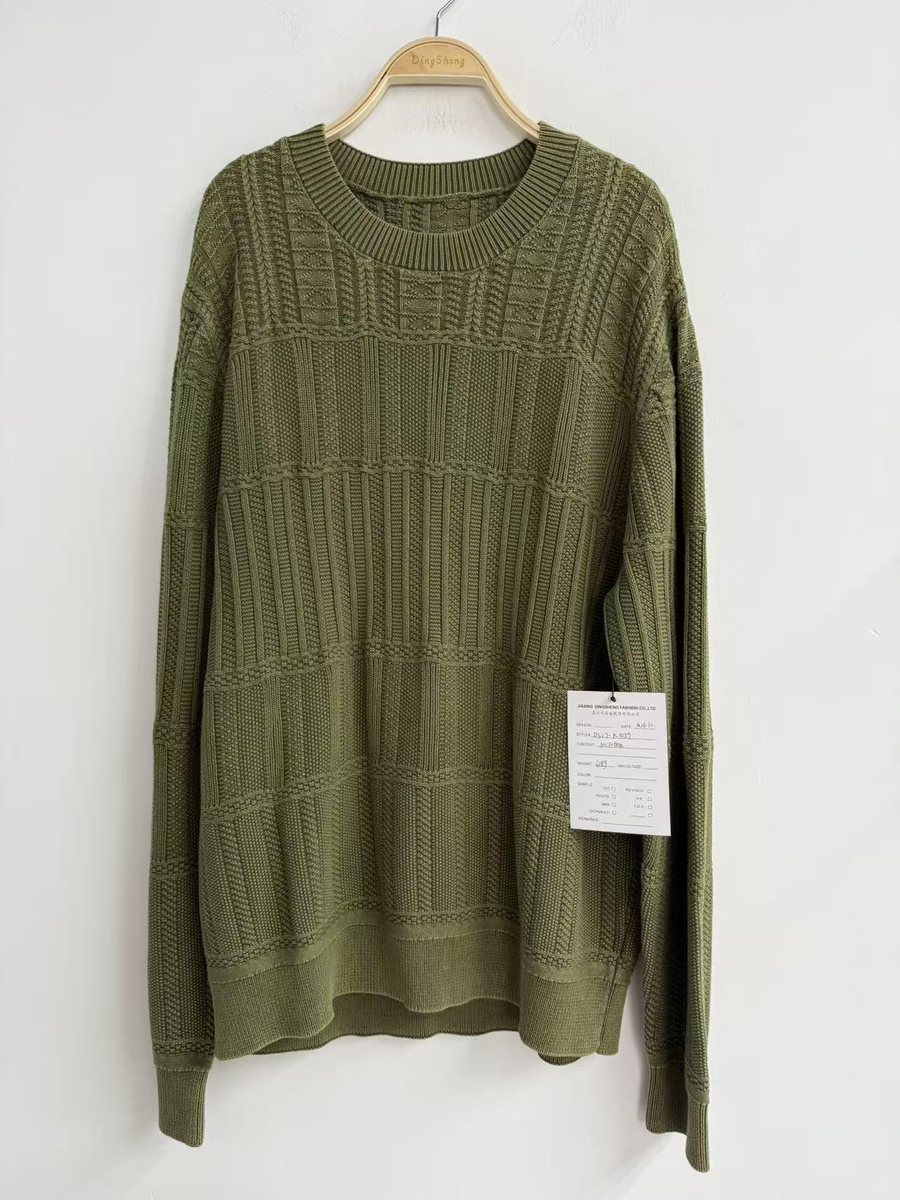
In a tech pack, name the stitch for each area, for example a jersey body with 2×2 rib cuffs, hem and neckband.
Cables, tuck and textures
Raised stitches in a single colour.
Cable
Groups of stitches crossed over each other to form rope-like twists, from a single rope to wave, diamond and Aran patterns. Crossing pulls the fabric in, so a cable sweater uses more yarn for the same width and takes longer to knit. Chunky cables suit low gauges such as 3–5GG.
Bobble
Small raised knots made by knitting extra loops in one spot. Bobbles give a hand-knit look and a lot of texture, and they add knitting time.
Basketweave and diamond textures
Knit and purl stitches arranged in blocks or diagonal lines, so the pattern shows as a relief in one colour: a woven-basket check, or a lattice of diamonds.
Waffle, honeycomb and tuck stripes
Tuck stitches hold a loop on the needle for one or more rows before knitting it in. The held loops build a raised grid (waffle), larger cells (honeycomb) or horizontal ridges (tuck stripes), and make the fabric thicker than jersey in the same yarn. Full cardigan stitch, also called fisherman rib, and half cardigan stitch are tuck-based ribs with a plump, chunky look.
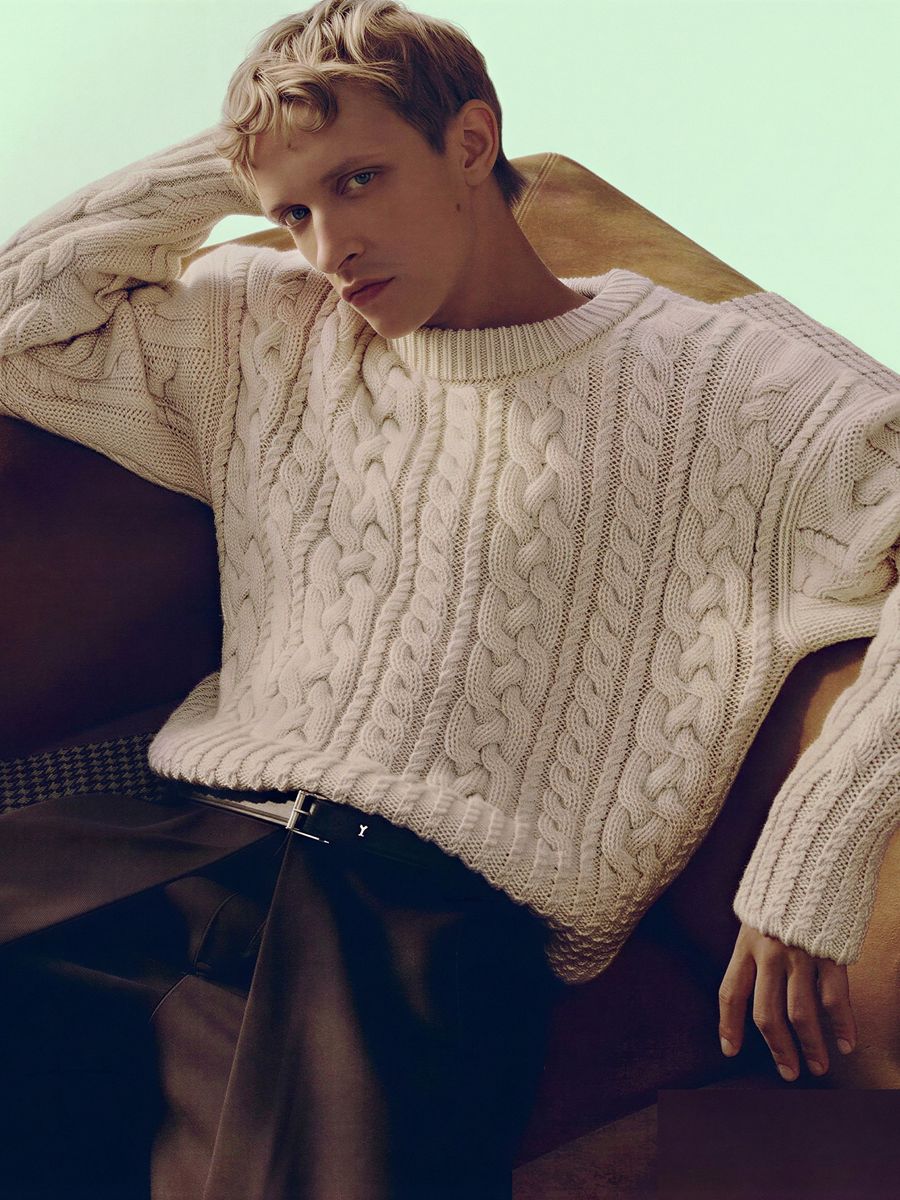
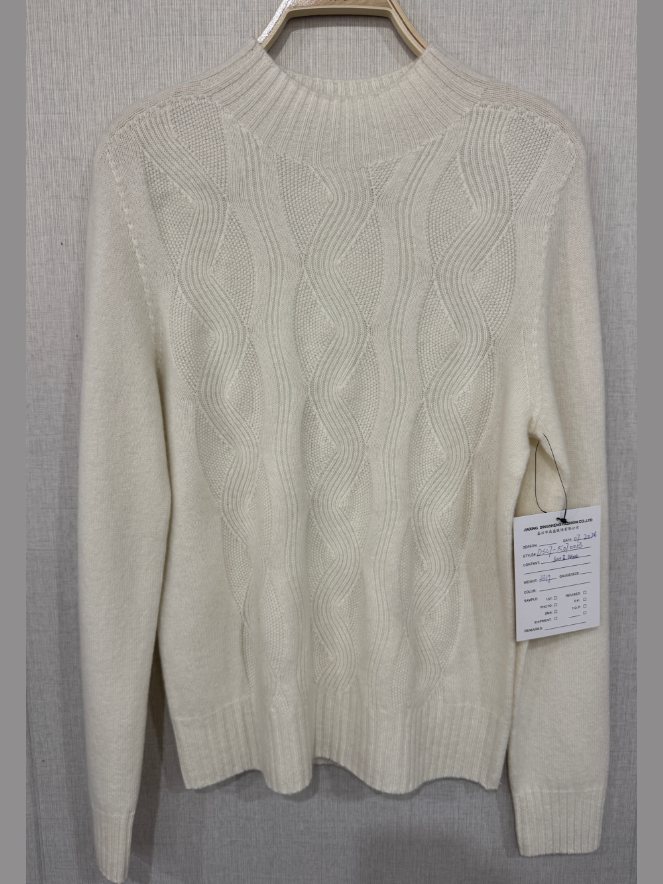
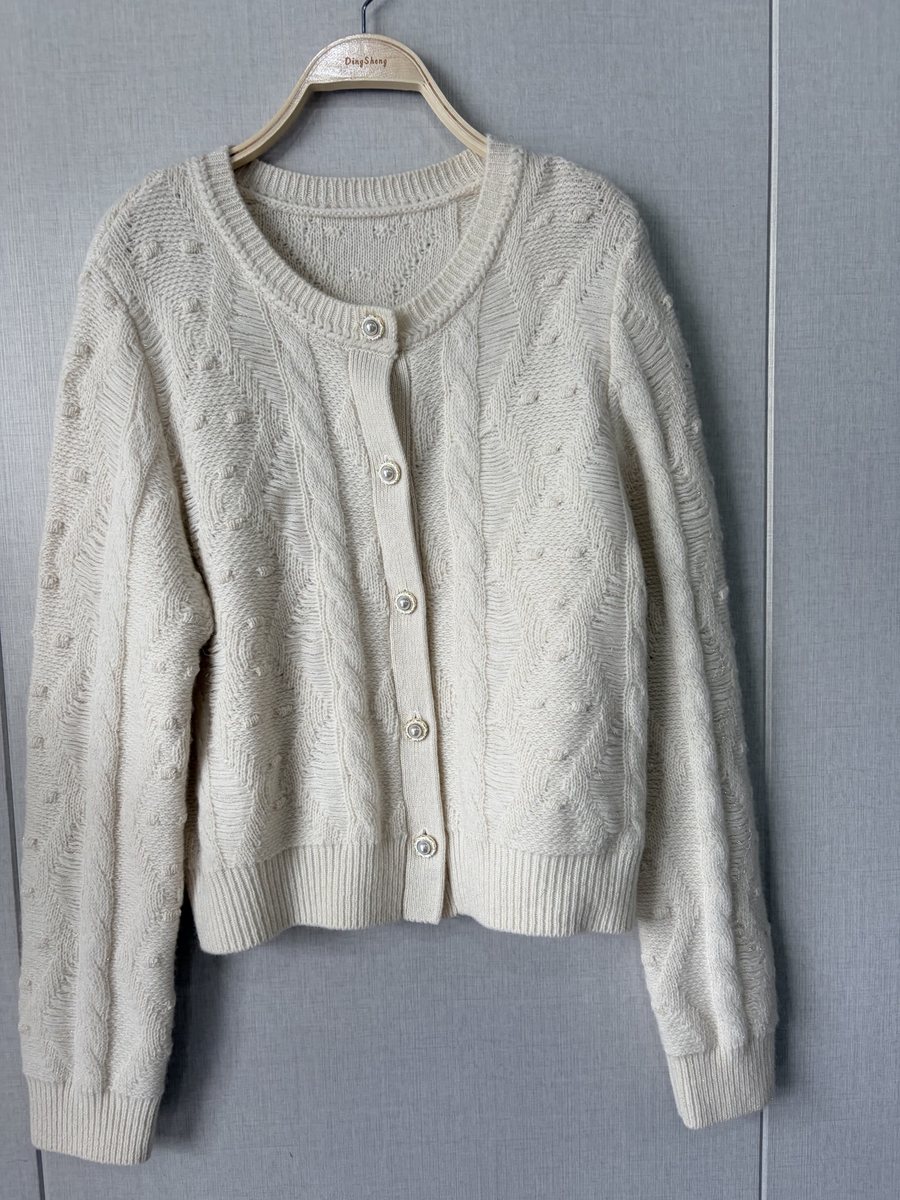
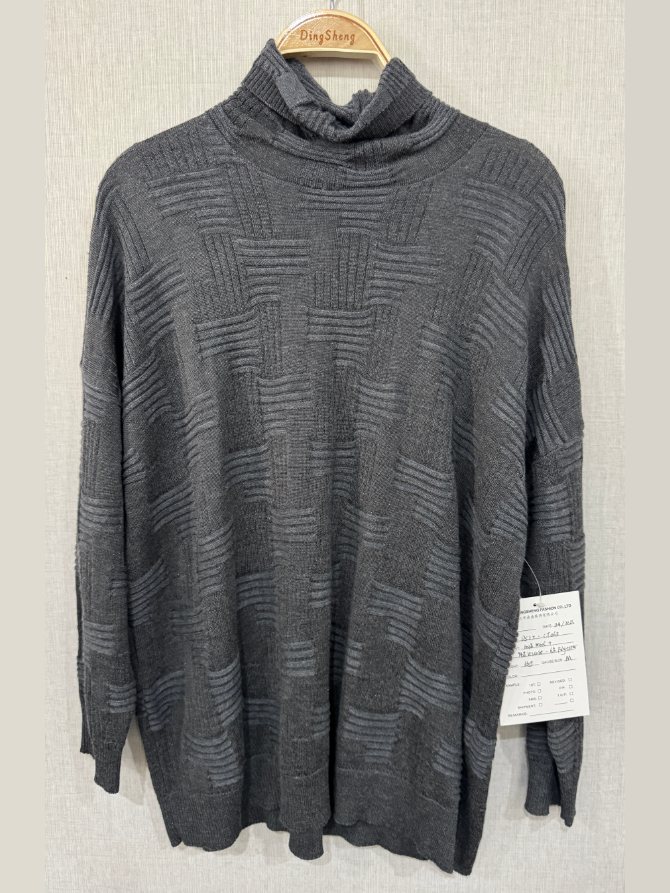
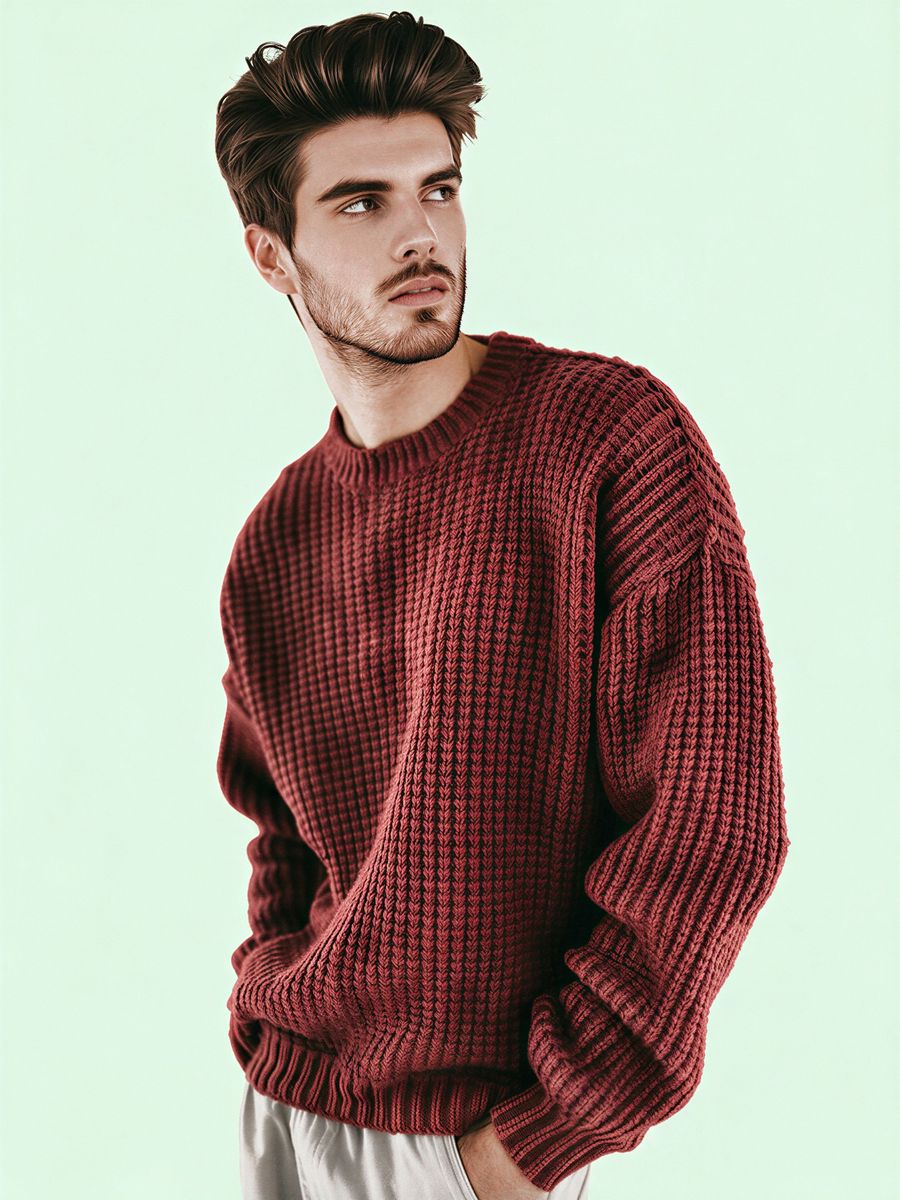
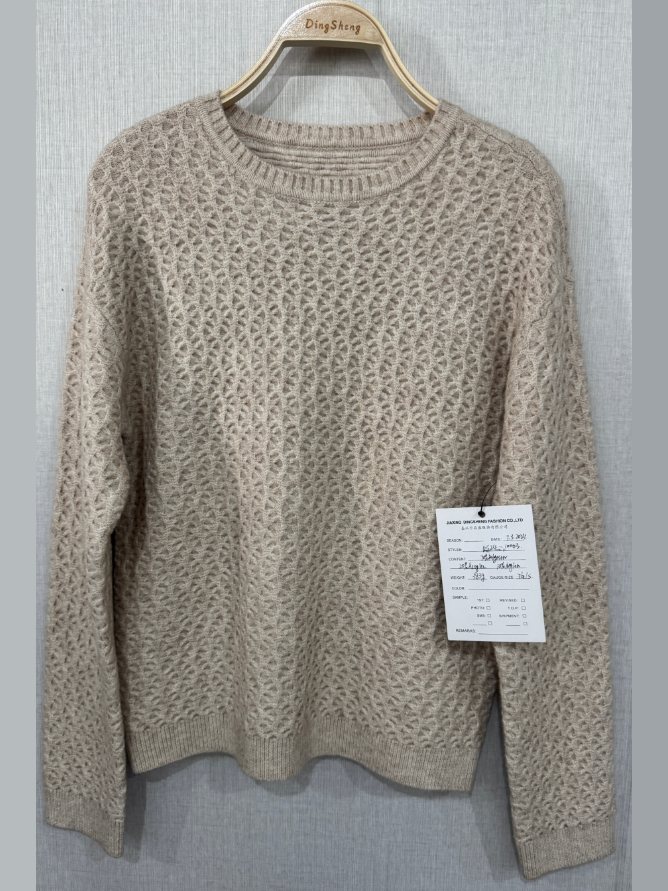
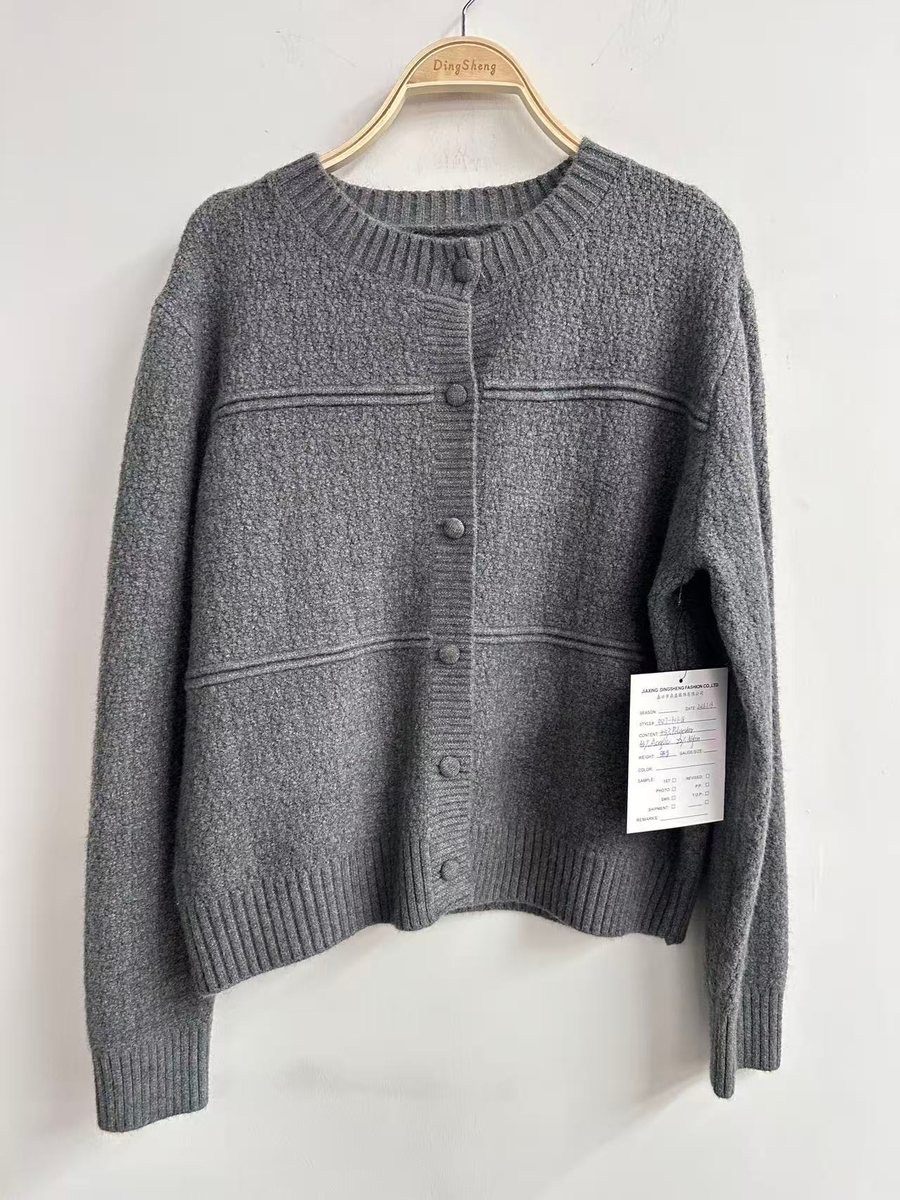
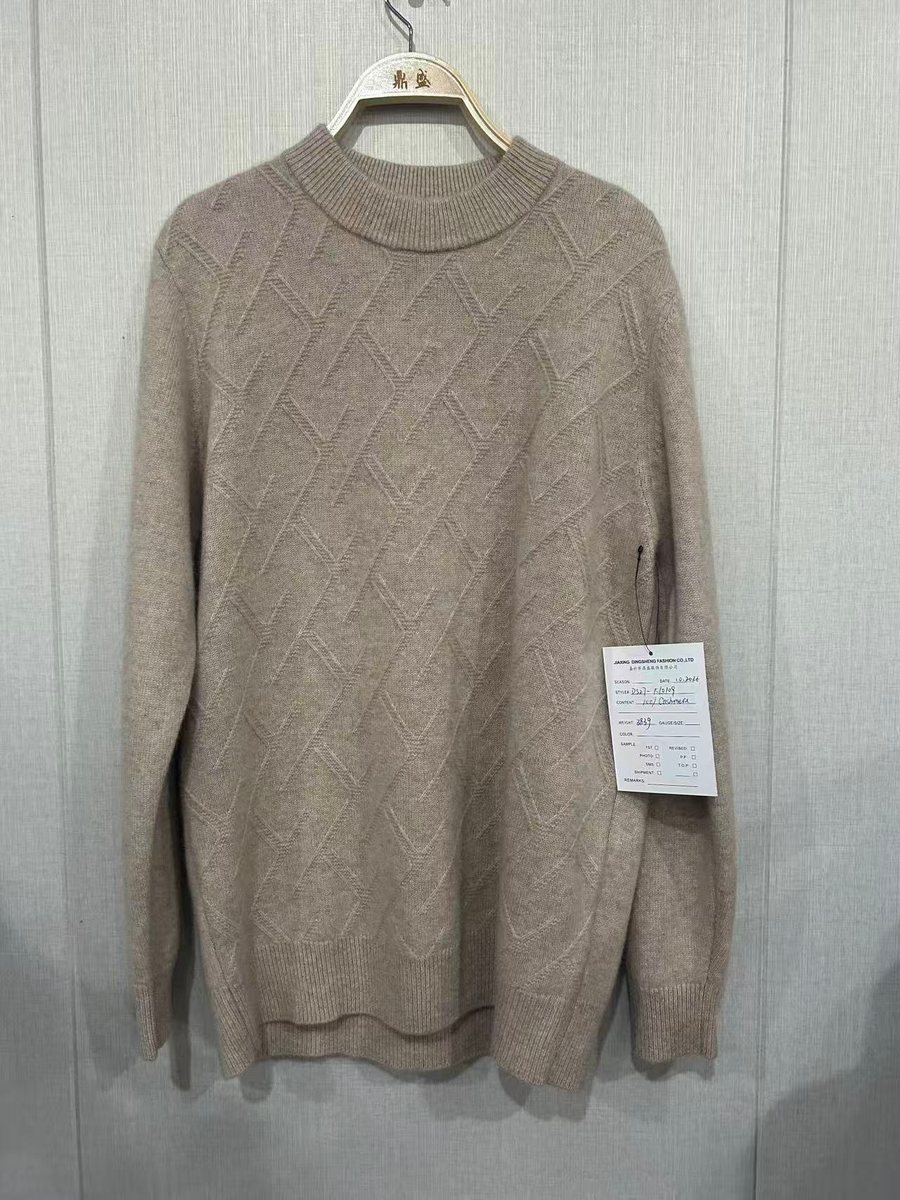
Raised stitches use more yarn and knitting time than jersey, and that shows in the price. See what moves the price in our sweater cost guide.
Open stitches
Pointelle, open-knit and dropped stitches.
Pointelle
Small eyelets made by moving stitches to the next needle during knitting, arranged in dots, lines, diamonds or flowers. Pointelle makes a sweater lighter and suits cardigans, spring knits and children’s wear.
Open-knit and mesh
Larger, regular openings across the fabric for a net or lace-like look. Open-knit tops and pullovers are often worn over a camisole or another layer.
Dropped stitch
A needle is left out of work so that a ladder runs down the fabric, giving vertical lines of openness and a relaxed look.
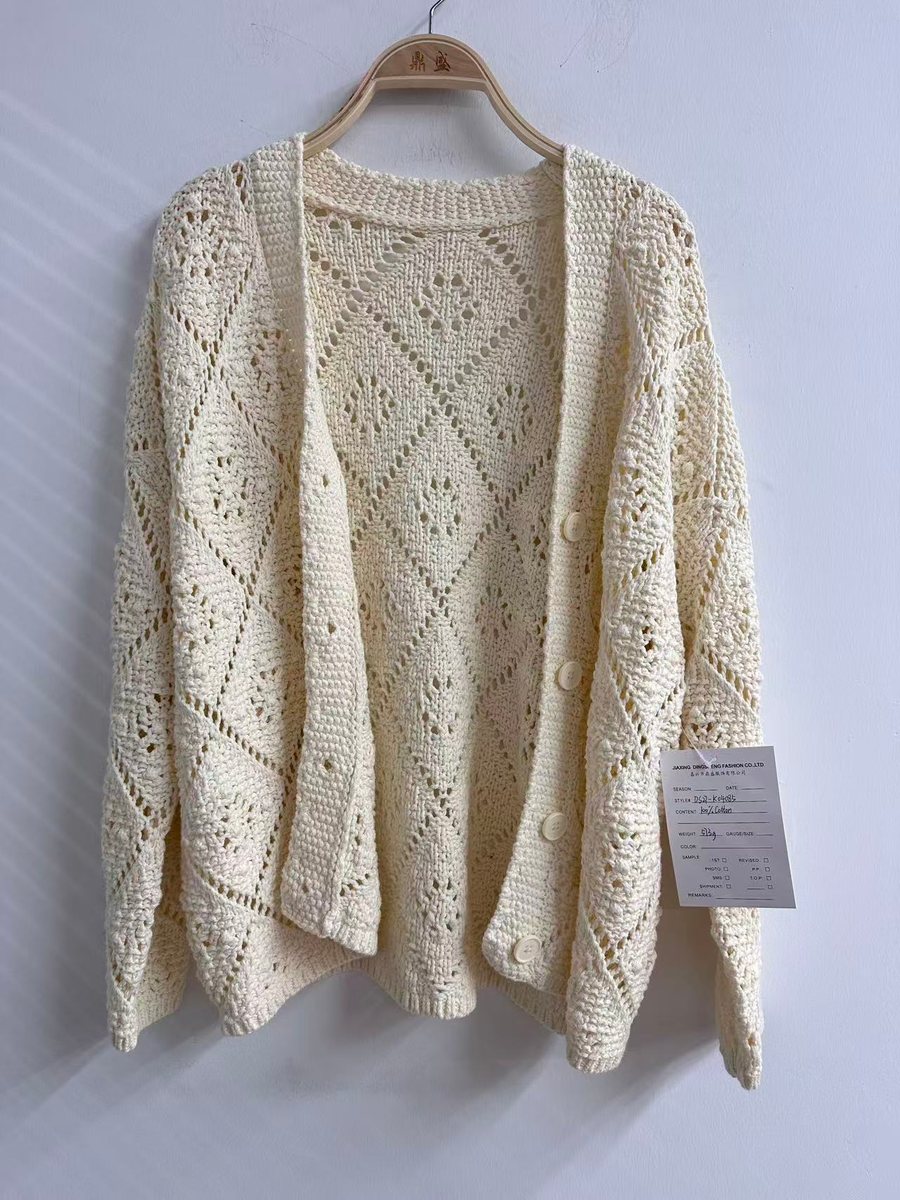
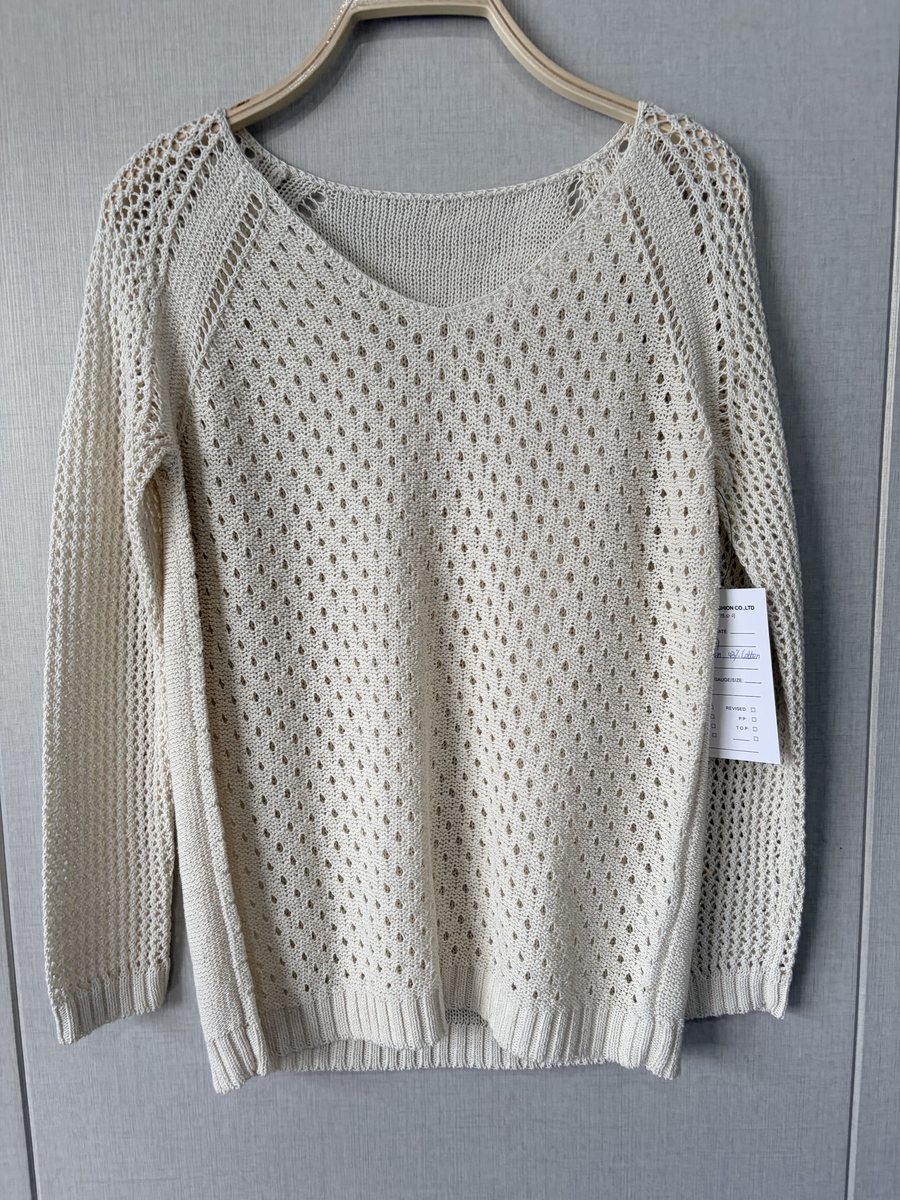
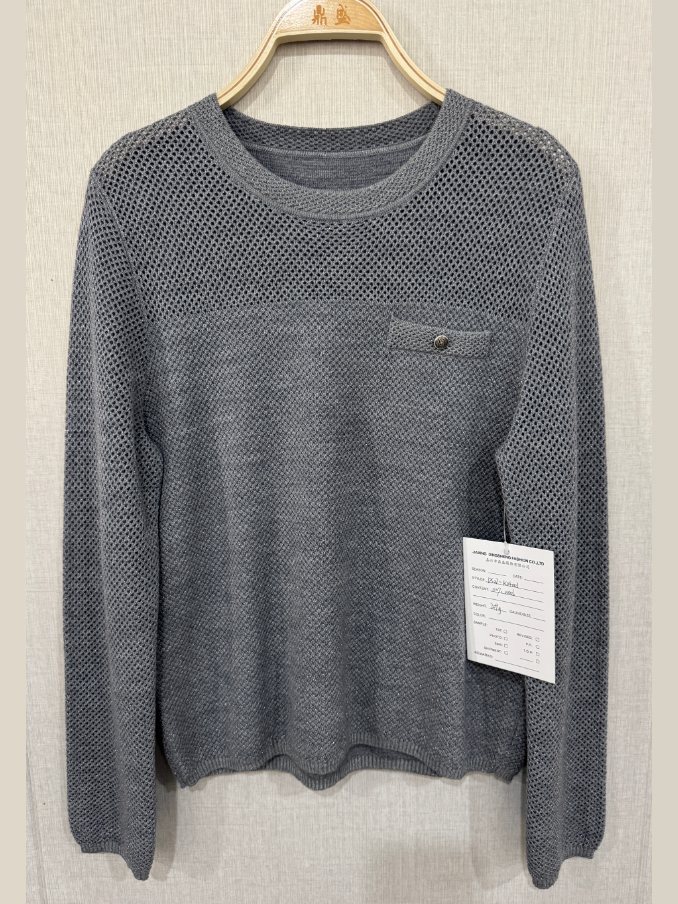
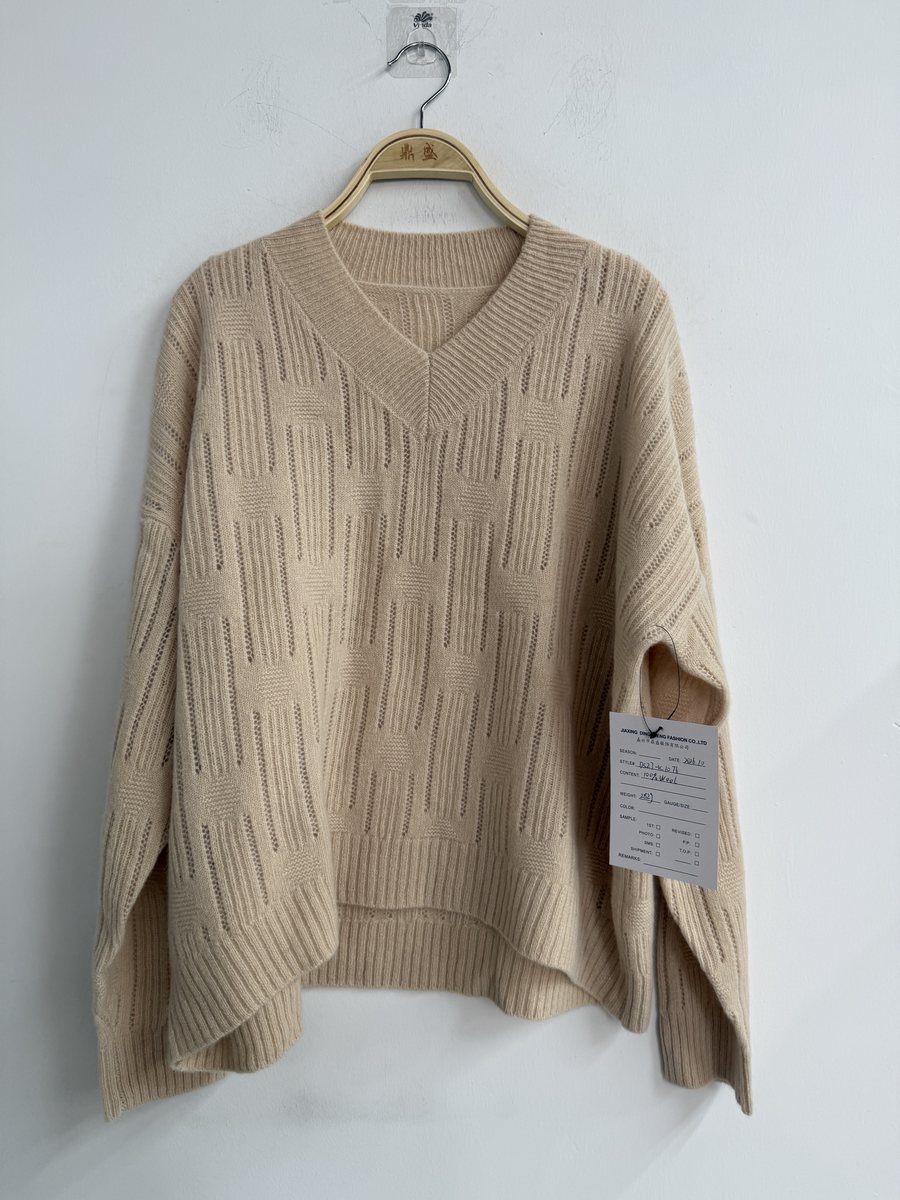
Open areas can snag and stretch, so check them on the first sample, after washing.
Colour stitches
Jacquard, Fair Isle, argyle and intarsia.
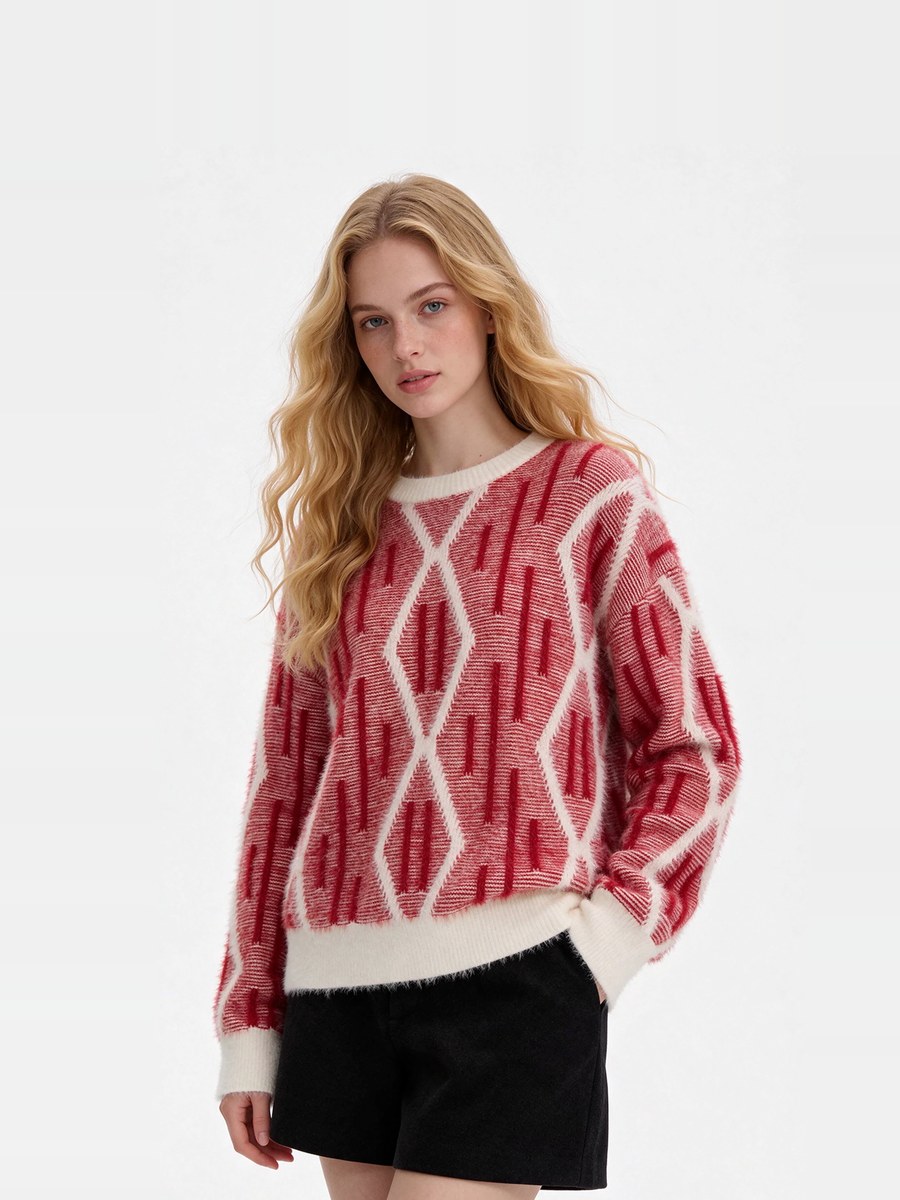
Jacquard
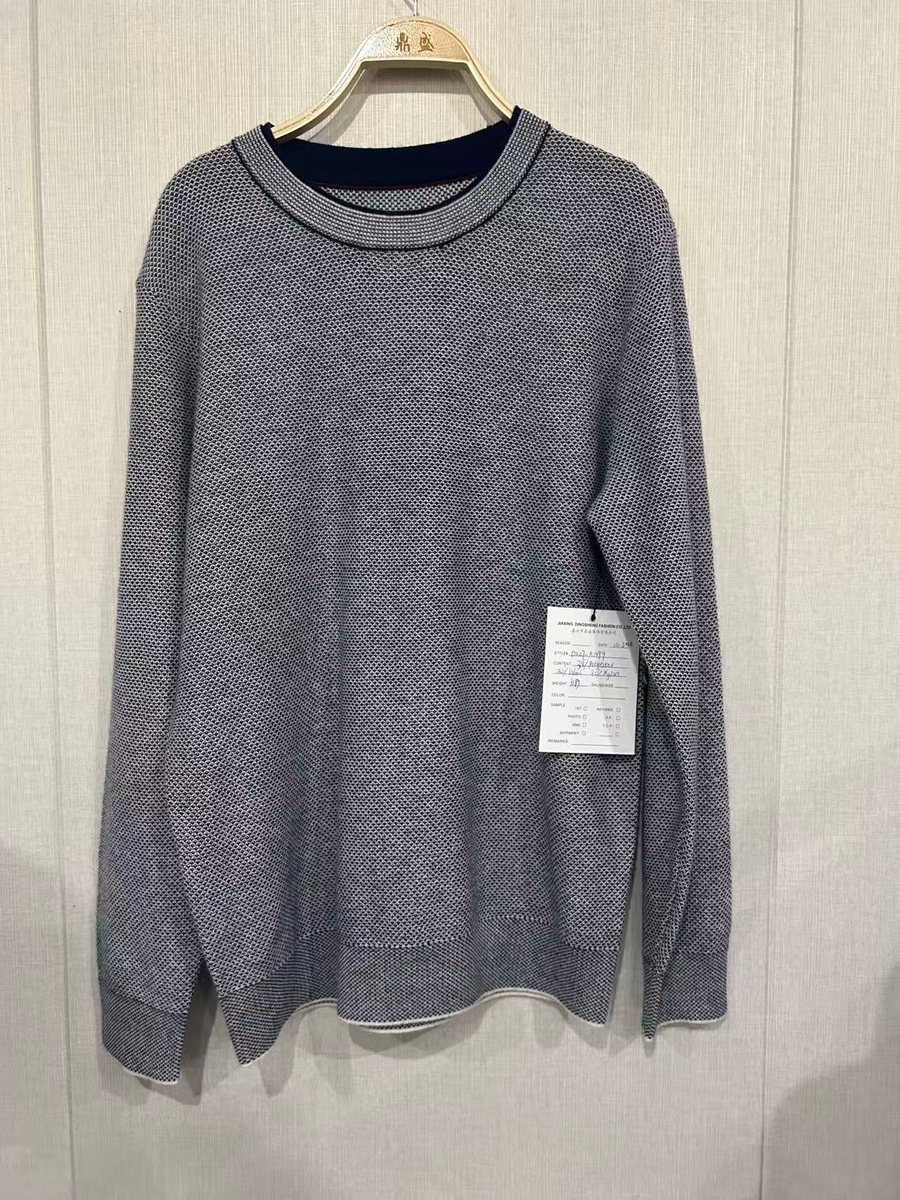
Two or more colours knitted together to form a pattern. Double jacquard has a birdseye back and suits sweaters worn next to the skin; single (float) jacquard leaves loose floats of yarn on the back, which can snag. Every colour adds yarn to the back, so jacquard is heavier and stretches less than jersey. We knit double jacquard in up to four colours.
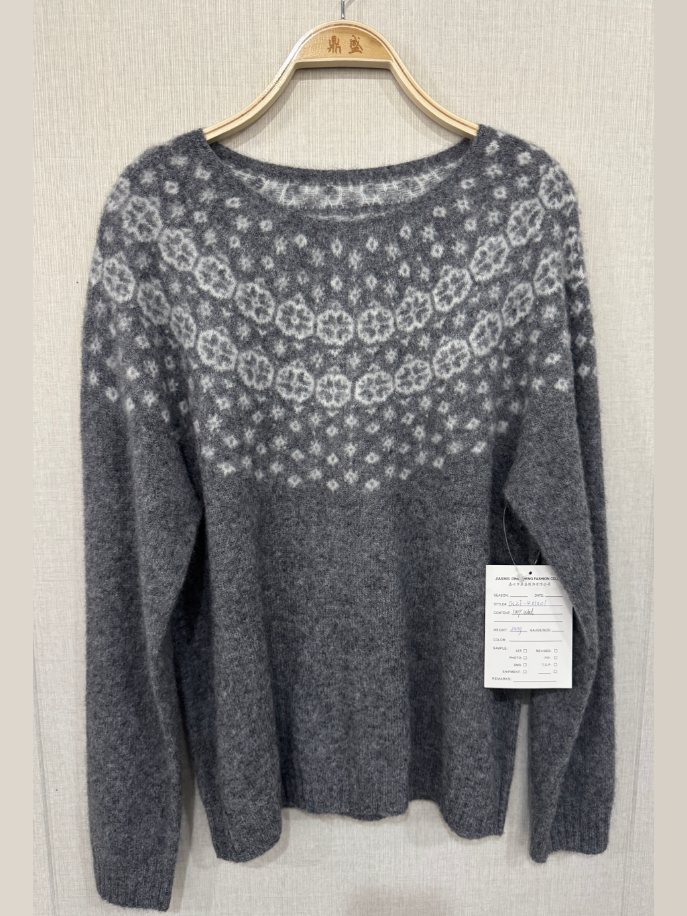
Fair Isle and Nordic
Bands of small motifs, often around a yoke, knitted as jacquard. Fair Isle is named after Fair Isle in Shetland.
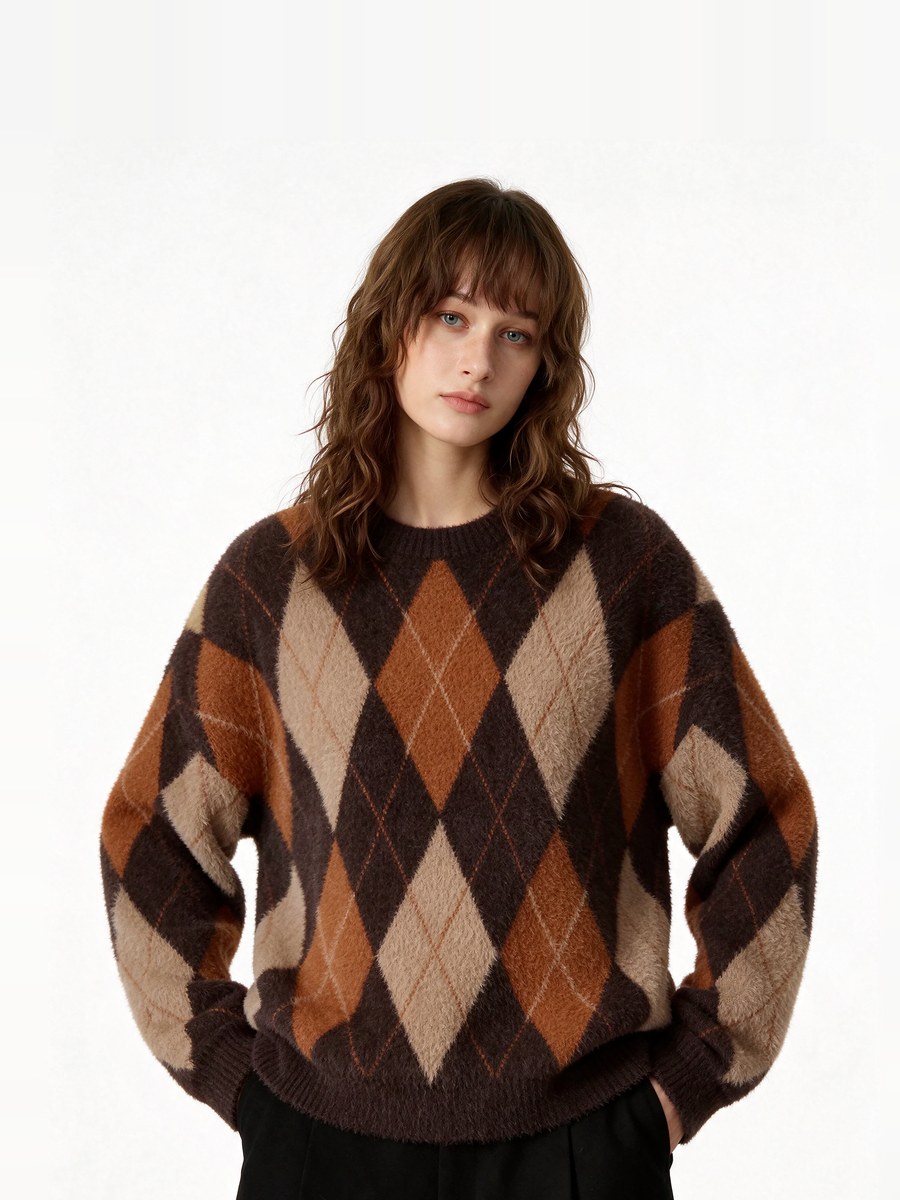
Argyle
Diamonds crossed by diagonal lines, knitted as jacquard or intarsia.
Intarsia
Each colour area is knitted with its own yarn, so the back is clean, with no floats. It suits large motifs, colour blocks and knitted logos.
Read how jacquard sweaters are made for colour limits, floats and artwork, or browse our jacquard and intarsia knitwear.
In your brief
How to name stitches in a brief or tech pack.
- Every area: name the stitch for the body, the sleeves and each trim, for example a jersey body with 2×2 rib cuffs, hem and neckband.
- Rib: give the rib ratio, such as 1×1 or 2×2, and the depth of each trim.
- Patterns: for cables, pointelle and textures, mark where the pattern starts and ends and how many repeats sit across the front.
- Colours: for jacquard and intarsia, send the artwork as a stitch grid with numbered colours, and say whether the back should be birdseye or float.
- Gauge: chunky cables and fine pointelle need different machines, so agree the gauge first; see sweater gauge explained.
- Not sure of the name? Send a photo or a garment and point to the stitch; we can work from a reference.
Our sweater tech pack guide has a template with a page for stitches and patterns.
FAQ
Knit stitch questions.
What is the most common knit stitch for sweaters?
Jersey for the body and rib for the cuffs, hem and neckband. Most plain sweaters combine the two.
What is the difference between rib knit and cable knit?
Rib alternates columns of knit and purl stitches, so it stretches across and springs back. Cable crosses groups of stitches over each other to form twists; it is heavier and stretches less.
What is waffle knit?
A tuck stitch that builds a raised grid of small cells. It gives a thicker, textured fabric in a single colour, used for pullovers, cardigans and knit tops.
What is pointelle?
A pattern of small eyelets made by moving stitches during knitting. It makes knitwear lighter and more delicate, and is common in cardigans, spring knits and children’s wear.
Which stitches cost more to knit?
Stitches that need more yarn or knitting time: cables, bobbles, tuck stitches, multi-colour jacquard and intarsia. Plain jersey with rib trims is the most economical.
Start a project