Yarn guide
What Is Mohair?
Mohair is the hair of the Angora goat: a lustrous fibre that gives sweaters a soft, hairy halo. This guide explains mohair grades and blends, how mohair compares with faux-mink and brushed wool, and what to agree with your factory before you develop mohair knitwear.
 By Marcia Lee, Business Manager at Knitwear World · Published November 2026
The fibre
Mohair comes from the Angora goat.
Mohair is a fibre and yarn made from the hair of the Angora goat. It is not the same as angora, which comes from the Angora rabbit. Angora goats are usually shorn twice a year, and their hair grows thicker as they get older.
The fibre has a natural lustre, takes dye well and is strong for its weight. In knitwear it is chosen for its halo: fine hairs that stand out from the yarn and soften the look of the stitches, especially after brushing.
South Africa is the largest producer, with about 56% of world production in 2024.
Grades
Kid, young goat and adult mohair.
Mohair is classed by the age of the goat, because the hair thickens with age. Finer hair feels softer and usually sells at a higher price.
| Class | Fibre diameter | What it means |
|---|---|---|
| Kid | 24–29 microns | From the first two shearings; the finest and softest mohair |
| Young goat | 30–34 microns | Still soft, with a little more body |
| Adult | 35–40 microns | Sold as fine adult or strong adult; thicker and stronger |
Classing is not fixed: grazing, season and breeding can move a lot up or down a class. For comparison, merino wool covers roughly 12–24 microns, and in the US fibre can only be sold as cashmere if it averages 19 microns or less. Even kid mohair is coarser than fine merino or cashmere, so most mohair knitwear blends it with other fibres. See cashmere vs merino wool.
Blends
Most mohair sweaters are blends.
Mohair gives a blend its halo and lustre. Wool adds warmth and body. Acrylic, polyester and polyamide (nylon) add strength and keep the price down, and a little elastane helps fitted styles keep their shape.
In our sample collection, mohair makes up 10–40% of the yarn, knitted plain, brushed, in pointelle and in jacquard.
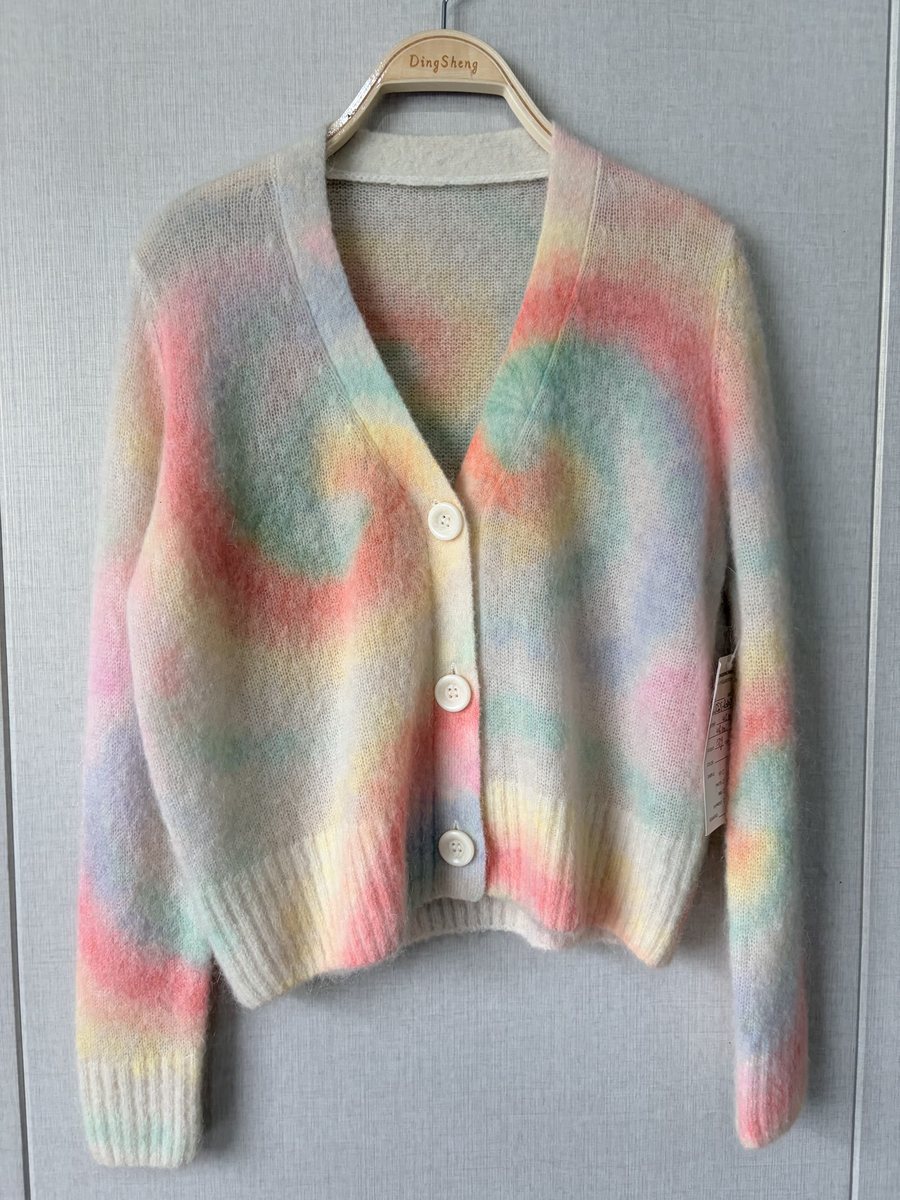
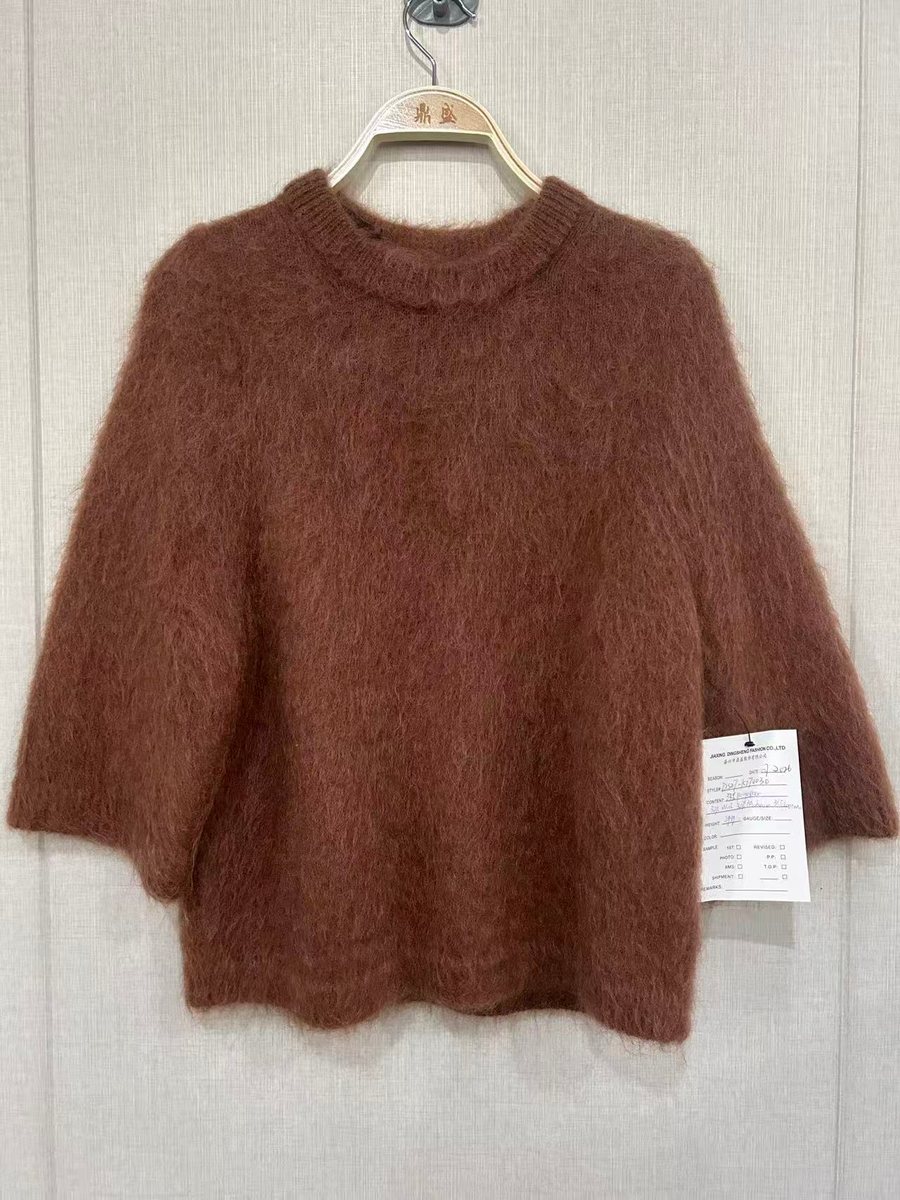
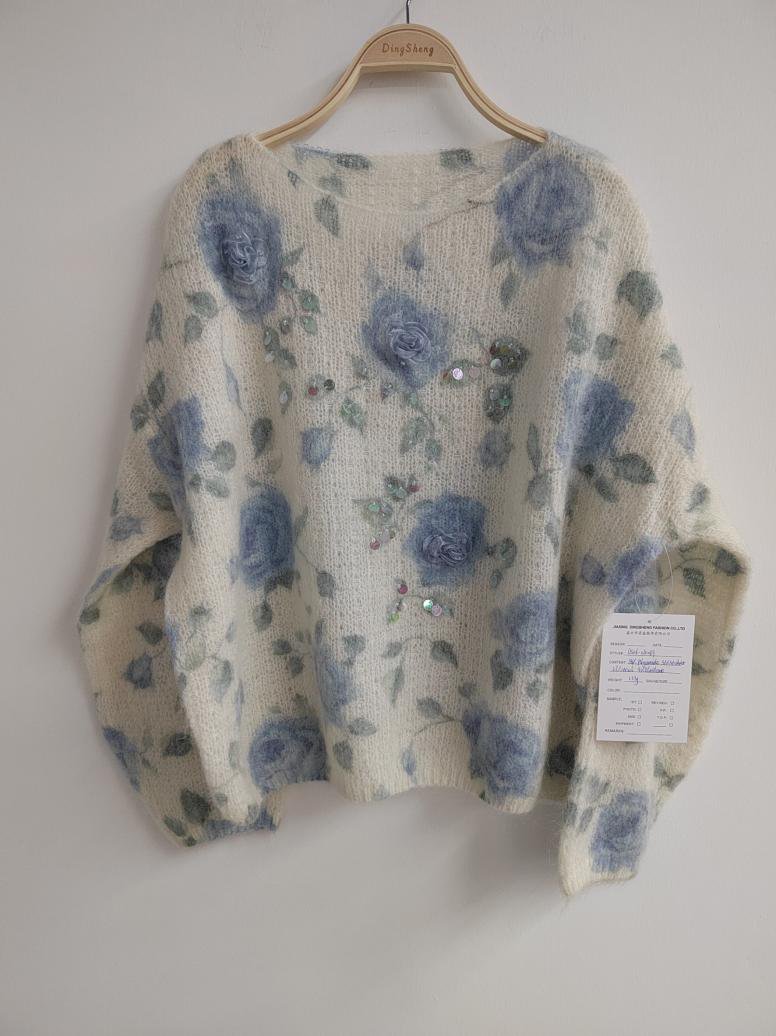
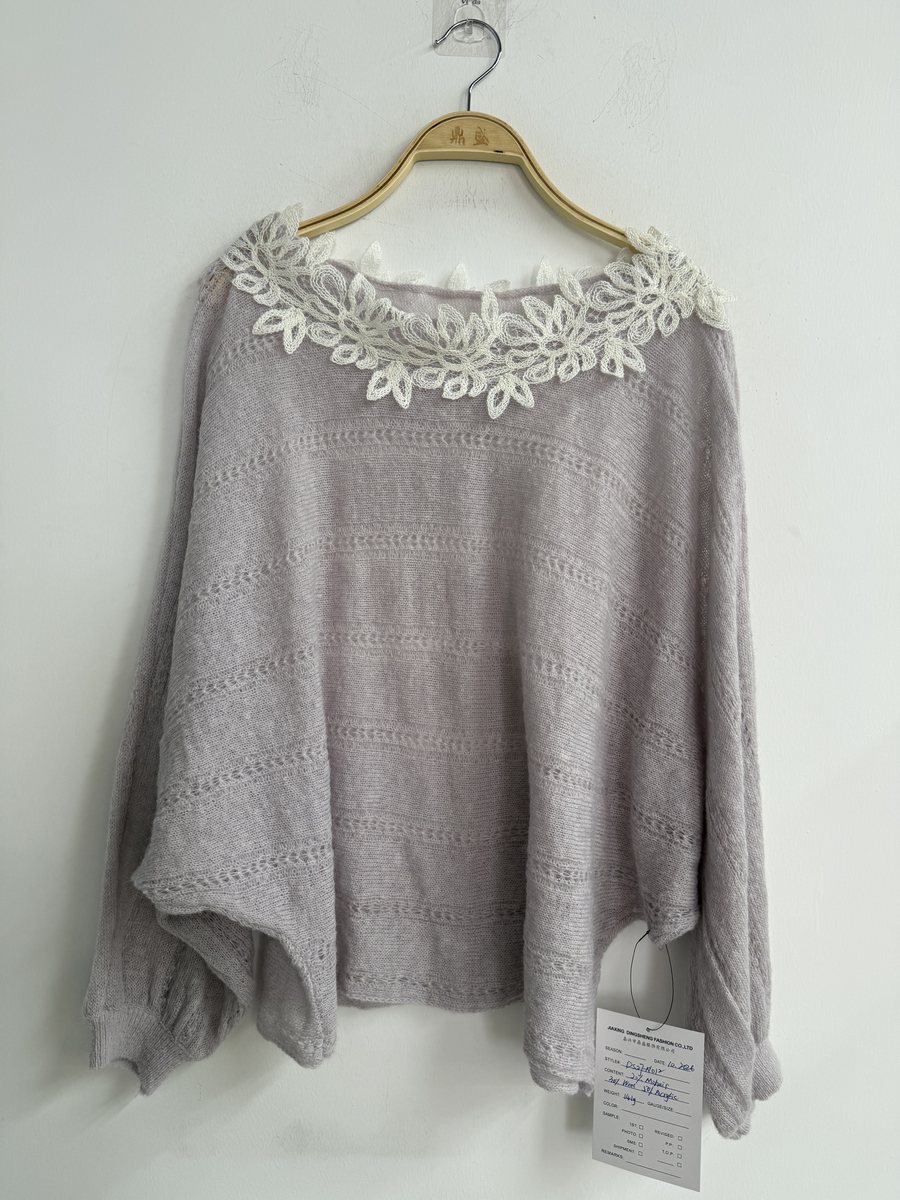
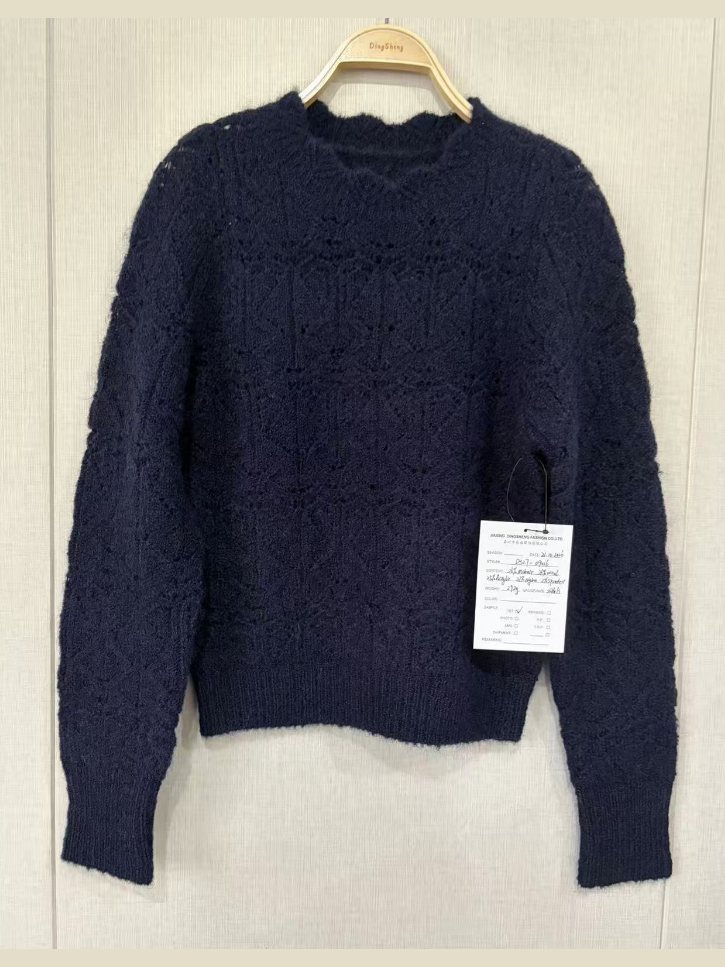
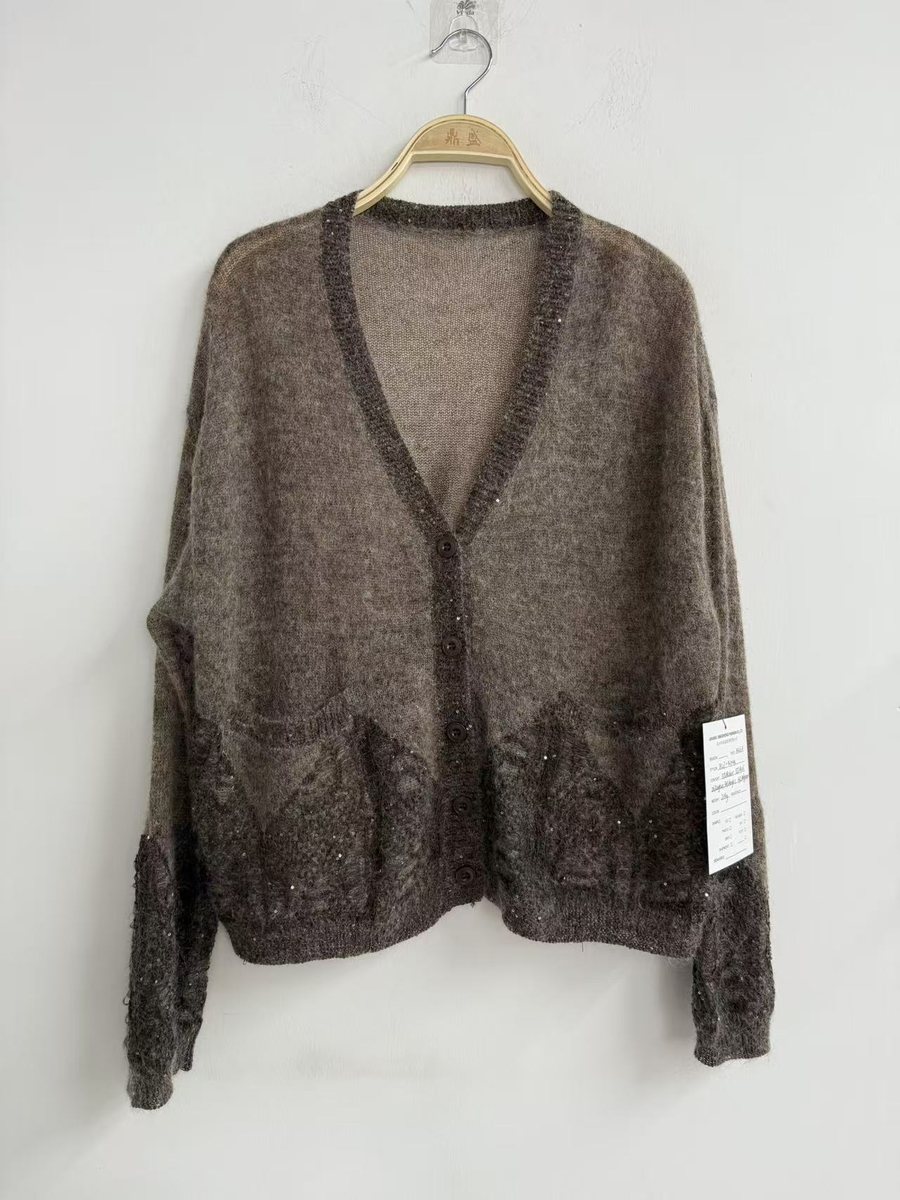
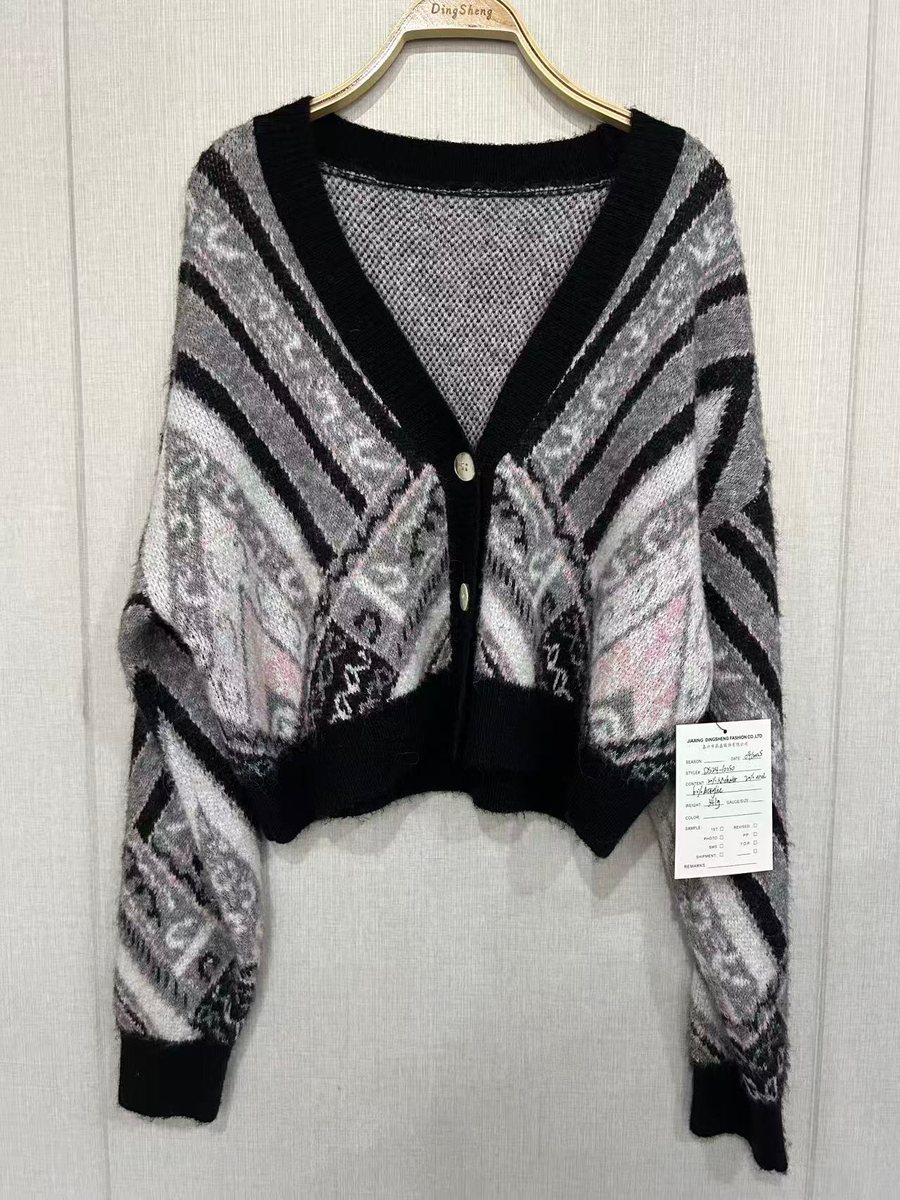
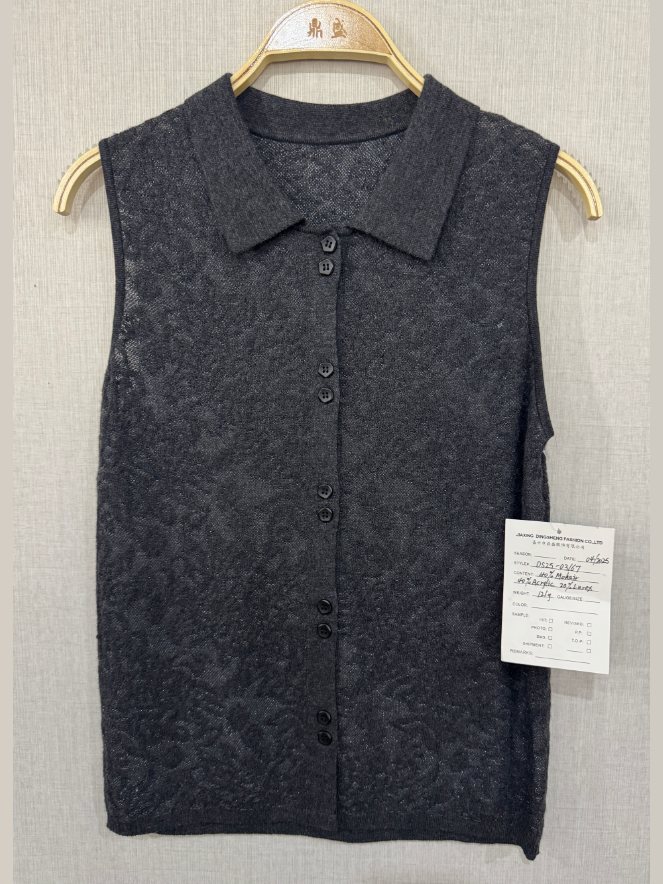
A higher mohair share gives more halo and lustre and usually costs more. A higher synthetic share makes the yarn stronger and easier to price for volume. Tell us the hand-feel and the price you are aiming for, and we will suggest a blend. See more brushed and fancy-yarn styles in our sweater designs and yarns.
Fuzzy options
Mohair, faux-mink or brushed wool?
Three yarn routes give a sweater a soft, fuzzy surface. They can look alike in photos, but they feel, wear and price differently, so choose the route before the first sample.
| Route | What it is | Surface | In our samples |
|---|---|---|---|
| Mohair blend | Angora goat hair blended with wool and synthetic fibres | A long, lustrous halo; the stitches still show | 10–40% mohair |
| Faux-mink | A fuzzy fancy yarn, usually blended from nylon and polyester | A dense, plush, fur-like pile | Sweaters, cardigans, jackets and knit coats, plain or in patterns |
| Brushed wool blend | Wool or wool–cashmere knit, brushed after knitting | A soft, hazy surface | 90% wool, 5% cashmere, 5% silk in our new-season brushed knits |
Browse our fuzzy sweaters for faux-mink styles.
Development
What to agree before you develop mohair knitwear.
- Blend and grade: give the mohair share you want, or the hand-feel and price you are aiming for. Kid mohair costs more than adult mohair.
- Gauge and density: a looser knit lets the halo open up and keeps the sweater light, but it stretches and snags more easily. Agree the gauge and the target weight on the first sample.
- Shedding and pilling: hairy yarns can shed loose fibres, especially when new. Wash and wear the sample before you approve it; our sweater pilling guide explains pilling grades.
- Labels: in the US, mohair may be labelled as wool or by its own name, and a label that names mohair must give its percentage. Check the rules for every market you sell in.
- Certification: if your brand needs certified mohair, ask for the Responsible Mohair Standard (RMS) before sampling. Textile Exchange is folding RMS into its Materials Matter Standard, which takes effect on 31 December 2026. See certified yarns.
- Minimums: our minimum is 300 pieces per style, from 150 pieces per colour. A yarn spun or dyed to order can carry a higher mill minimum; see knitwear MOQ explained.
FAQ
Mohair questions.
Is mohair itchy?
It depends on the grade and the blend. Kid mohair is the finest grade and feels softest; adult mohair is thicker and can prickle. Blending mohair with wool, cashmere or soft synthetic fibres, and brushing the knit, makes it feel softer.
Is mohair the same as angora?
No. Mohair comes from the Angora goat. Angora fibre comes from the Angora rabbit.
Is mohair warm?
Yes. Mohair insulates well, so even a light, airy mohair sweater can feel warm. Blending it with wool adds more warmth and body.
Can mohair be knitted in patterns?
Yes. In our samples, mohair blends are knitted plain, in pointelle, in lace-jacquard and in colour jacquard, and some are brushed after knitting for a softer halo.
What is the minimum order for mohair sweaters?
300 pieces per style, from 150 pieces per colour. Smaller trial orders are possible at a higher unit price. If the yarn has to be spun or dyed to order, the yarn mill’s own minimum can be higher.
Sources
Sources.
- Farmer’s Weekly, “Classing mohair” (mohair classes and fibre diameters). Read
- FashionUnited (AFP), “South African mohair: production, traceability and industry challenges”, March 2026. Read
- Textile Exchange, “Responsible Mohair Standard”. Read
- US Federal Trade Commission, “Threading Your Way Through the Labeling Requirements Under the Textile and Wool Acts”. Read
- Wikipedia, “Mohair”. Read
Keep reading
Start a project