Yarn guide
What Is Cashmere?
Cashmere is the fine undercoat of the cashmere goat: one of the softest and rarest fibres in knitwear. This guide explains where cashmere comes from, what decides its quality and price, how blends compare with 100% cashmere, and what to agree with your factory before you develop cashmere knitwear.
 By Marcia Lee, Business Manager at Knitwear World · Published November 2026
The fibre
Cashmere is the undercoat of the cashmere goat.
Cashmere goats grow two coats: long, coarse guard hair on the outside and a fine, soft undercoat beneath it. Cashmere is that undercoat. The name comes from Kashmir, whose shawls brought the fibre to Europe.
Is cashmere wool? It is goat hair, not sheep’s wool. In the US it counts as a specialty wool fibre, so a label may call it cashmere or wool, and a label that says cashmere must give its percentage.
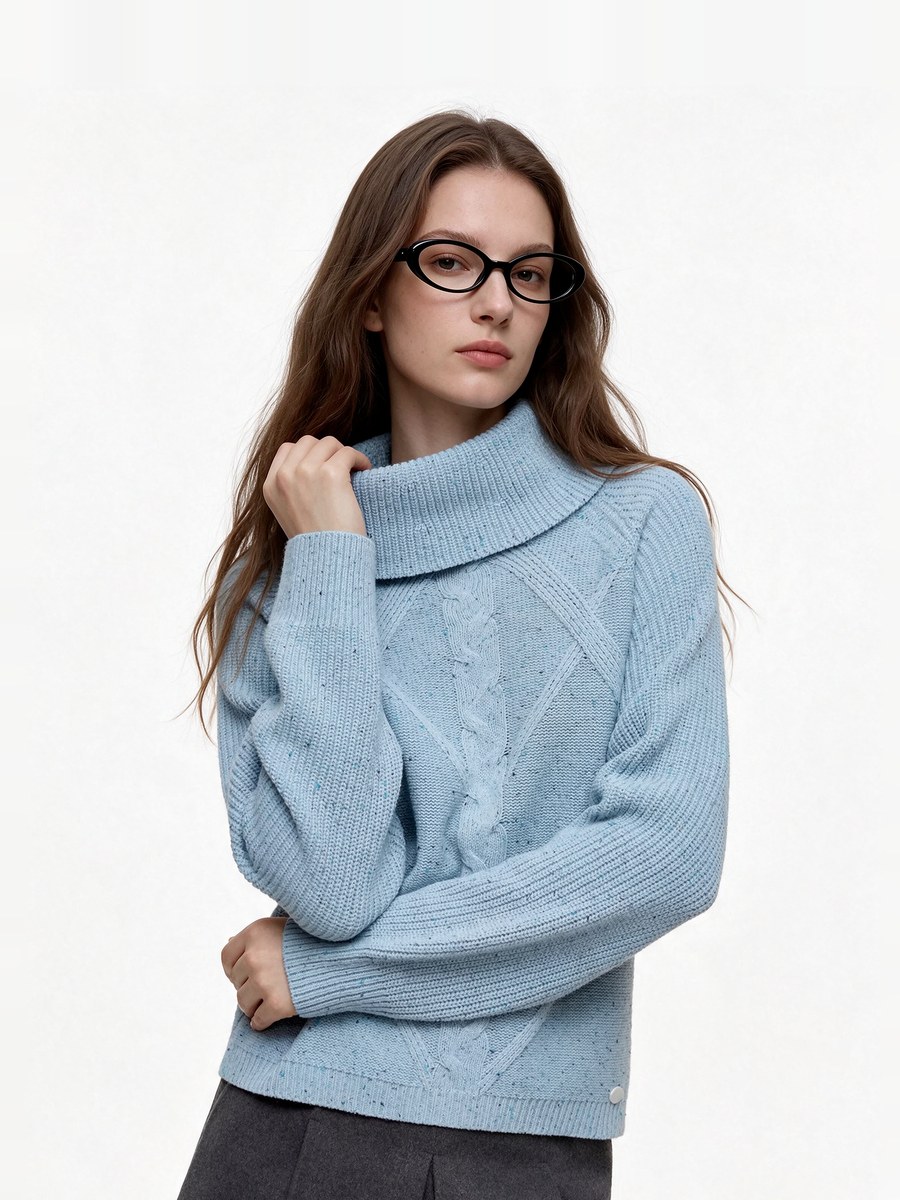
From goat to yarn
Where cashmere comes from and how it is made.
The undercoat is combed or sheared during the spring moult. After sorting and scouring, the coarse guard hair is removed, a step called dehairing, and the clean fibre is ready to be spun into yarn.
A goat gives only about 150 g of cashmere a year, which is one reason the fibre is expensive. China is the largest producer and Mongolia the second. Read about Qinghe, China’s cashmere county, in our guide to sweater manufacturers in China.
Quality
What decides cashmere quality and price.
Two sweaters can both be 100% cashmere and still feel and wear very differently. These are the factors that make the difference.
| Factor | What to ask for | Why it matters |
|---|---|---|
| Fineness | The average fibre diameter in microns. In the US, fibre sold as cashmere must average 19 microns or less, with no more than 3% of fibres over 30 microns; the finest grades are around 14 microns | Finer fibre feels softer and costs more |
| Fibre length | Longer fibres | Long fibres spin a stronger yarn that pills less; short fibres pill sooner |
| Dehairing | Few coarse guard hairs left in the fibre | Coarse hairs make the yarn prickle |
| Colour | Natural white fibre for pale and bright colours | White fibre can be dyed to any shade; darker natural fibre suits darker colours |
| Yarn | Yarn count, ply and twist | They change the handle, the weight and how quickly a sweater pills |
| Knitting and finishing | Knit density and washing | Washing softens the handle; the washed sample shows the final result |
Shops often sell cashmere as grade A, B or C, but these grades are not a fixed standard. Ask for the fibre diameter, the fibre length and the yarn count instead.
Blends
100% cashmere or a cashmere blend?
Pure cashmere gives the softest handle. Blends lower the price and change how the knit behaves: wool–cashmere is warmer for its price and holds its shape, cashmere–silk adds sheen and drape, and brushed wool blends with a little cashmere give a soft, airy surface. Our sample collection runs from 100% cashmere to blends with 5% cashmere.
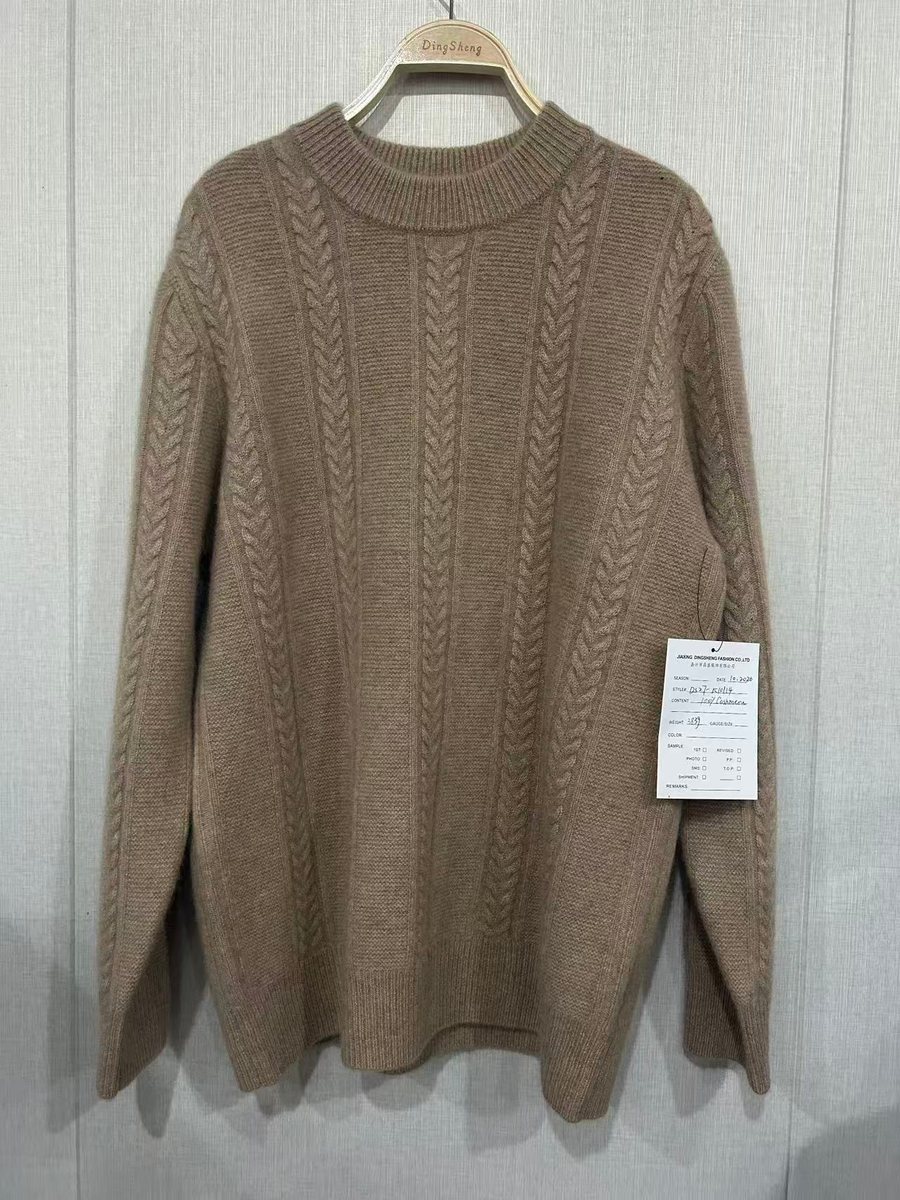
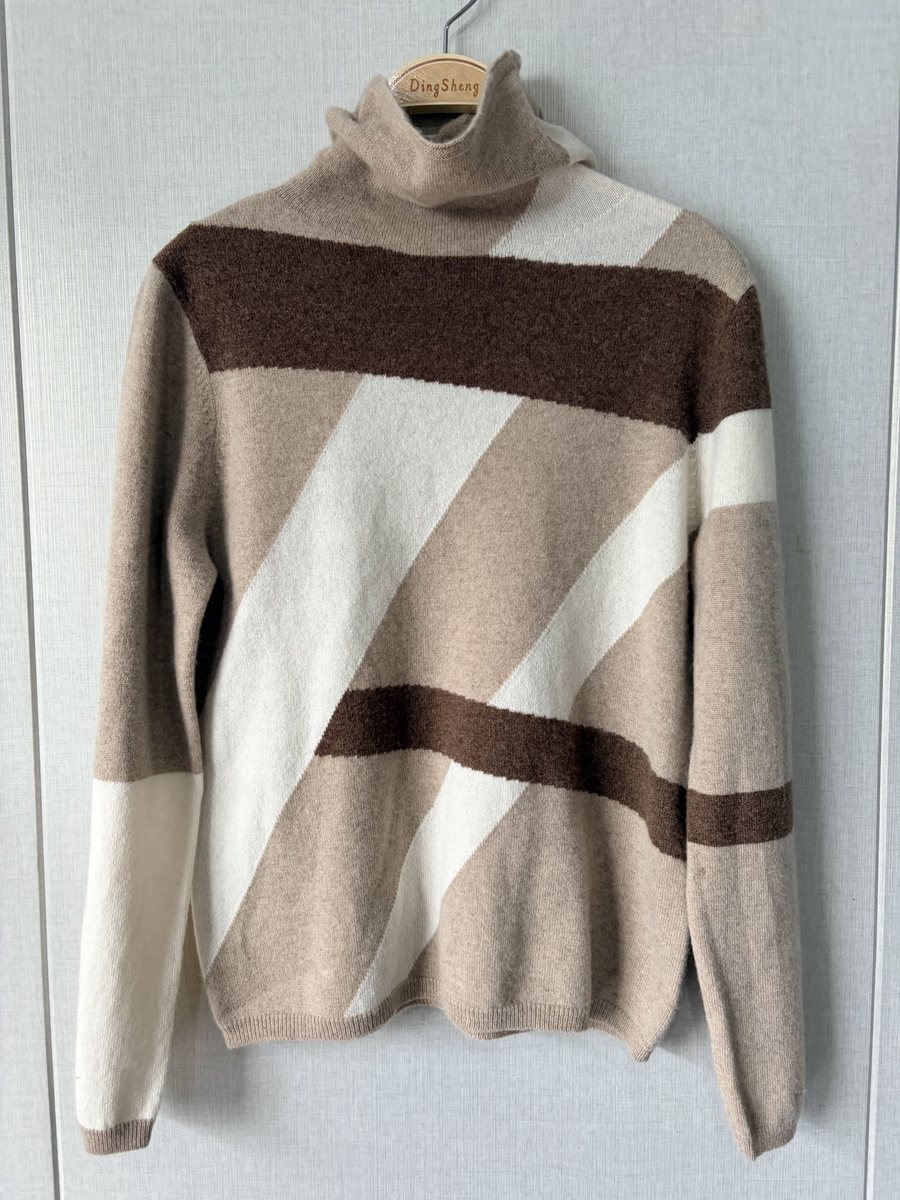
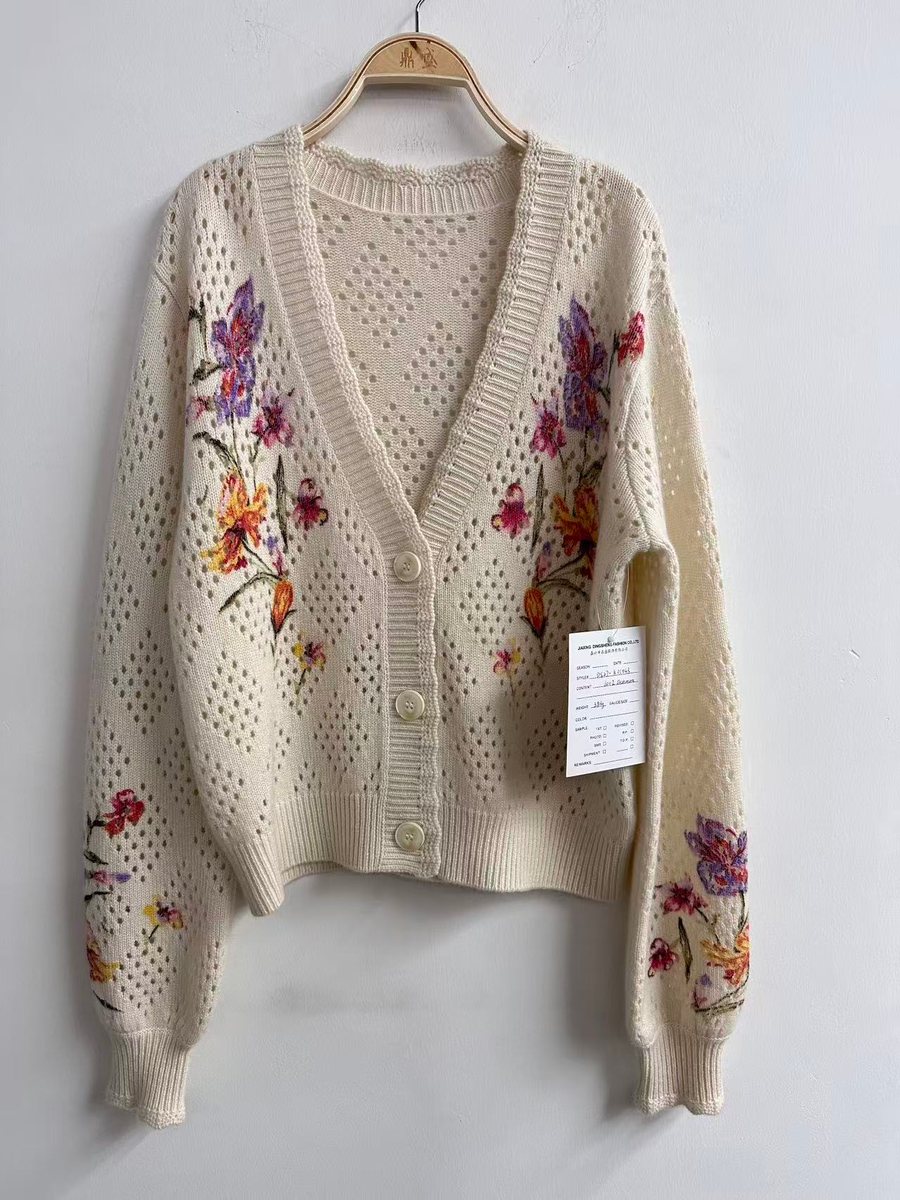
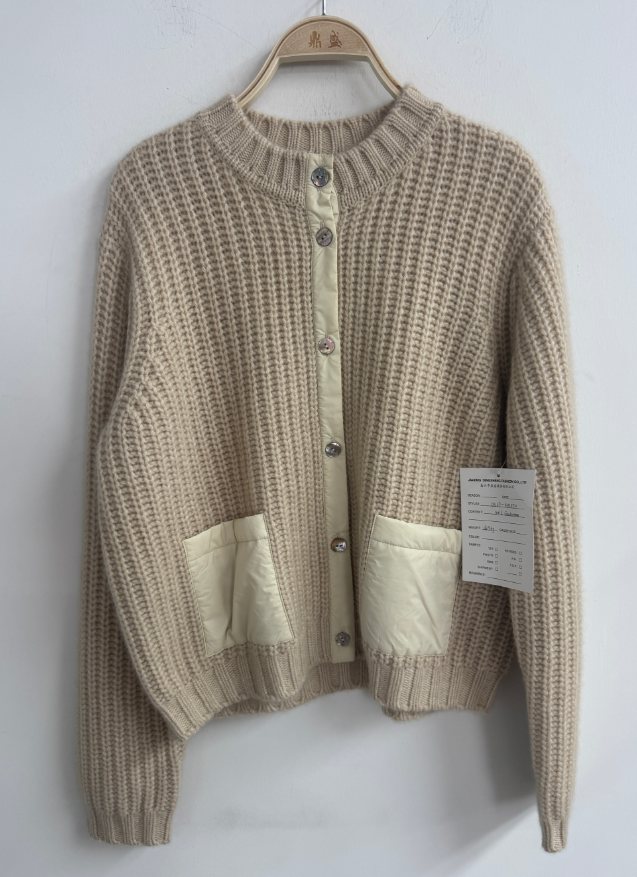
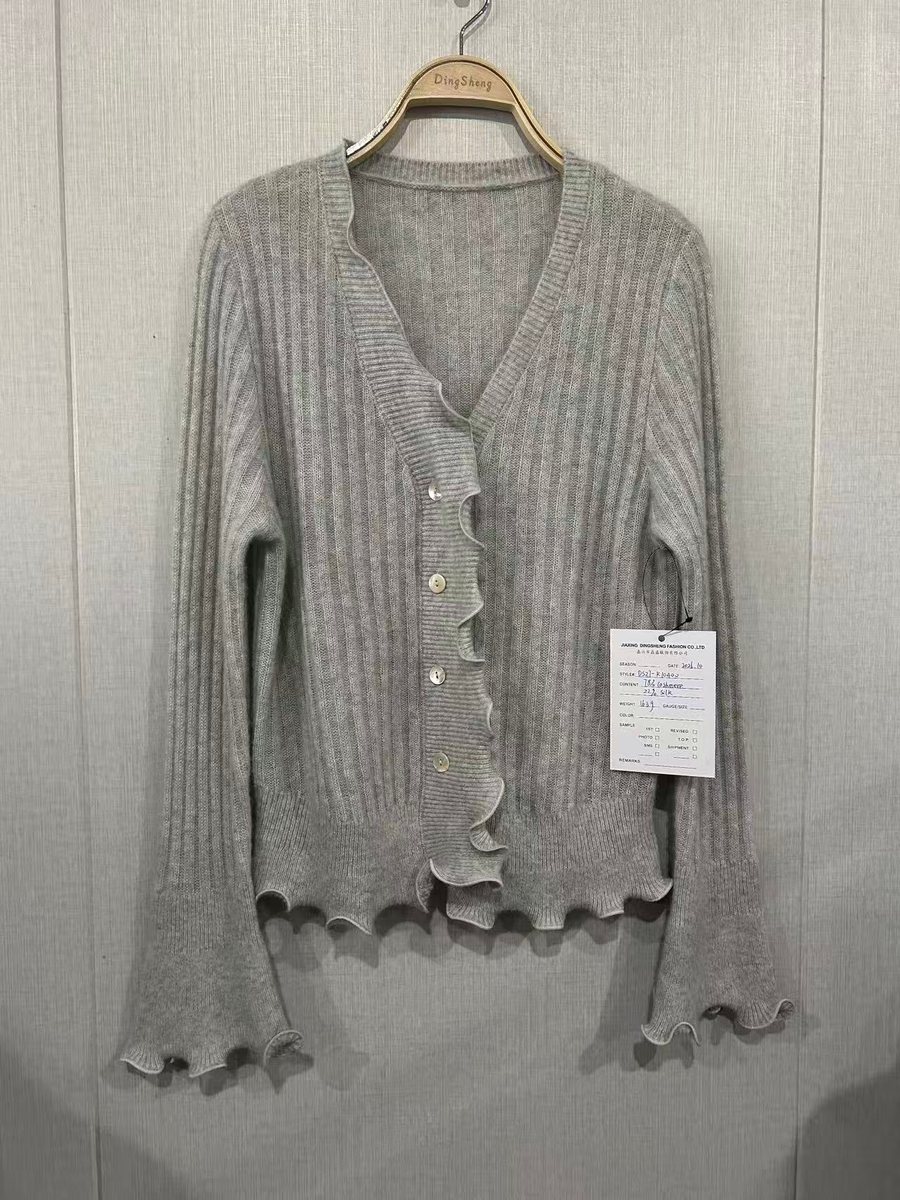
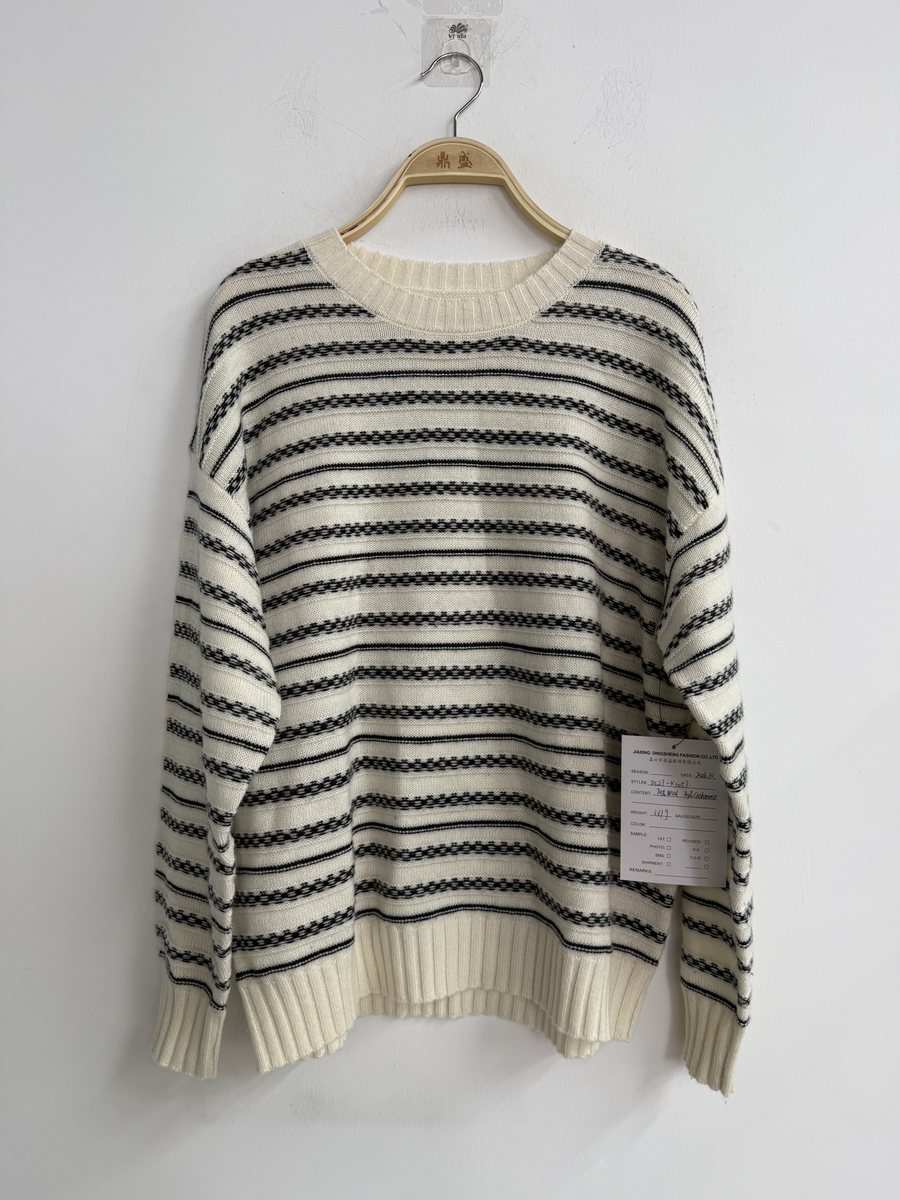
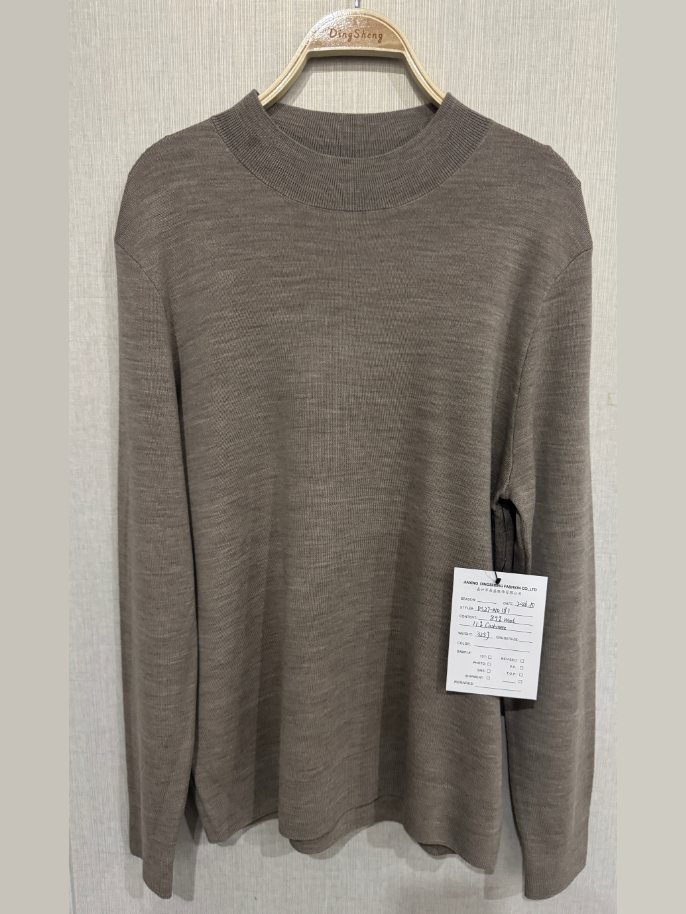
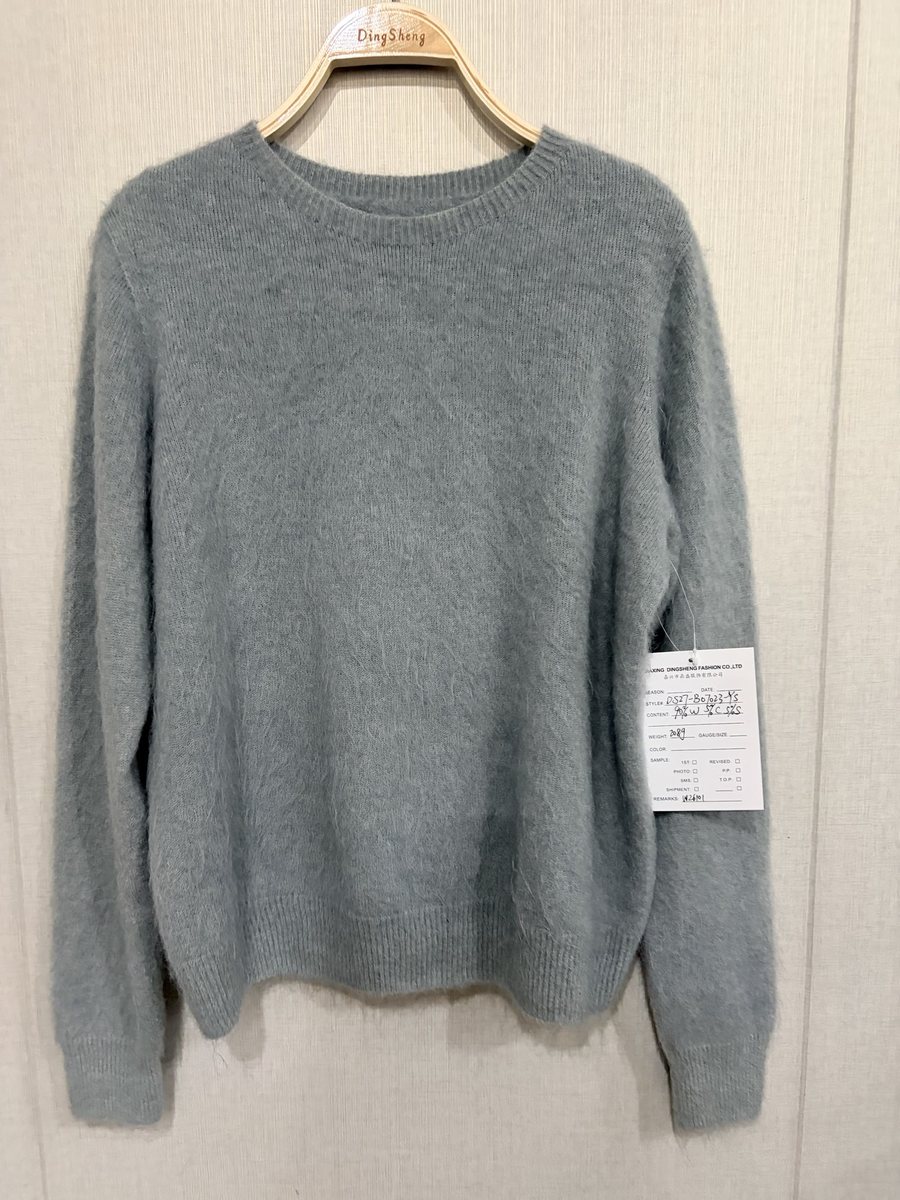
Whatever the blend, the care label must show the real cashmere percentage, and the product name should not suggest more cashmere than the sweater contains.
Development
What to agree before you develop cashmere knitwear.
- Yarn: the composition, the yarn count and the spinner. If quality matters at your price point, ask for the fibre diameter and length.
- Gauge: we knit cashmere from 3GG to 16GG, from fine layering knits to soft chunky cardigans; see sweater gauge explained.
- Swatch and washed sample: we confirm yarn, gauge and handle on a swatch before the first sample, then approve a washed sample so you see the final handle and size.
- Pilling: agree the test method and the minimum grade before bulk; see how to stop sweaters pilling.
- Colour: dyed-to-order cashmere yarn can add a mill minimum per colour; stock colours keep the minimum low.
- Certification: for animal-welfare or sustainability claims, ask before sampling about certified cashmere, such as the Good Cashmere Standard or the Sustainable Fibre Alliance standard, or about recycled cashmere; see certified yarns.
- Minimums: 300 pieces per style, from 150 pieces per colour; smaller trial orders are welcome at a higher unit price.
See our custom cashmere sweaters, or compare the two fibres in cashmere vs merino wool.
FAQ
Cashmere questions.
Is cashmere wool?
Cashmere is goat hair, not sheep’s wool. US labelling rules treat it as a specialty wool fibre, so a label may call it cashmere or wool; if it says cashmere, it must give the percentage.
Where does cashmere come from?
From the soft undercoat of cashmere goats, mostly in China and Mongolia. The fibre is combed or sheared in spring, then scoured and dehaired before it is spun.
Why is cashmere so expensive?
A goat gives only about 150 g of cashmere a year, and the fine undercoat has to be separated from the coarse hair. Finer, longer and white fibre costs the most.
Is cashmere warmer than wool?
Cashmere is very warm for its weight, so a light cashmere sweater can feel as warm as a heavier wool one. Wool–cashmere blends combine warmth with a lower price.
What is the minimum order for cashmere sweaters?
300 pieces per style, from 150 pieces per colour. Smaller trial orders are welcome at a higher unit price, and dyed-to-order cashmere yarn can add a mill minimum per colour.
Sources
Sources.
- DNFI (Discover Natural Fibres Initiative), “Cashmere”. Read
- Wikipedia, “Cashmere wool”. Read
- US Code, 15 U.S.C. § 68b, Wool Products Labeling Act (cashmere). Read
- US Federal Trade Commission, “Threading Your Way Through the Labeling Requirements Under the Textile and Wool Acts”. Read
- FashionUnited, “Aid by Trade Foundation introduces world’s first cashmere standard”, January 2020. Read
- Control Union, “SFA Sustainable Cashmere Standard”. Read
Keep reading
Start a project