Sweater guide
Types of Sweaters: Styles, Necklines, Knits and Yarns.
Sweaters are grouped in five ways: how they are built, the neckline, the knit stitch or pattern, the gauge and the yarn. This guide explains each type of sweater, what it looks like and how it is made, from the point of view of a factory that knits all of them.
 By Marcia Lee, Business Manager at Knitwear World · Updated October 2026
At a glance
Five ways to describe a sweater.
Most sweater names combine several of these at once. A “cream cable-knit crew-neck pullover in wool” tells you the construction (pullover), the neckline (crew), the stitch (cable) and the yarn (wool). Add the gauge, and a factory knows almost exactly what to make.
| Group | What it describes | Examples |
|---|---|---|
| Construction | How the sweater opens and what it covers | Pullover, cardigan, zip-up, vest, polo sweater, hoodie, sweater coat, poncho |
| Neckline | The shape of the neck opening and collar | Crew, V-neck, turtleneck, mock neck, cowl, boat neck, henley, shawl and polo collars |
| Knit and pattern | The stitch structure and surface | Jersey, rib, cable, waffle, pointelle, jacquard, intarsia, brushed |
| Gauge | How fine or chunky the knit is | Chunky 3–5GG, mid-gauge 7GG, fine 12–16GG |
| Yarn | The fibre or blend | Wool, merino, cashmere, cotton, linen, viscose, mohair and blends |
Construction
Sweater types by construction.
Construction is the first thing a buyer and a factory agree on, because it decides the pattern pieces, the trims and how the panels are joined.
Pullover (jumper)
A pullover has no front opening and is pulled on over the head. It is the most common type of sweater and the base for most necklines and stitches below. In the UK and Australia a pullover is usually called a jumper. See our pullover sweaters.
Cardigan
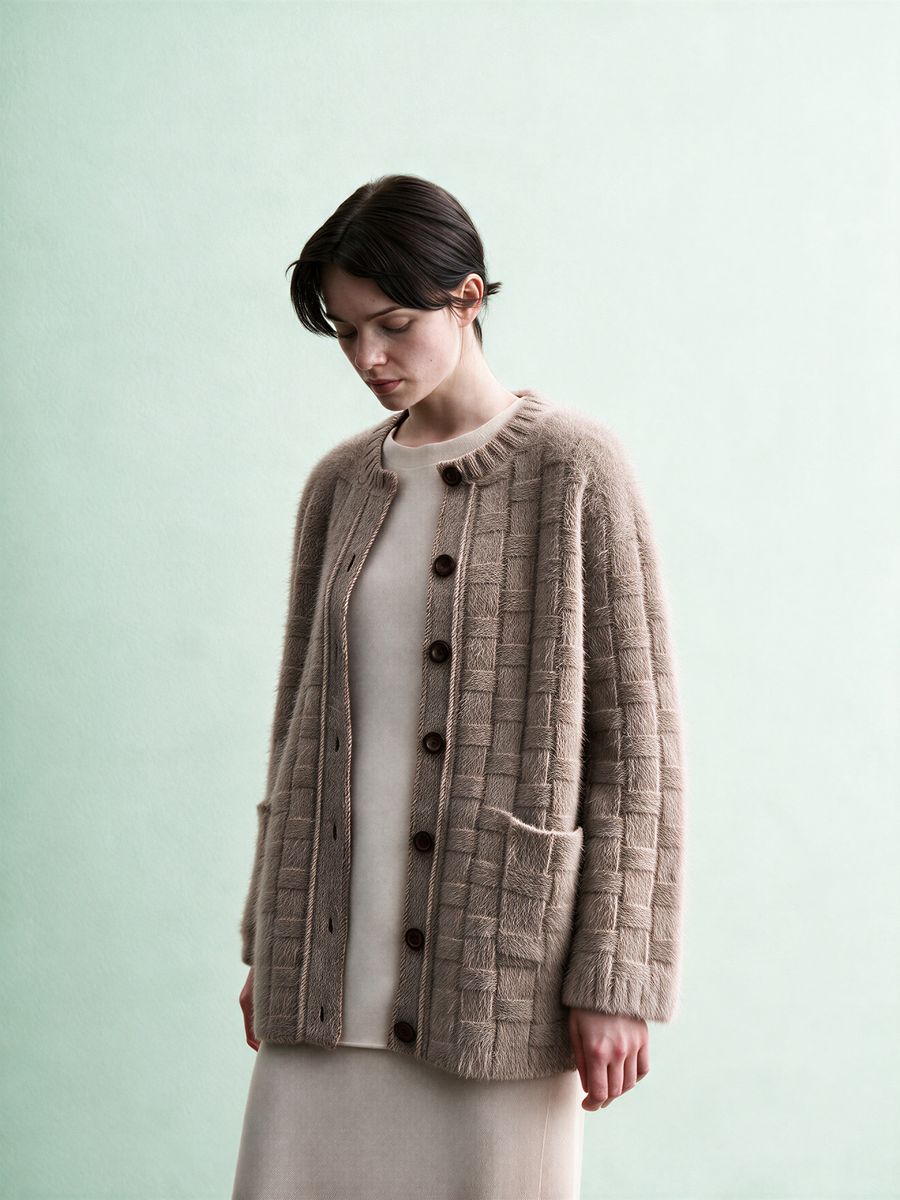
A cardigan opens at the front and closes with buttons, a zip or a tie, or is worn open. Common shapes include button-through, cropped, longline, oversized and wrap cardigans. The placket, buttons and pockets decide how a cardigan looks, so they are confirmed on the first sample. See our cardigans.
Zip-up and half-zip
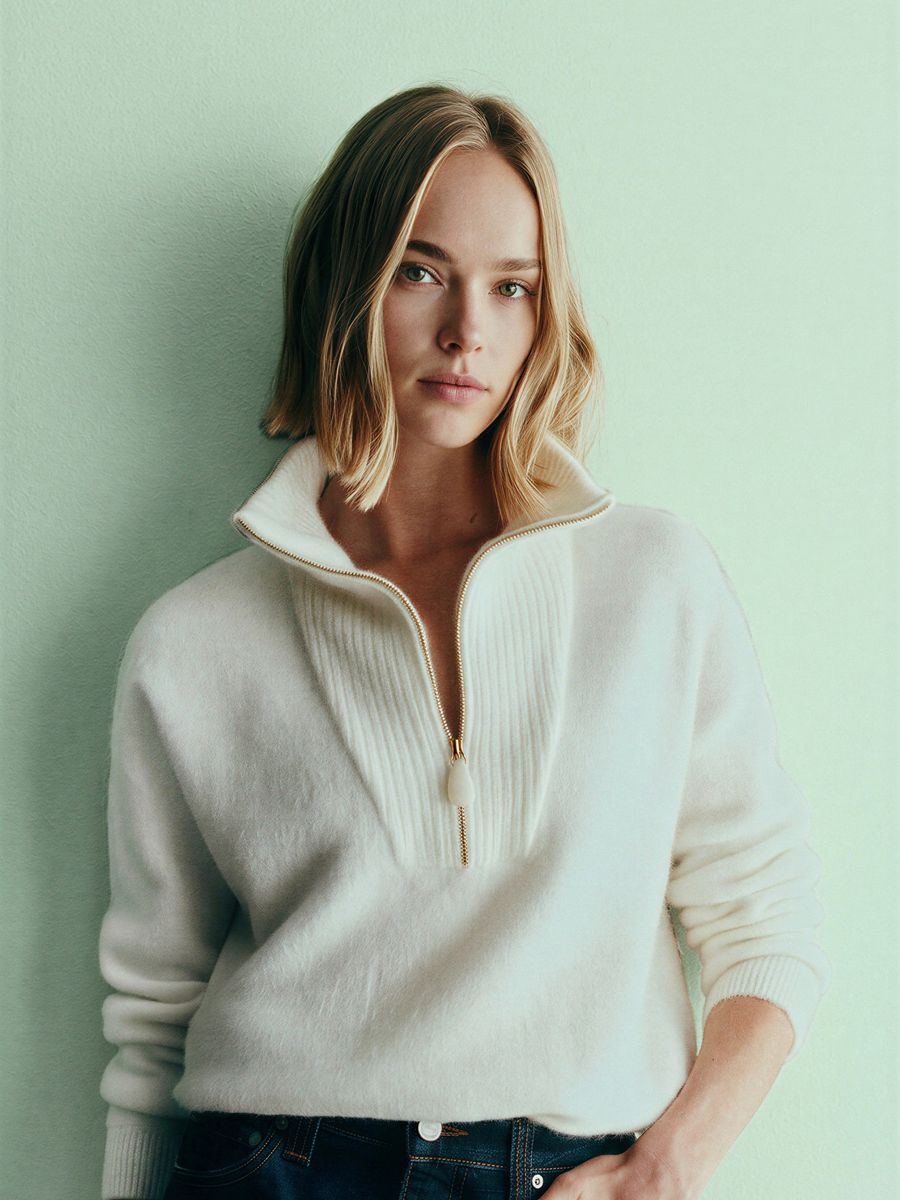
A full-zip sweater opens like a jacket; a half-zip or quarter-zip has a short zip at the neck. Both are staples in menswear and in relaxed, sporty ranges.
Sweater vest
A sweater vest, or slipover, has no sleeves and is usually worn over a shirt or a top. V-neck and crew-neck vests are the classics; button-front knit vests look closer to a waistcoat.
Polo sweater
A polo sweater, or knit polo, has a shirt-style collar and a short button or zip placket, in short or long sleeves. The collar has to stay flat after washing, so collar construction matters more than on any other type. See our knit polo shirts.
Knitted hoodie
A knitted hoodie has a hood, often with a drawcord and a pouch pocket. Unlike a sweatshirt hoodie cut from jersey fabric, it is knitted as shaped panels on a flat knitting machine and then linked together.
Sweater coat and long cardigan
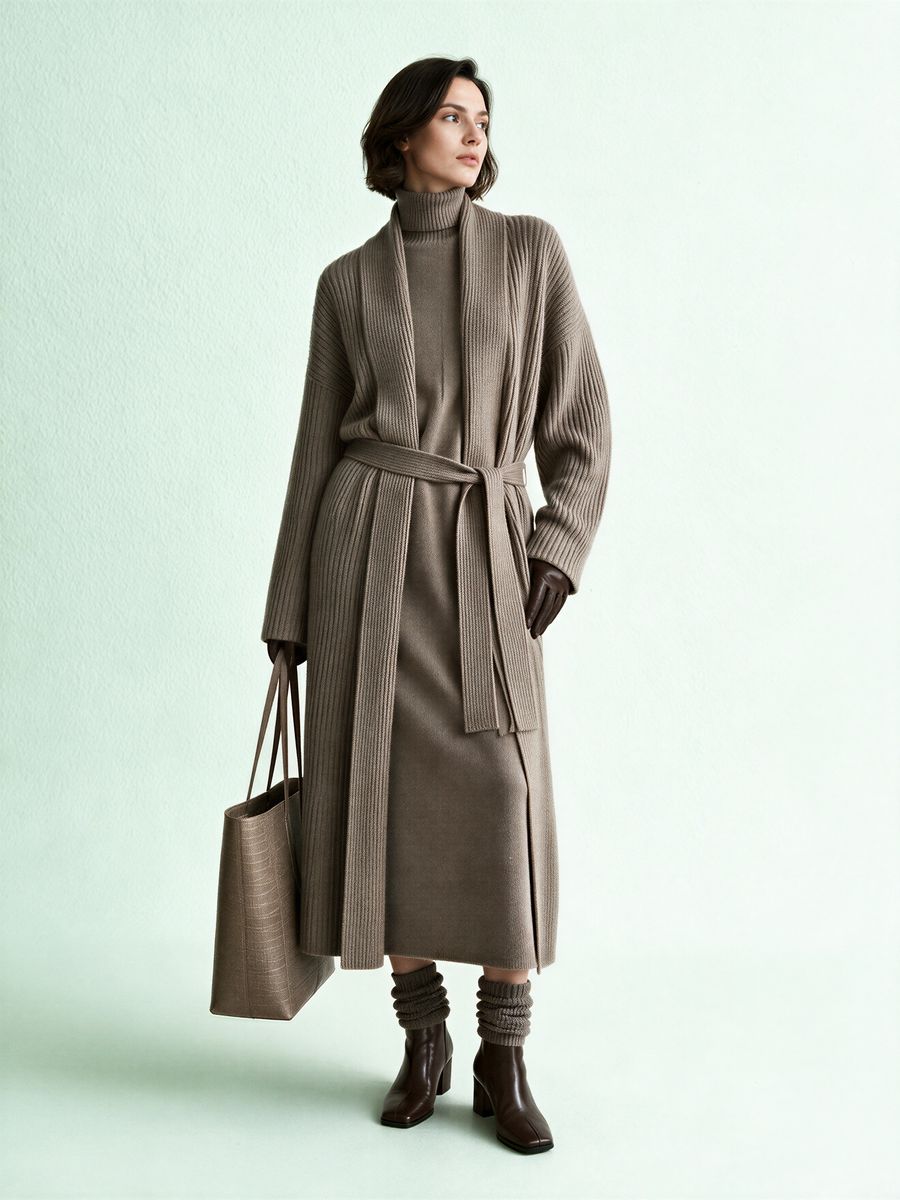
A sweater coat is a coat-length knit, usually in a heavier gauge so it hangs like outerwear but feels like a sweater. See our sweater coats.
Poncho, cape, wrap and shrug
These open shapes are worn over other layers. A poncho or cape drapes from the shoulders, a wrap ties or crosses at the front, and a shrug is a short, cropped layer that covers the arms and shoulders.
Knit sets, sweater dresses and skirts
Matching tops, cardigans, skirts and trousers knitted in the same yarn sell as sets or twinsets. A sweater dress is simply a sweater long enough to wear on its own.
Necklines
Sweater necklines and collars.
The neckline is knitted as a separate trim, usually in rib, and linked to the body. A clean, even neck trim is one of the first quality checks on any sweater.
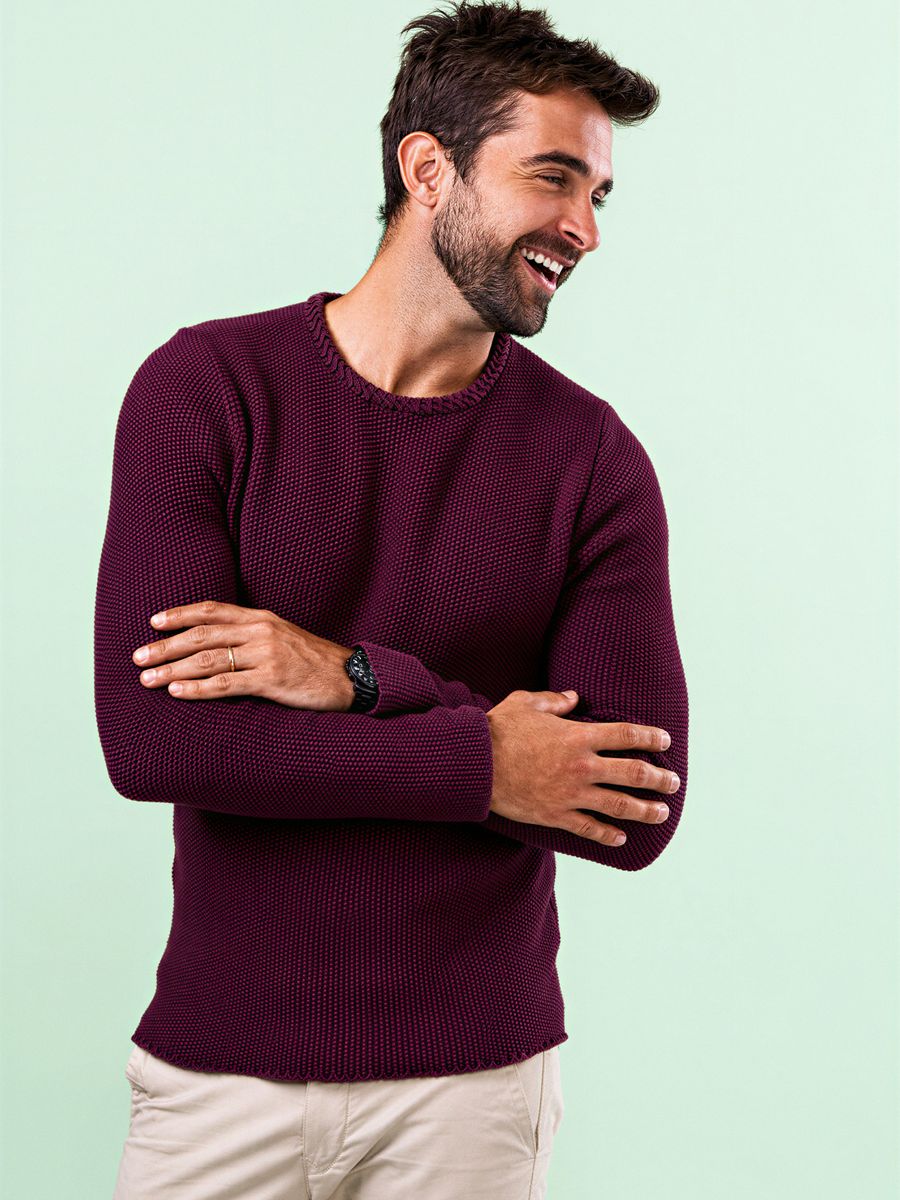
- Crew neck. A round neckline that sits close to the base of the neck. The most versatile choice for both men’s and women’s ranges.
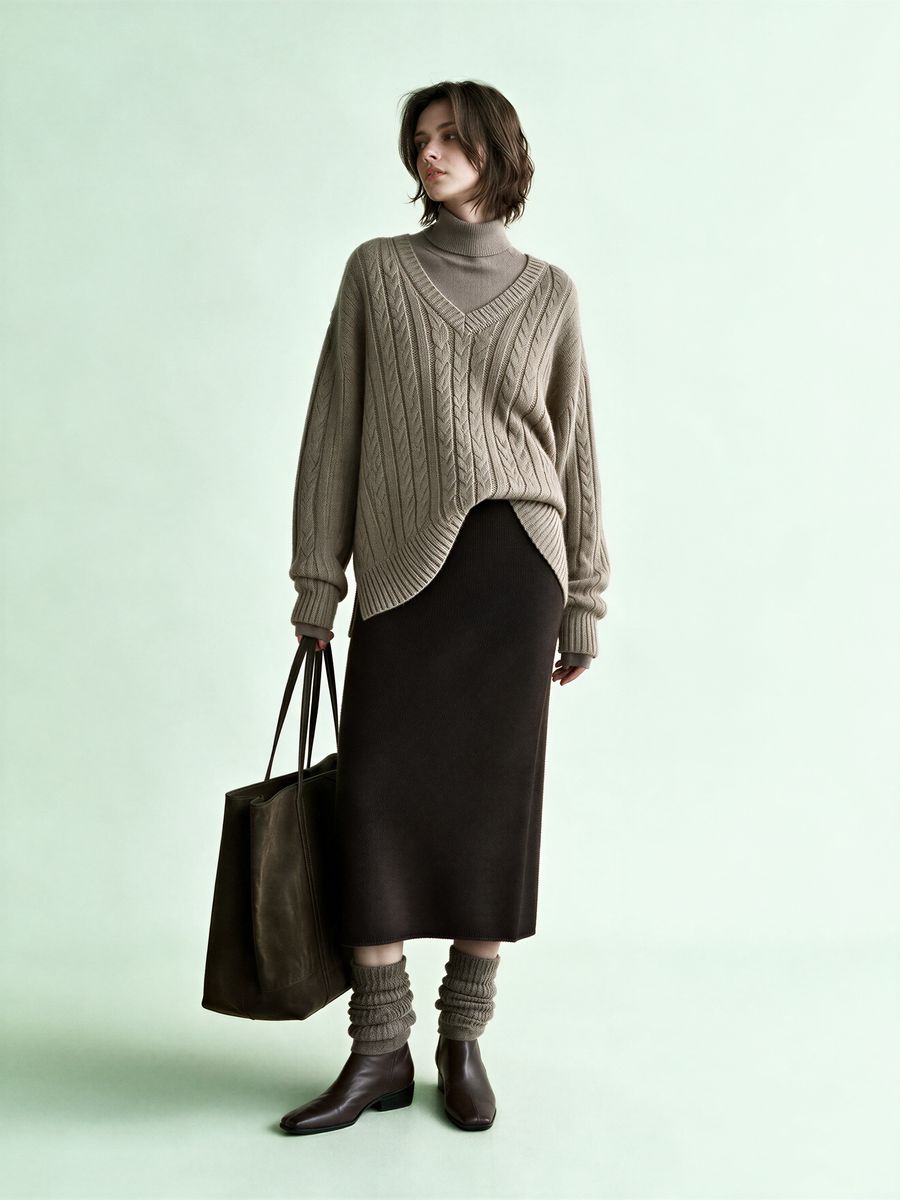
- V-neck. A V-shaped opening, deep or shallow. Easy to layer over a shirt or a camisole.
- Turtleneck. A tall tube of rib that folds over on itself. In the UK it is often called a roll neck or polo neck.
- Mock neck. A short stand-up collar that is not folded over; also called a funnel neck.
- Cowl neck. A loose, draped collar that falls in soft folds around the neck.
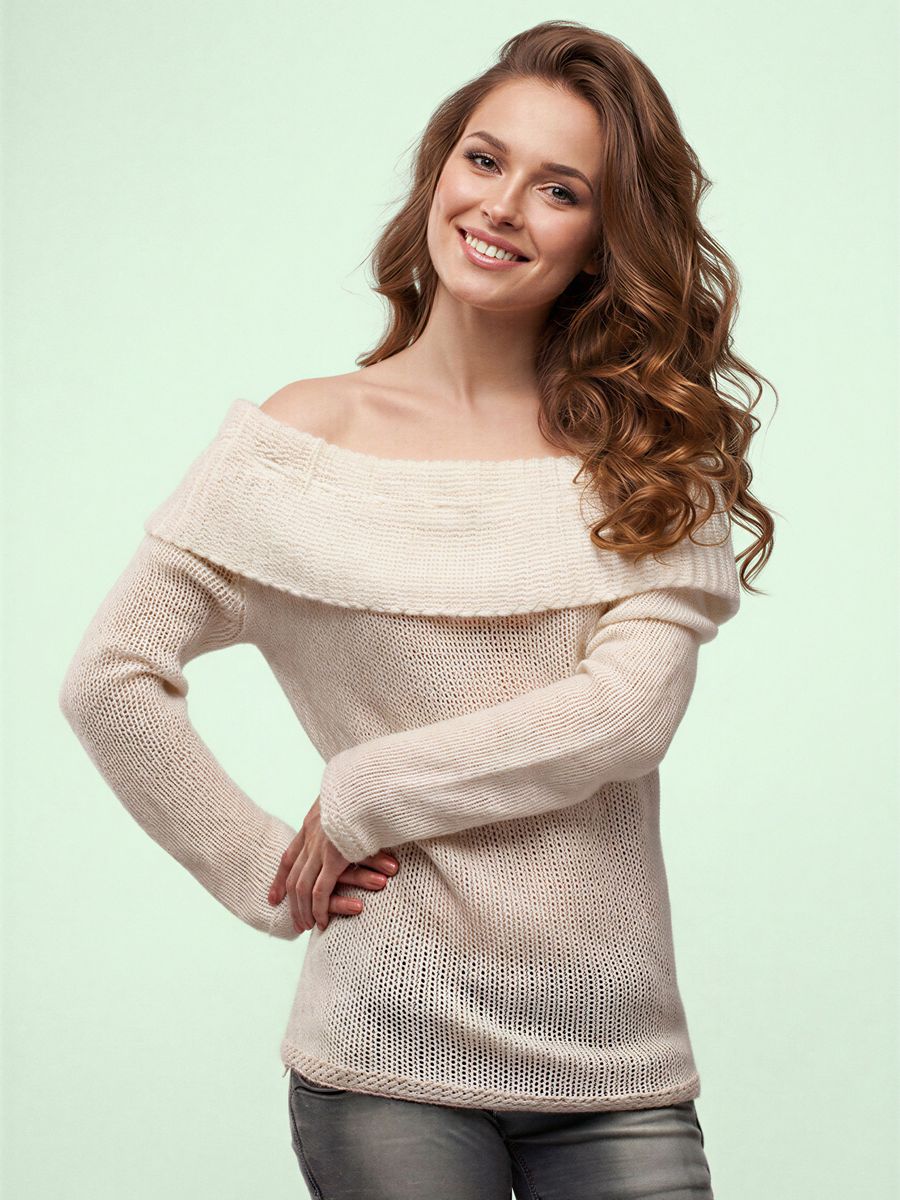
- Boat neck. A wide, shallow neckline from shoulder to shoulder. Off-shoulder styles take it further.
- Scoop neck. A lower, rounded neckline, common on lighter tops and layering pieces.
- Henley. A round neckline with a short button placket and no collar.
- Shawl collar. A wide rolled collar that continues down the front, most often on cardigans and heavier knits.
- Polo collar. A shirt-style collar with a placket, as on a polo sweater.
Knits and patterns
Knit stitches and sweater patterns.
The stitch gives a sweater its surface, weight and stretch. On computerized flat knitting machines, most of these can be combined in one garment, for example a cable body with rib trims.
Jersey
Plain knit with a smooth face. It is the lightest construction and the base for most essentials.
Rib
Alternating columns of knit and purl stitches, such as 1×1 or 2×2 rib. Rib stretches and recovers, so it is used for cuffs, hems and necklines and for fitted bodies.
Cable
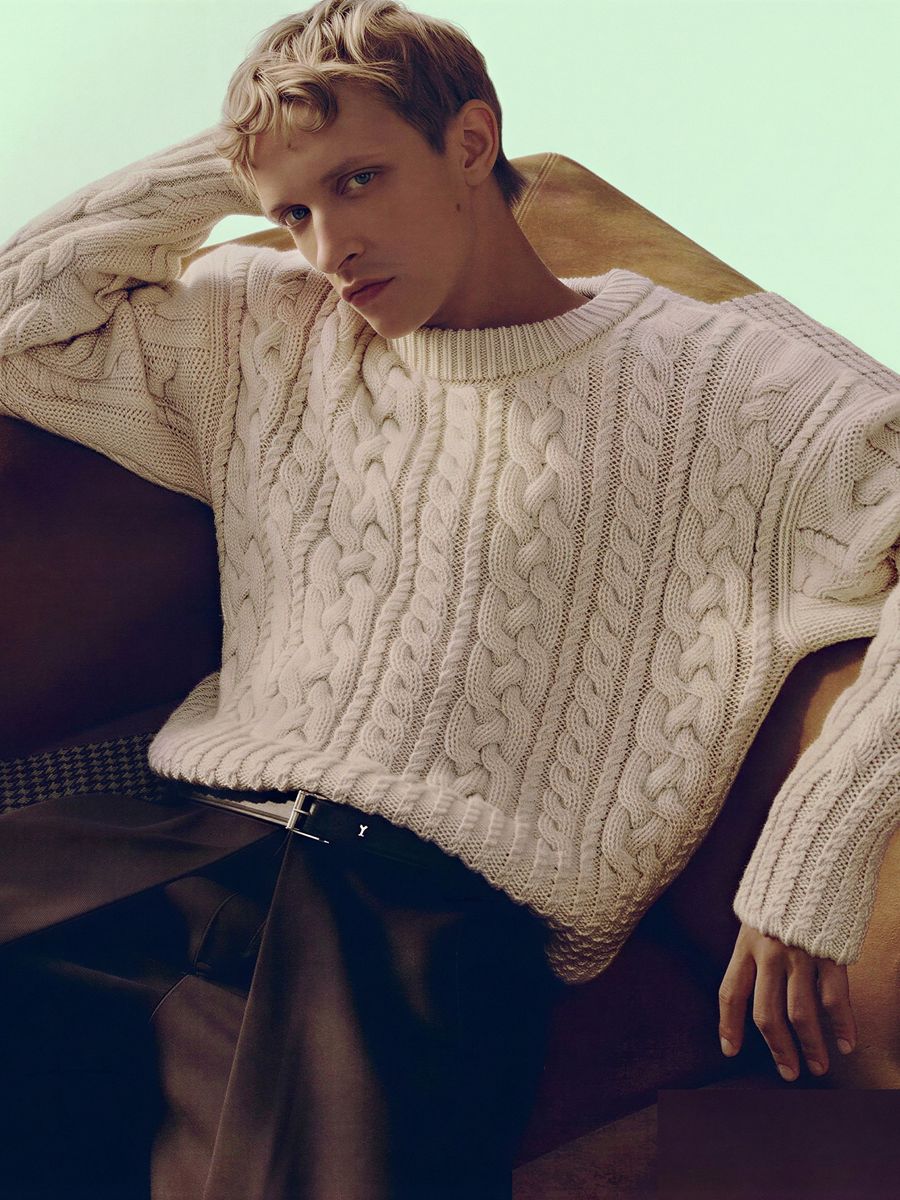
Stitches crossed over each other to form rope-like twists. The fisherman or Aran sweater, named after the Aran Islands off the west coast of Ireland, is the classic cable-knit sweater.
Waffle, bobble and textured stitches
Tuck and other textured stitches create a raised grid, small bobbles or a crinkled surface. They add depth to a single-colour sweater.
Pointelle and open-knit
Small eyelets or larger open patterns, made by moving stitches during knitting. They make a sweater lighter and more airy, and suit spring and summer knits.
Jacquard: Fair Isle, argyle and Nordic
Jacquard knits two or more colours into the fabric to form a pattern. Fair Isle sweaters, named after Fair Isle in Shetland, use bands of small motifs; argyle uses diamonds; Nordic designs use stars, snowflakes and yokes. We knit double jacquard in up to 4 colours. Read how jacquard sweaters are made.
Intarsia
Separate blocks of colour knitted side by side without yarn floating at the back. It suits large motifs, colour-blocking and knitted logos. See our jacquard and intarsia knitwear.
Brushed knits
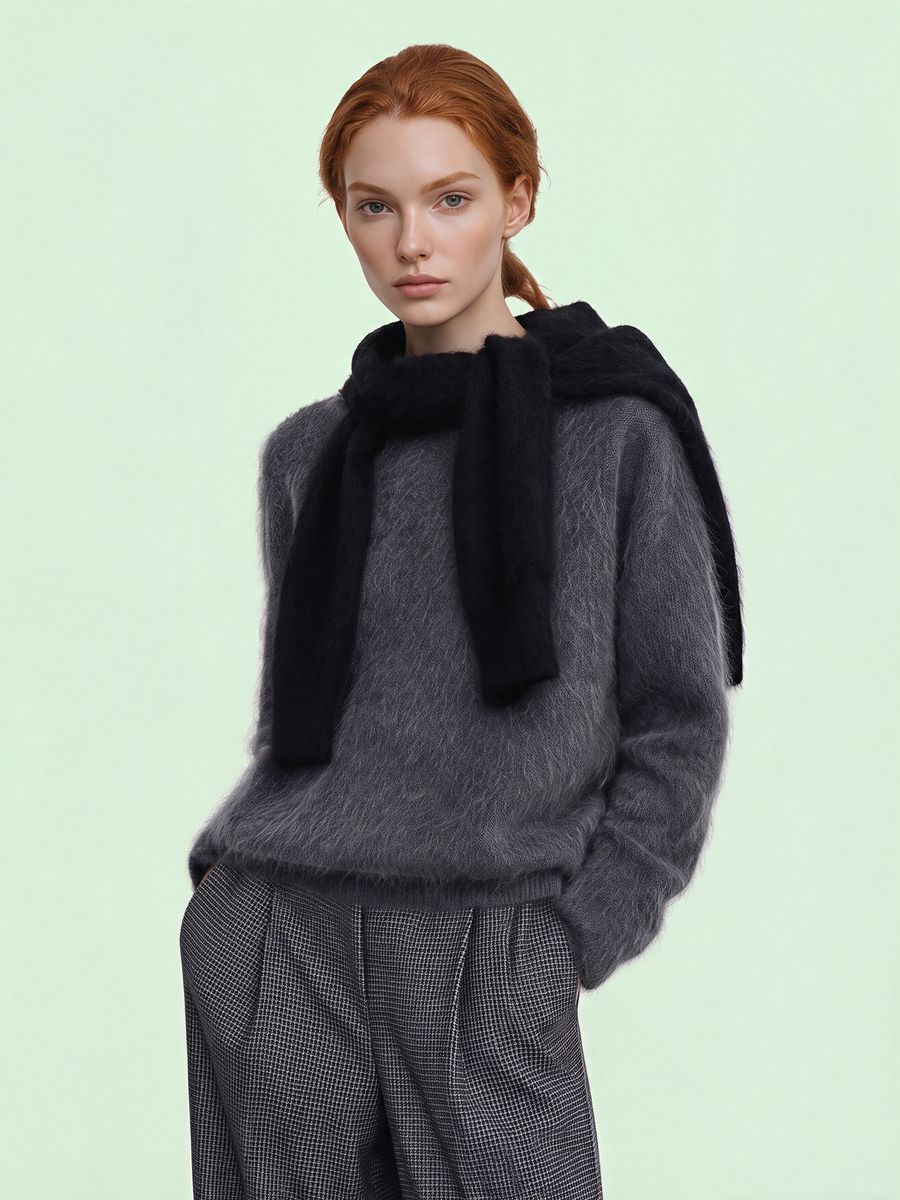
After knitting, the fabric is brushed to raise the fibres into a soft, hazy surface. Brushed knits are often made in wool, mohair or cashmere blends, plain or printed.
Printed and embellished sweaters
Some patterns are added after knitting: prints, embroidery, beads, sequins and appliqué. They let a simple knit carry a detailed design.
Gauge
Chunky, mid-weight and fine-gauge sweaters.
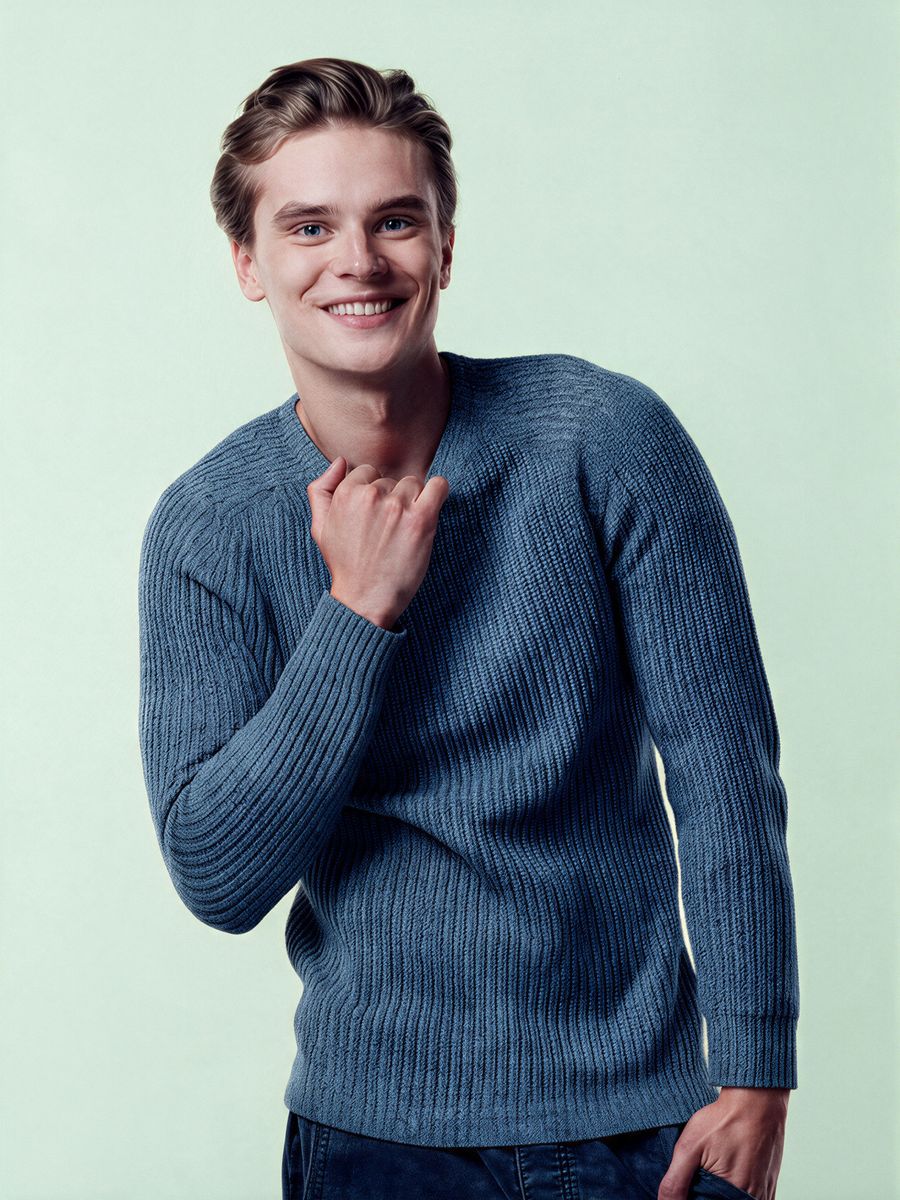
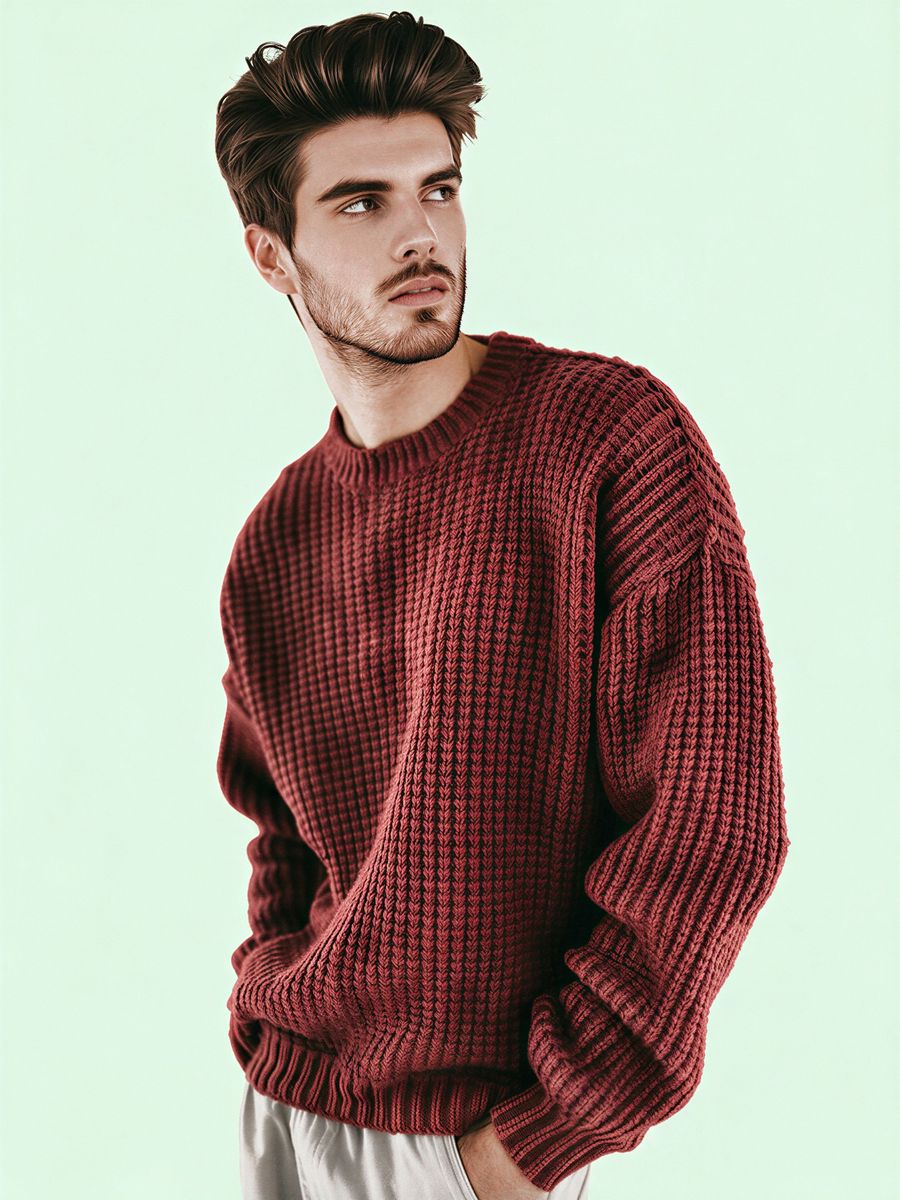
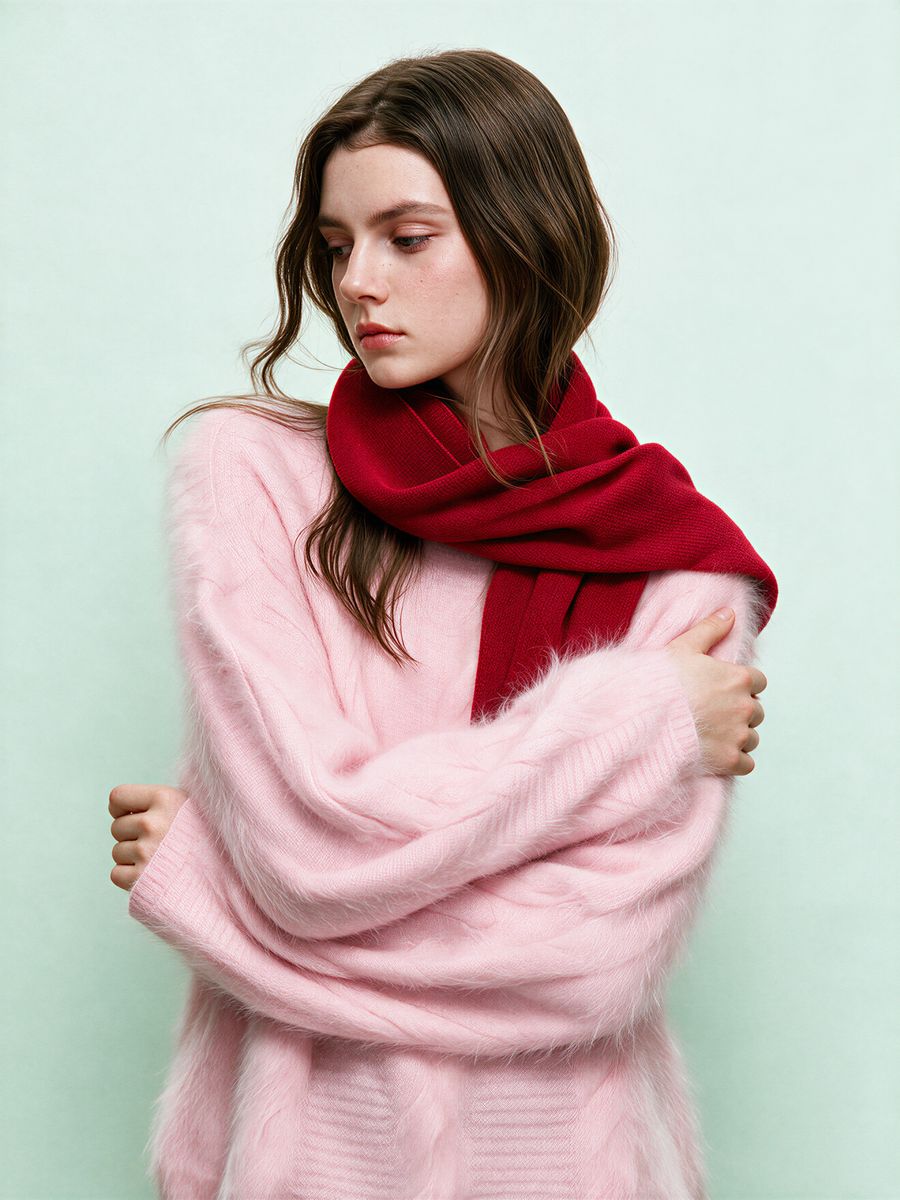
Gauge, written as GG, is the number of needles per inch on the knitting machine. A lower number means thicker yarn and a chunkier knit; a higher number means a finer, smoother fabric. Gauge changes the look, the weight and the season of a sweater, and it affects cost through yarn use and knitting time.
| Gauge | Look and feel | Typical uses |
|---|---|---|
| 3–5GG | Chunky, thick and warm, with bold stitches | Winter cables, sweater coats, statement knits |
| 7GG | Mid-weight, the everyday sweater | Crew necks, cardigans, textured pullovers |
| 12GG | Fine and smooth | Layering knits, knit polos, light cardigans |
| 14–16GG | Very fine, close to a jersey shirt | Premium fine-gauge essentials in merino, cashmere or silk blends |
We knit from 3GG to 16GG on 200 computerized flat knitting machines, so one collection can mix chunky and fine pieces.
Yarns
Sweater materials.
- Wool and merino. Warm, elastic and breathable. Merino is a finer, softer wool for next-to-skin sweaters.
- Cashmere. Very soft and light for its warmth, from the fine undercoat of cashmere goats. Used pure or blended for premium ranges; see our cashmere sweaters.
- Cotton. Breathable and easy to care for, for spring, summer and transitional knits.
- Linen and linen blends. Cool and crisp, for summer knits with a dry hand.
- Viscose, lyocell and silk blends. A fluid drape and a soft sheen, for lightweight tops and cardigans.
- Mohair and brushed blends. A light, hairy halo that gives brushed knits their softness.
- Acrylic, nylon and polyester blends. Value, easy care and shape retention; recycled polyester is available for more sustainable ranges.
For a side-by-side comparison, read the best yarn for sweaters, and for certified options, GRS, RWS and organic cotton yarns.
Men and women
Types of sweaters for men and women.
Men’s sweaters centre on a smaller set of classics: crew necks, V-necks, quarter-zips, cable and fisherman sweaters, knit polos, cardigans and roll necks, in mid and fine gauges. See our men’s knitwear.
Women’s sweaters cover a wider range of shapes: cropped and oversized pullovers, wrap and off-shoulder styles, camisoles and cardigans worn as twinsets, knit sets, sweater dresses and decorated knits with lace, embroidery or prints. See our women’s knitwear.
For brands
Choosing sweater types for a collection.
A knitwear range usually combines core styles, such as crew necks, V-necks and cardigans in reliable yarns, with a few seasonal statement pieces in jacquard, brushed or embellished knits. Core styles carry the volume; statement pieces give the collection its story.
Our standard MOQ is 300 pcs per style, from 50 pcs per colour, and the first sample is normally ready 3–5 days after the details are confirmed. To start from finished samples, browse our sweater designs, or send your own tech pack for OEM development.
FAQ
Sweater type questions.
How many types of sweaters are there?
There is no fixed number, because each sweater combines a construction, a neckline, a stitch, a gauge and a yarn. There are about nine basic constructions: pullover, cardigan, zip-up, vest, polo sweater, hoodie, sweater coat, poncho or wrap, and knit sets and dresses.
What are other names for sweaters?
In the UK and Australia a pullover is usually called a jumper. Other names include pullover, jersey and knit; knitwear covers the whole category. A cardigan is a sweater that opens at the front, and a turtleneck is called a roll neck or polo neck in the UK.
What are patterned sweaters called?
Most knitted-in patterns are jacquard: Fair Isle (bands of small motifs), argyle (diamonds) and Nordic (stars, snowflakes and yokes). Fisherman or Aran sweaters use cables instead of colour, intarsia sweaters use large blocks of colour, and holiday designs are sold as Christmas sweaters.
Which sweater styles are we developing for the new season?
Our newest sample collection leans towards brushed knits in wool, cashmere and silk blends, knit polos and polo sweaters, pointelle and open-knit tops, and knitwear with lace, embroidery or beading.
What is the difference between a sweater and a cardigan?
A cardigan is a type of sweater that opens at the front. A pullover sweater has no front opening and is pulled on over the head.
Start a project