Knitwear basics
Sweater Gauge Explained.
What gauge (GG) means in knitwear, how 3GG, 7GG, 12GG and 16GG sweaters differ in look, weight and cost, and how to choose a gauge for each style in your collection.
 By Marcia Lee, Business Manager at Knitwear World · Published November 2026
The short answer
Gauge is the number of needles per inch.
Gauge, written as GG, is the number of needles per inch on the knitting machine. A lower number means thicker yarn and a chunkier knit; a higher number means a finer, smoother fabric. A 3GG sweater is a heavy winter knit. A 16GG sweater is light enough to wear as a top.
Gauge changes the look, the weight and the season of a sweater, and it also affects the price. It is one of the first things a factory needs to know, together with the yarn and the stitch.
Gauge chart
From chunky 3GG to fine 16GG.
| Gauge | Look and feel | Typical yarns | Typical products |
|---|---|---|---|
| 3–5GG | Chunky and textured; stitches are easy to see | Thick wool blends, chunky cotton, bouclé and other fancy yarns | Winter pullovers, cable knits, sweater coats, chunky cardigans |
| 7GG | Classic mid-weight sweater | Wool blends, cotton, cotton–acrylic | Everyday pullovers and cardigans, jacquard and Fair Isle styles |
| 12GG | Fine and smooth, good for layering | Merino, cotton, viscose blends, cashmere blends | Fine-gauge pullovers, knit polos, uniform knitwear |
| 14–16GG | Very fine, light and close to a jersey | Fine merino, cashmere, silk blends | Premium fine-gauge essentials, knit tops, light cardigans |
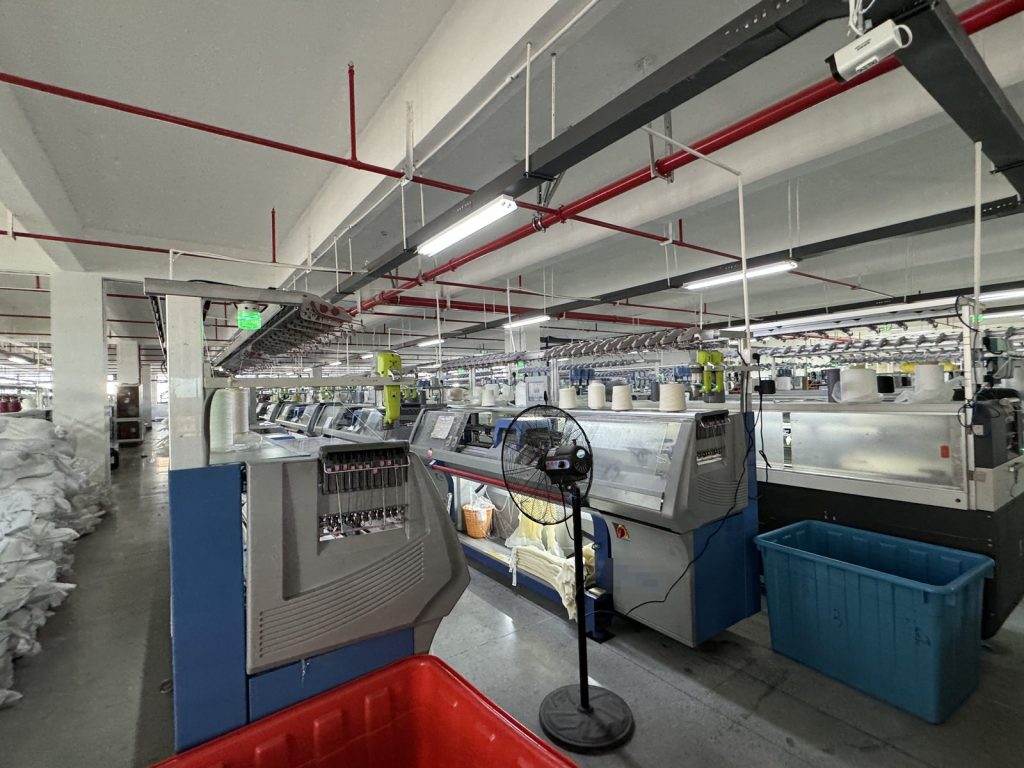
We knit from 3GG to 16GG on 200 computerized flat knitting machines, so one collection can mix chunky and fine pieces.
What gauge changes
Look, weight, pattern detail and cost.
- Look and hand-feel: low gauges show the stitch and feel lofty; high gauges look clean and drape more.
- Weight and season: chunky gauges use more yarn per garment and suit autumn and winter. Fine gauges suit layering and year-round ranges.
- Pattern detail: a finer gauge has more stitches per inch, so jacquard motifs, lettering and logos can be drawn in more detail. On a chunky gauge the same artwork has to be simplified.
- Cost: yarn is the largest part of the cost of most sweaters, so a heavy chunky knit uses more of it. A fine gauge uses less yarn but takes longer to knit and to link. The gauge alone does not make a sweater cheap or expensive; yarn, weight and knitting time together do.
Gauge is not the same as stitch density. On one gauge, a factory can knit tighter or looser within a range, which changes the hand-feel, the weight and how much the fabric pills. We confirm the density on a trial swatch before the first sample. See why sweaters pill and how to prevent it.
Choosing
How to choose a gauge for your style.
- Start from the look: send a reference photo or garment. Our design team reads the gauge, stitch and construction from it.
- Match the yarn: each gauge takes a range of yarn thicknesses. A yarn that is too thick or too thin for the machine will not knit well, so yarn and gauge are chosen together. See the best yarn for sweaters.
- Think about the artwork: detailed jacquard or a small logo needs a finer gauge. Our guide to how jacquard sweaters are made explains the limits.
- Give a target price: quantity and target price decide which yarn and gauge we propose.
Not sure about the gauge? Leave it blank in your tech pack and describe the look you want; we will suggest it. A sketch or reference photo, measurements, target price, quantity and delivery date are enough to start.
Related terms
Fully fashioned, cut-and-sew and whole garment.
Buyers often meet these three terms together with gauge. They describe how a sweater is put together, not how fine it is.
| Construction | How it is made | Strengths | Watch out for |
|---|---|---|---|
| Fully fashioned | Each panel is knitted to its final shape, then the panels are joined loop by loop on a linking machine | Clean, flat seams; little yarn waste; the traditional way to make a sweater | More skilled labour in linking |
| Cut-and-sew | Knitted fabric is cut into panels and sewn together, as in woven garments | Fast for simple shapes and printed or all-over fabrics | Bulkier seams; yarn is wasted in cutting |
| Whole garment | The sweater is knitted in one piece on a special machine, with no side or shoulder seams | No seams; very clean inside | Needs dedicated machines; fewer factories offer it |
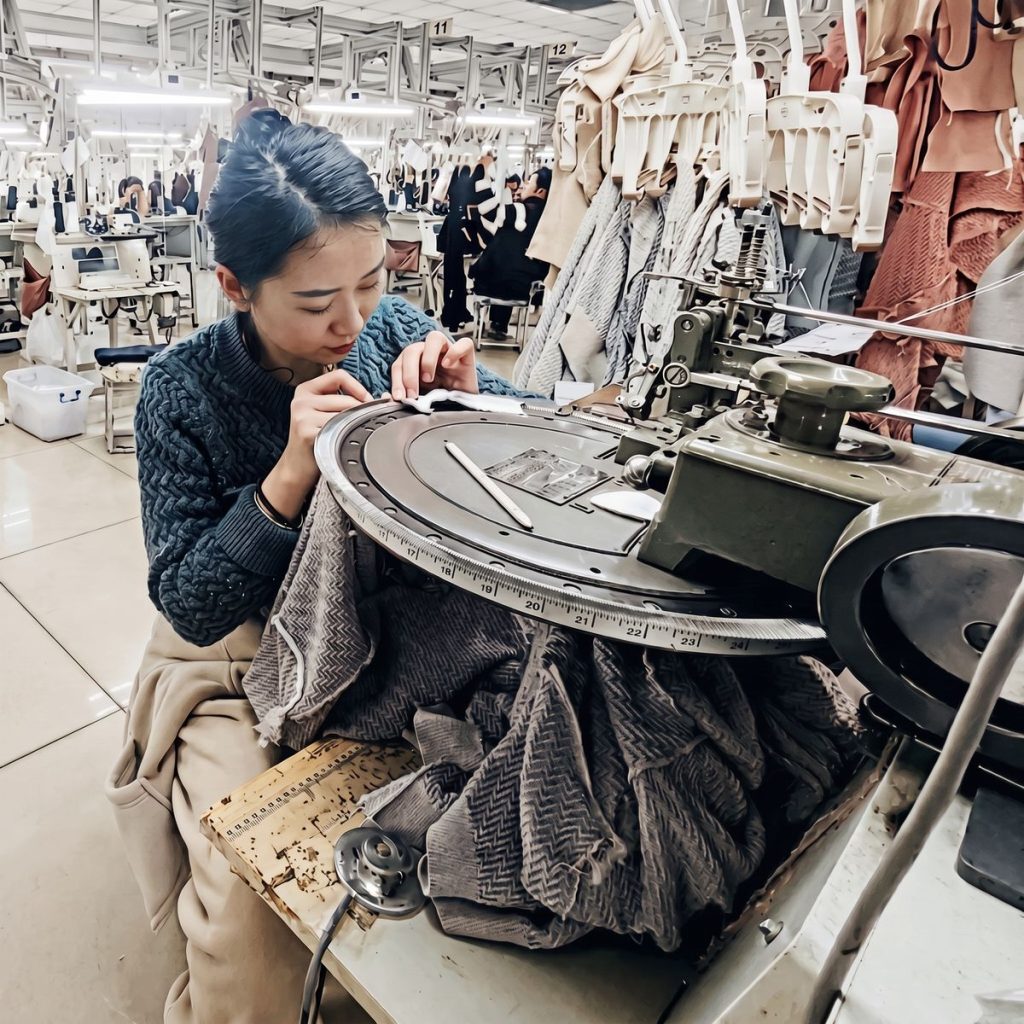
In our factory, technicians write a knitting specification for each style: gauge, stitch density, panel shapes and measurements, and how the panels will be joined. Our guide to the knitwear production process follows a sweater from brief to shipment.
Start a project