Yarn guide
What Is Merino Wool?
Merino wool comes from merino sheep and is the finest sheep’s wool, usually 12 to 24 microns. Here is where it comes from, how it is graded, why it rarely itches, and what to check when you choose merino for a sweater.
 By Marcia Lee, Business Manager at Knitwear World · Published November 2026
The basics
Where merino wool comes from.
Merino is a breed of sheep developed in Spain, where for centuries the flocks were a closely guarded monopoly. In the 18th century the breed spread across Europe, and later to South America, South Africa, Australia and New Zealand. Australia is a leading supplier of fine merino today.
The fleece is scoured to remove grease and dirt, then combed and spun into yarn. Merino fibres are fine and tightly crimped, up to about 40 crimps per centimetre, which gives merino yarn its spring and loft.
Grades
Merino grades by micron.
Merino is graded by the average diameter of its fibres, measured in microns, or thousandths of a millimetre. The finer the fibre, the softer the yarn and the more valuable the wool.
Ultrafine and superfine merino is the softest, for luxury fine-gauge knits worn next to the skin. Fine merino goes into most merino sweaters and cardigans. Medium and strong merino is crisper and harder-wearing, for everyday knits and blends.
Grade names vary between markets, and yarn names such as extrafine are used loosely, so ask for the micron of the yarn and put it in your tech pack.
Comfort
Is merino wool itchy?
Itch comes from coarse fibre ends pressing on the skin, not from wool itself. Fibres coarser than about 30 microns can prickle, and a fabric with more than about 5% of them is generally regarded as uncomfortable. Merino, at 24 microns or finer, sits well below that line, which is why fine merino can be worn next to the skin.
Yarn and knit still matter: a merino blended with coarser fibres, or a loosely knitted surface, can feel scratchy. Ask for a swatch and wear it against your neck before you approve the yarn.
Compare
Merino vs regular wool, lambswool and cashmere.
| Fibre | Comes from | Feel |
|---|---|---|
| Merino | Merino sheep | Fine, soft and springy |
| Crossbred wool | Other sheep breeds | Warm but coarser; can prickle |
| Lambswool | A lamb’s first shearing, at about seven months, from any breed | Soft and elastic |
| Cashmere | The undercoat of cashmere goats | Softest and light for its warmth; more delicate |
For a full side-by-side comparison, read cashmere vs merino wool and what cashmere is.
Care
Does merino wool shrink?
It can. Wool fibres are covered in tiny scales that hook together when the fabric is rubbed in warm water, so untreated merino can felt and shrink in a hot or rough wash. Machine-washable merino has a treatment that removes or coats the scales; chlorine-Hercosett is a common one, and chlorine-free treatments also exist.
Untreated merino is best washed by hand or on a wool cycle in cool water and dried flat. Agree the wash method for the care label, and check a washed sample’s measurements before bulk.
Sourcing
Choosing merino for your sweaters.
- Micron and gauge: finer merino suits finer gauges; we knit premium fine-gauge essentials in merino at 14GG to 16GG. See sweater gauge explained.
- Blends: merino is often blended with cashmere or silk for softness, or with nylon or acrylic for strength and price.
- Certified wool: we source RWS merino through certified yarn suppliers. See certified yarns.
- Colours and minimums: dyed-to-order yarn can add a mill minimum per colour; our MOQ is 300 pieces per style, from 150 pieces per colour.
- Pilling: fine merino can pill, so agree the yarn, knit density and finish in advance. See how to stop sweaters pilling.
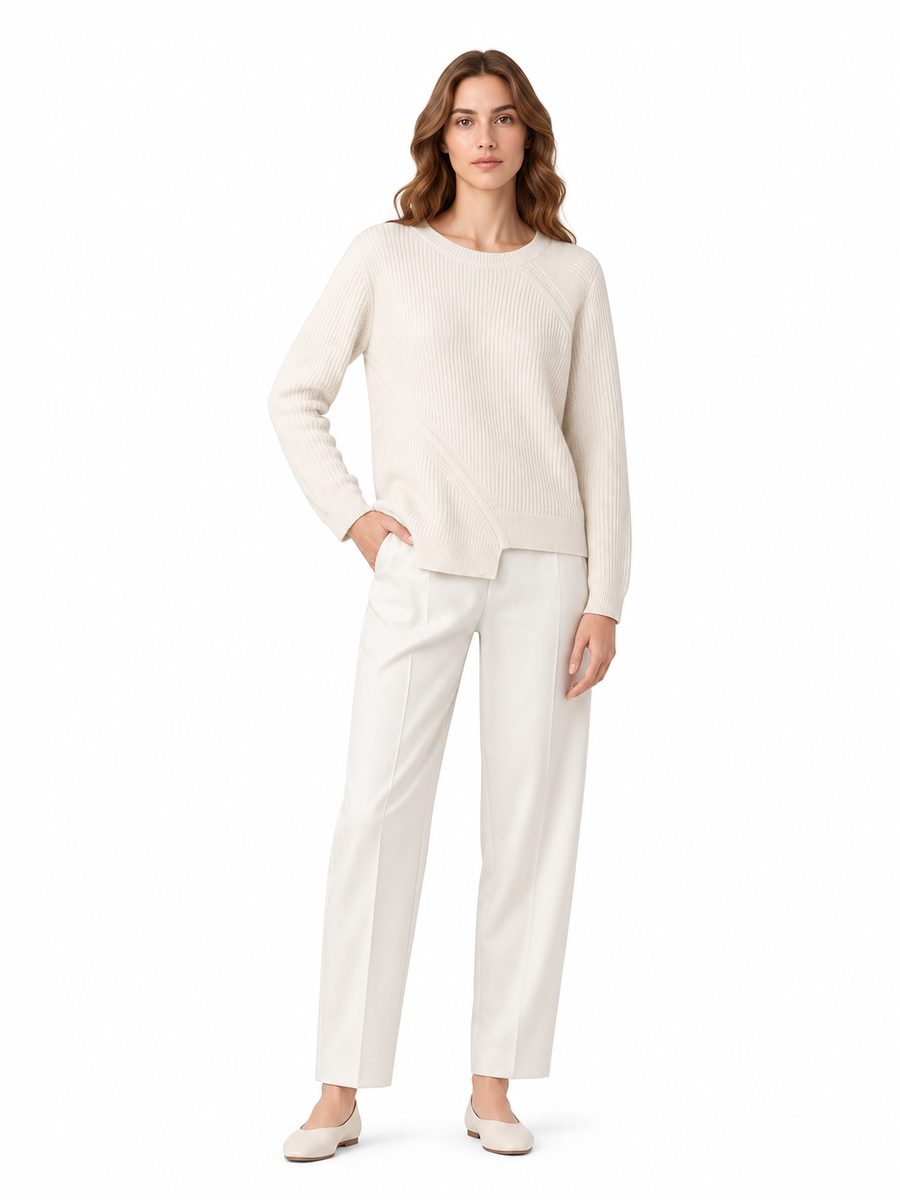
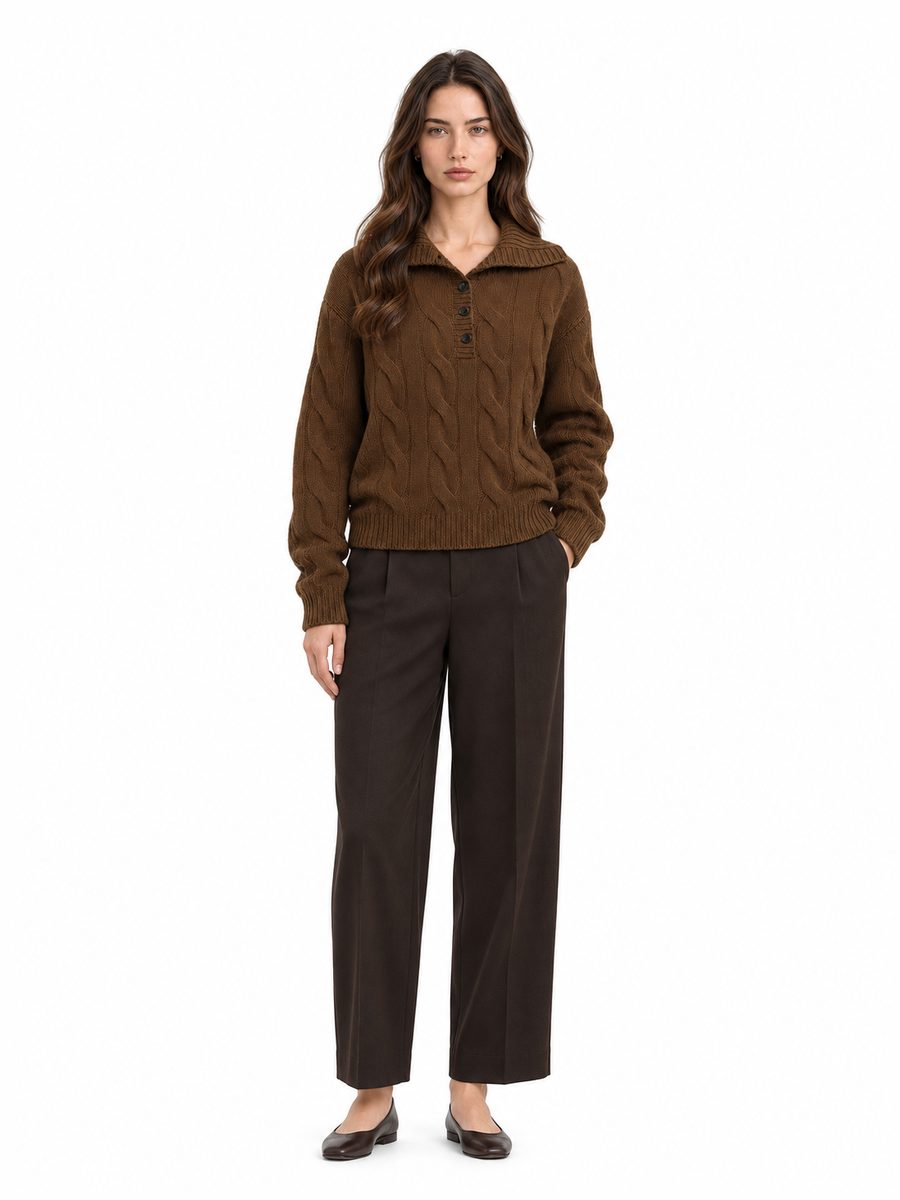
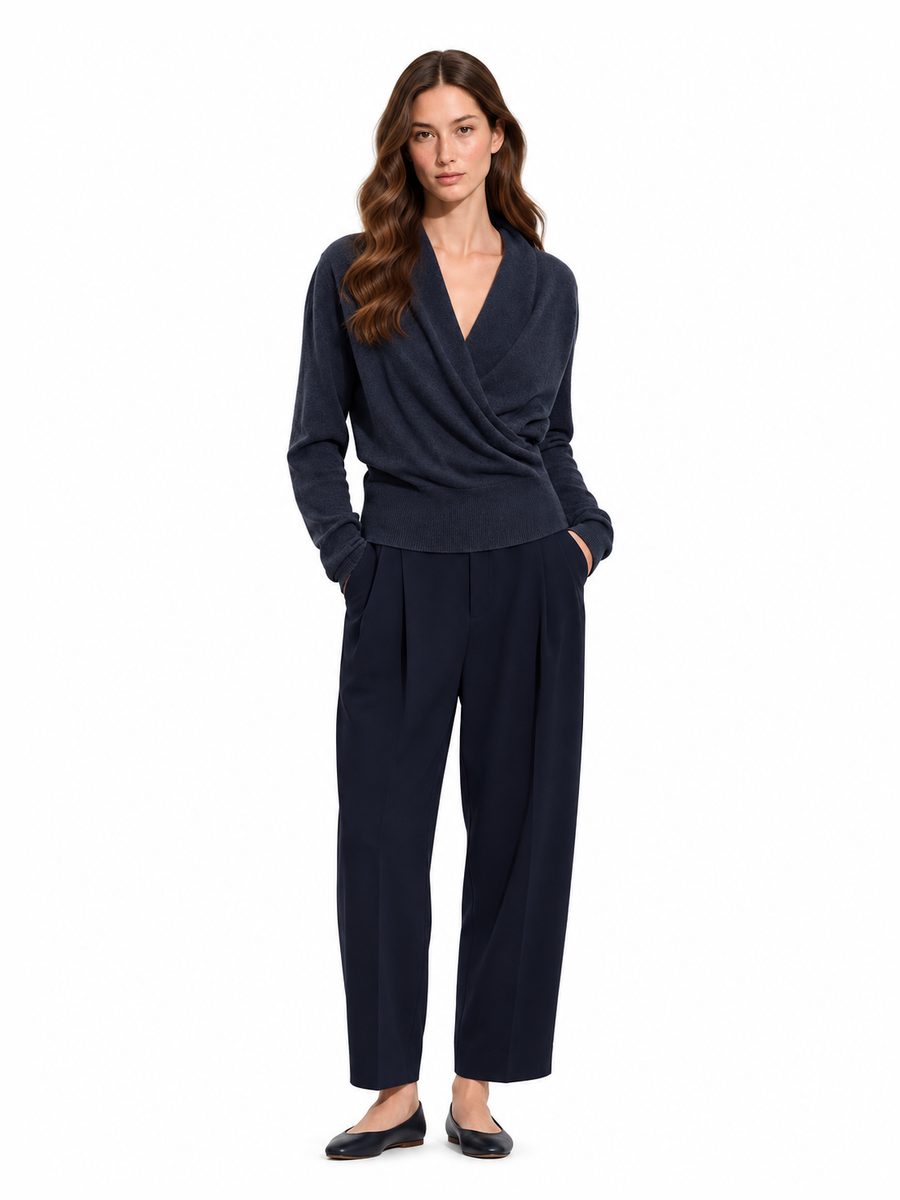
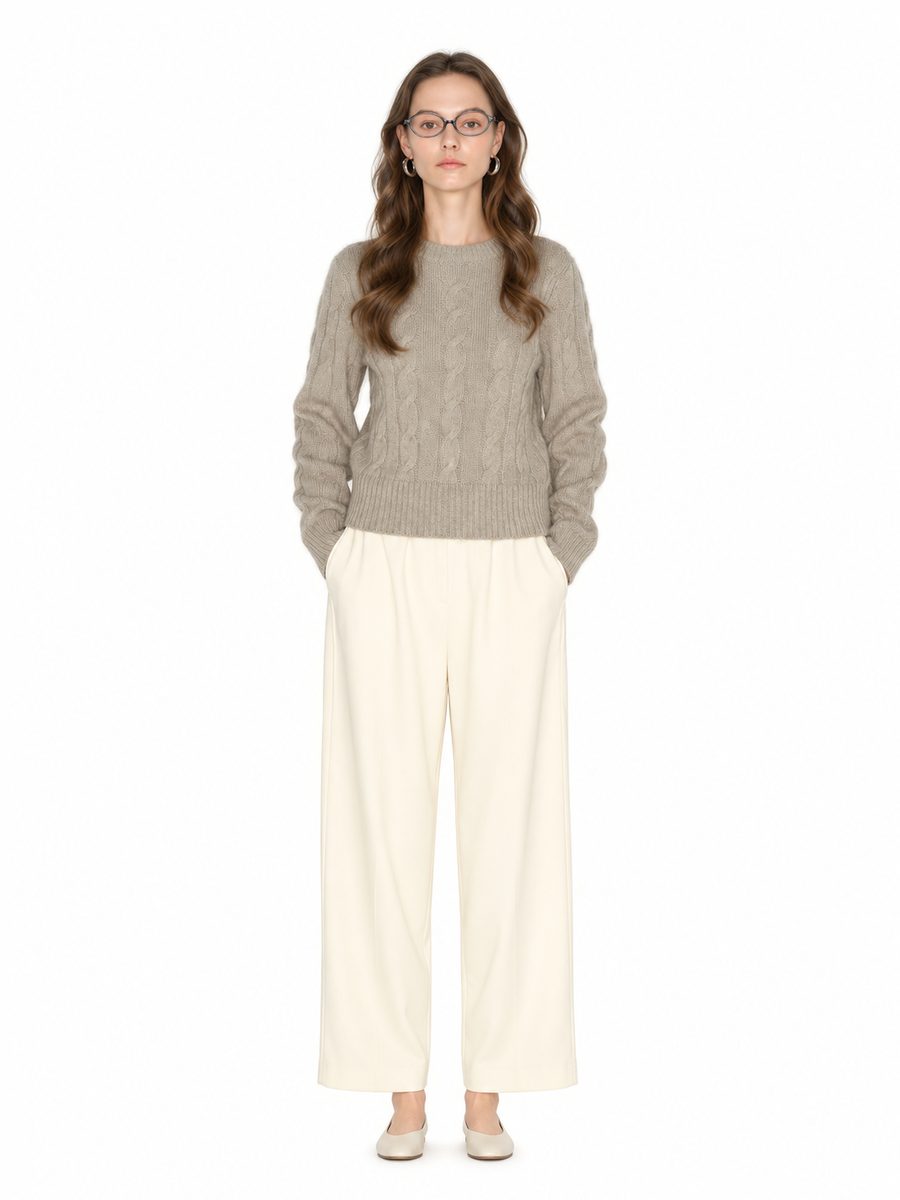
Four sweaters from our collection, all in 100% merino wool:
FAQ
Merino wool questions.
Is merino wool itchy?
Usually not. Itch comes from fibres coarser than about 30 microns pressing on the skin, and merino is 24 microns or finer. Very sensitive skin may still notice medium or strong merino, so choose superfine or fine merino for knits worn next to the skin.
Does merino wool shrink?
It can. Wool fibres have tiny scales that hook together when they are rubbed in warm water, so untreated merino can felt and shrink in a hot or rough wash. Machine-washable merino is treated to stop this; untreated merino should be washed cool on a wool cycle or by hand and dried flat.
Is merino wool warm?
Yes, for its weight. Its crimped fibres hold air, and wool can absorb almost a third of its own weight in water. How warm a sweater feels also depends on its gauge and thickness.
What is the difference between merino and lambswool?
Merino is a breed of sheep. Lambswool is wool from a lamb’s first shearing, at about seven months old, and can come from any breed; it is soft and elastic, but its fineness depends on the breed.
What is RWS merino?
Merino certified to the Responsible Wool Standard. Farms are audited for animal welfare and land management, mulesing is prohibited, and the wool is tracked to the final product with transaction certificates. RWS is being brought into Textile Exchange’s new Materials Matter Standard.
Sources
Sources.
- Wikipedia, “Merino” (origin in Spain and spread of the breed; mulesing). Read
- Wikipedia, “Wool” (merino grades by micron, crossbred wool, crimp, felting and shrink-resist treatments, moisture, itch above about 30 microns). Read
- The Woolmark Company, “Soft Merino wool” (finer microns are softer; prickle comes from coarse fibres). Read
- Woolwise (Australian Wool Innovation), Wool 422/522, topic 21 (comfort factor: fibres finer than 30 microns). Read
- Wikipedia, “Lambswool” (first shearing at about seven months). Read
- Textile Exchange, “Responsible Wool Standard” and RWS Quick Guide (mulesing prohibited; transaction certificates; Materials Matter Standard). Read
Keep reading
Start a project