Fabric guide
Knit vs Woven Fabric.
Knit fabric is made of loops of yarn pulled through each other; woven fabric is two sets of threads crossed at right angles. That one difference decides how a garment stretches and feels, how it is made, and which kind of factory makes it.
 By Marcia Lee, Business Manager at Knitwear World · Published November 2026
The difference
How knit and woven fabric are made.
Knit fabric is made by forming yarn into rows of loops. Each new loop is pulled through a loop of the row before, so the fabric stretches and springs back. A row of loops is called a course and a column is called a wale.
Woven fabric is made on a loom. Lengthwise threads, the warp, are held tight while crosswise threads, the weft, pass over and under them at right angles. The grid keeps its shape and barely stretches, except on the diagonal (the bias) or when the yarn contains elastane.
Sweaters, T-shirts, leggings and socks are knitted. Shirts, jeans, trousers and most jackets are woven.
Compare
Knit vs woven at a glance.
| Feature | Knit | Woven |
|---|---|---|
| Structure | Rows of loops pulled through each other | Warp and weft threads crossed at right angles |
| Stretch | Stretches across, often lengthwise too, and recovers | Little stretch, except on the bias or with elastane |
| Feel | Soft and flexible; moves with the body | Firmer and more stable; keeps its shape |
| Cut edges | Does not fray, but a cut edge curls or runs | Frays unless the edge is finished |
| Garments | Sweaters, cardigans, T-shirts, polos, leggings, socks | Shirts, jeans, trousers, blazers, coats |
| How garments are made | Knitted to shape and linked, or cut and sewn from knitted fabric | Cut from fabric and sewn |
How to tell
Three ways to tell knit from woven.
- Stretch it across. A knit gives and springs back. A woven hardly moves unless it contains elastane.
- Look closely. Plain knit (jersey) shows columns of small V shapes on the face and small loops on the back. A woven shows a fine crisscross grid; a plain weave looks the same on both sides.
- Check an edge. A cut woven edge frays into loose threads. A knit edge curls, and a cut stitch can run down the fabric like a ladder in tights.
On a sweater the knit is easy to see. Four common knit structures from our samples:
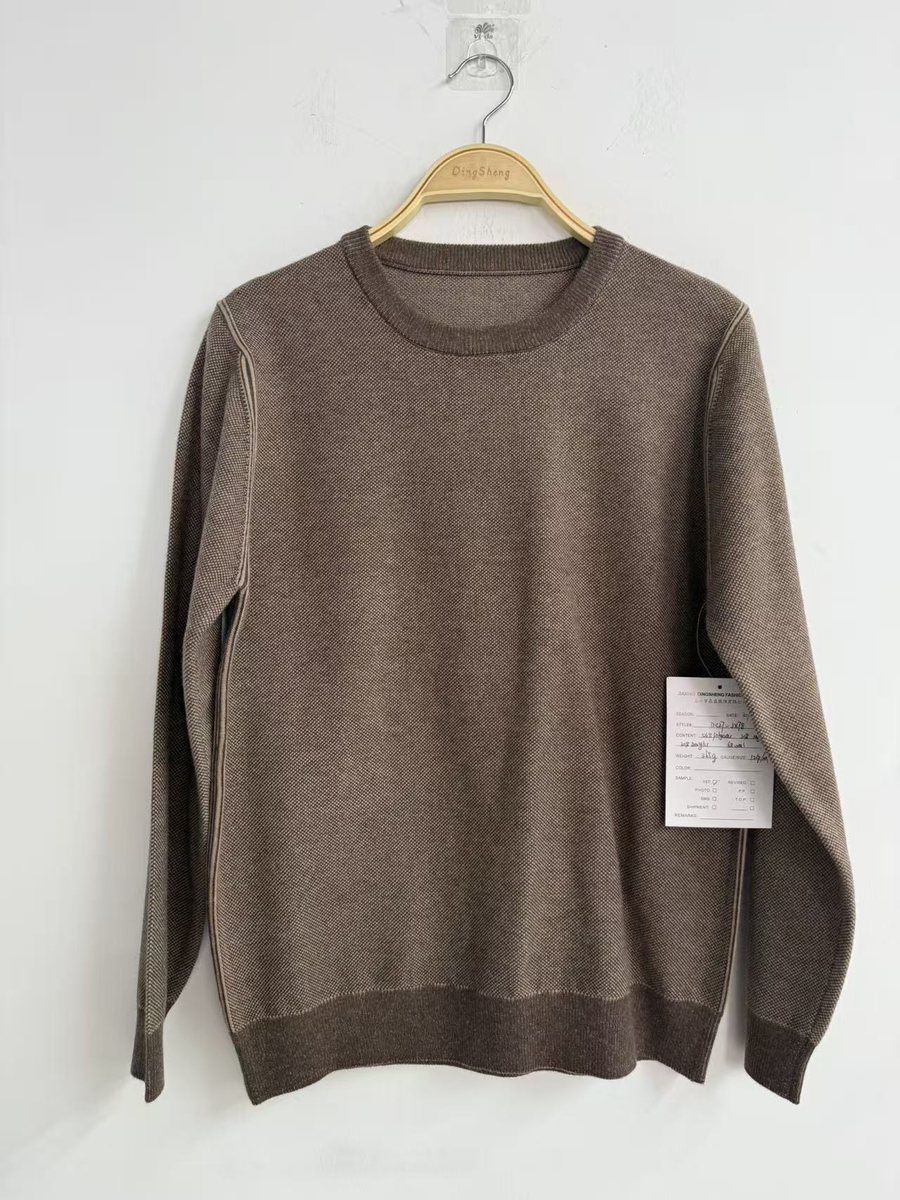
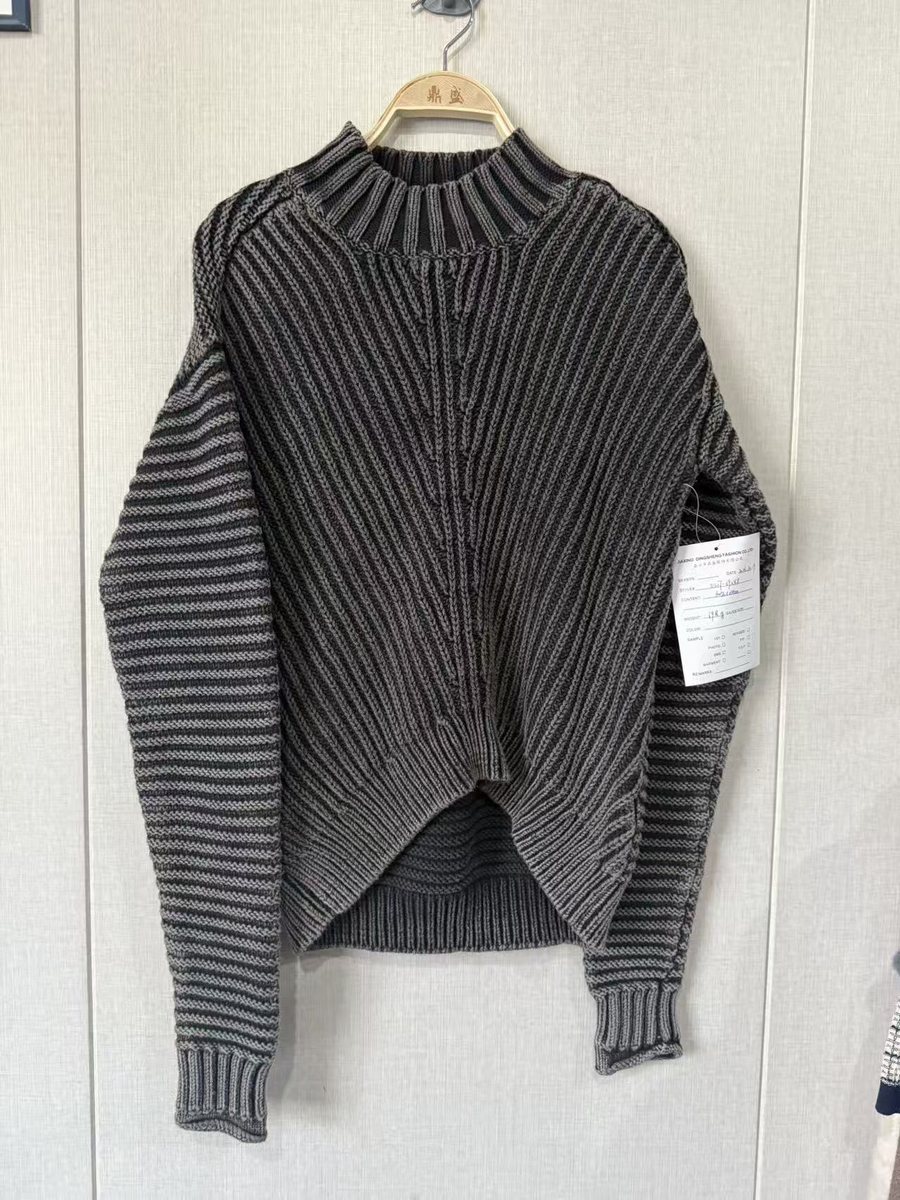
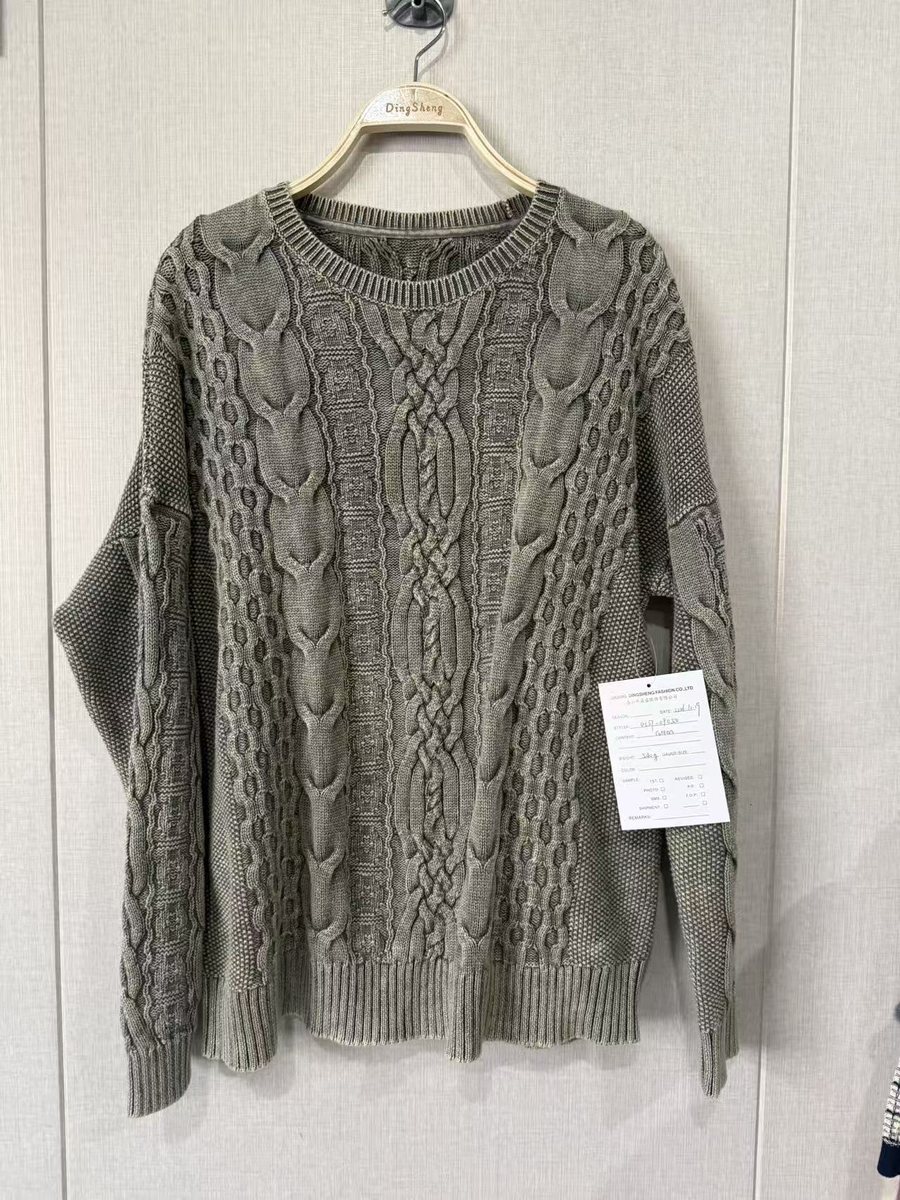
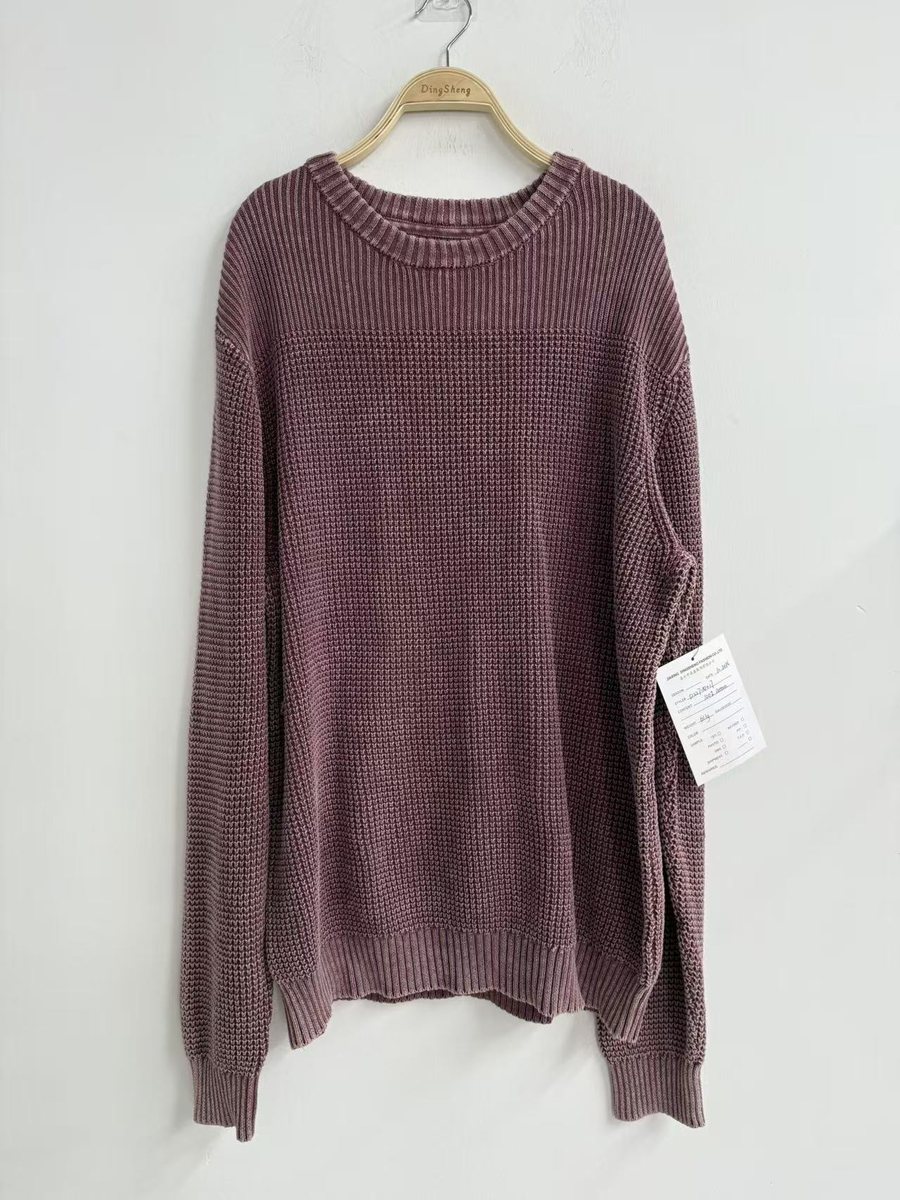
More stitches, with 20 photos, in types of knit stitches.
Production
From fabric to garment: three routes.
Knit and woven garments usually come from different factories, because they are made in different ways:
- Fully fashioned knitwear: yarn is knitted into shaped panels on flat knitting machines, and the panels are joined loop by loop on linking machines. Sweaters, cardigans, sweater vests, knit polos and sweater dresses.
- Cut-and-sew knits: knitted fabric such as jersey, rib or fleece is cut and sewn. T-shirts, sweatshirts and leggings.
- Woven garments: woven fabric is cut and sewn. Shirts, jeans, trousers, jackets and coats.
A sweater factory starts from yarn, so the fabric and the shape of each panel are knitted at the same time. We knit on 200 computerized flat knitting machines, from 3GG to 16GG, and link and finish in-house; see our knitwear production process.
Tech packs differ too. A knitwear tech pack describes the yarn, gauge, stitches and trims instead of a fabric, and knitwear tolerances are a little wider than for wovens: a common starting point is ±1 cm on widths and ±1.5 cm on lengths. Start from our sweater tech pack template.
FAQ
Knit and woven questions.
Is a sweater knit or woven?
Knit. A sweater is knitted from yarn, usually as shaped panels on a flat knitting machine that are then linked together. That is why it stretches, and why it is described by its gauge and stitch rather than by a fabric.
Is jersey knit or woven?
Knit. Jersey is the plain knit stitch, with smooth V shapes on the face. T-shirts are made from fine jersey fabric knitted on circular machines, and many sweaters are knitted in jersey from thicker yarn on flat machines.
Which is warmer, knit or woven?
It depends on the fibre and the weight. A knit often feels warmer for its weight, because its loops hold air, and it breathes well. A dense woven, such as a coat fabric, blocks wind better.
Do knits shrink more than wovens?
They can. The loops of a knit can tighten or relax in washing, so its length and width may change more than a woven’s. Ask for a washed sample and check its measurements before bulk.
What are the main types of knit fabric?
Weft knits, where the yarn runs across the fabric, include jersey, rib, cable, waffle and jacquard; sweaters and T-shirts are weft knits. Warp knits, where the yarns zigzag along the length of the fabric, include tricot and raschel, used for lingerie, sportswear, mesh and lace.
Sources
Sources.
- Wikipedia, “Knitted fabric” (loops, courses and wales; stretch, runs and curling). Read
- Wikipedia, “Woven fabric” (warp and weft at right angles; stretch on the bias; fraying). Read
- Wikipedia, “Warp knitting” (yarns zigzag along the length; tricot and raschel uses). Read
Keep reading
Start a project