Development guide
Sweater Tech Pack: What to Include, Page by Page.
A knitwear tech pack is not the same as a cut-and-sew tech pack. Instead of a fabric and its weight, it specifies the yarn, the gauge and the stitch, because the factory knits the fabric and the garment shape at the same time. This guide shows what we look for when a tech pack arrives, and what to send if you do not have one yet.
 By Marcia Lee, Business Manager at Knitwear World · Updated October 2026
Why knitwear is different
What changes in a knitwear tech pack.
Most tech pack templates are written for woven and jersey garments that are cut from fabric. A sweater is usually knitted panel by panel to shape on a flat knitting machine, then linked together. That changes several sections of the tech pack.
| Cut-and-sew tech pack | Sweater tech pack |
|---|---|
| Fabric name and weight (GSM) | Yarn composition and count, gauge and stitch structure |
| Pattern pieces and marker | Knitted panels with shaping, programmed by the factory |
| Seams and seam allowances | Linking, cup seaming or sewing, and where each is used |
| Print artwork | Jacquard or intarsia artwork as a stitch grid, with yarn colours |
| Fabric colour reference | Yarn colour references and lab dips on the actual yarn |
Page 1
Cover page and style summary.
The first page tells the factory what the style is and what it has to achieve commercially. Include:
- Style number, style name, season and category
- Size range and the base (sample) size
- Colourways and the quantity per colour you expect
- Target FOB price or retail price, and the delivery date you need
- Your contact person and the date and version of the tech pack
Quantity and target price matter more than many buyers think: they decide which yarn and gauge the factory proposes. See knitwear MOQ explained for how quantities per style and per colour work.
Page 2
Flat sketches and details.
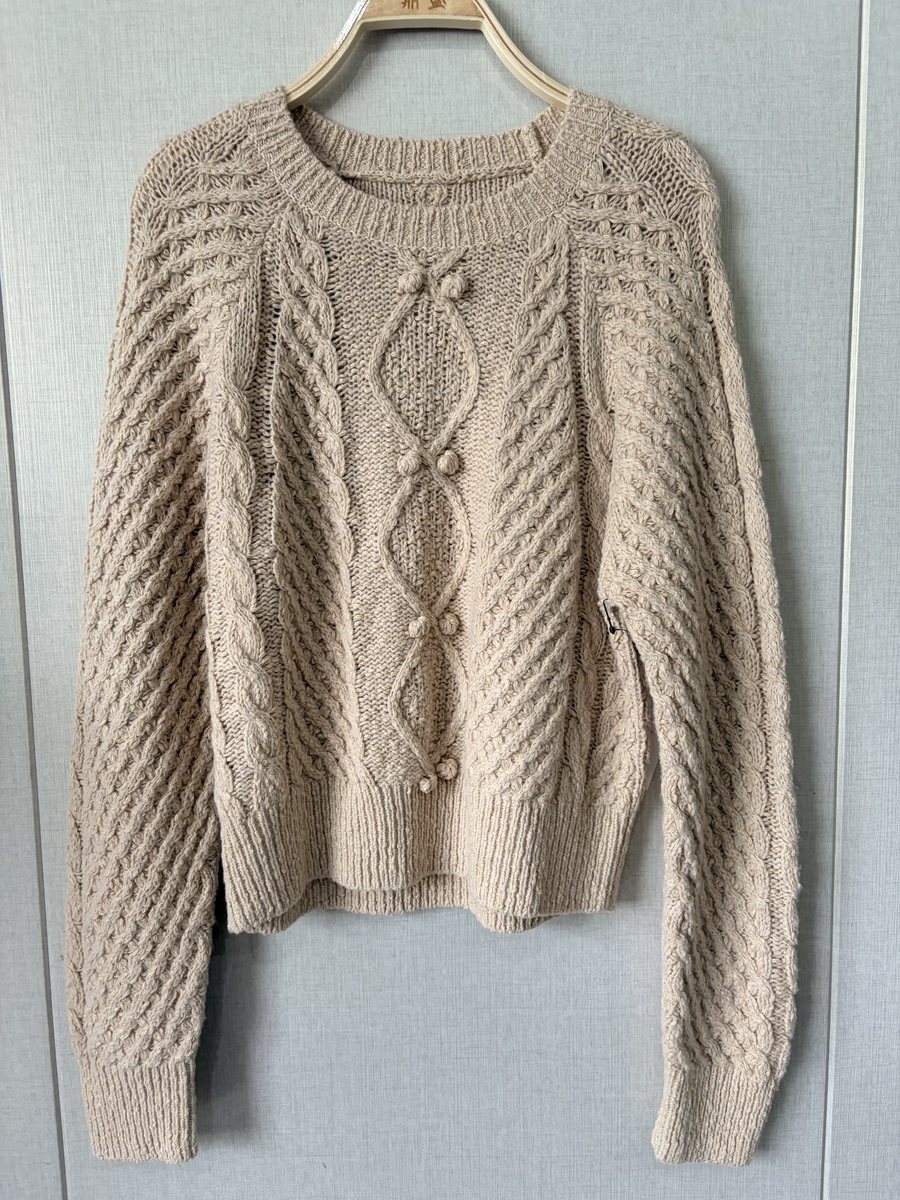
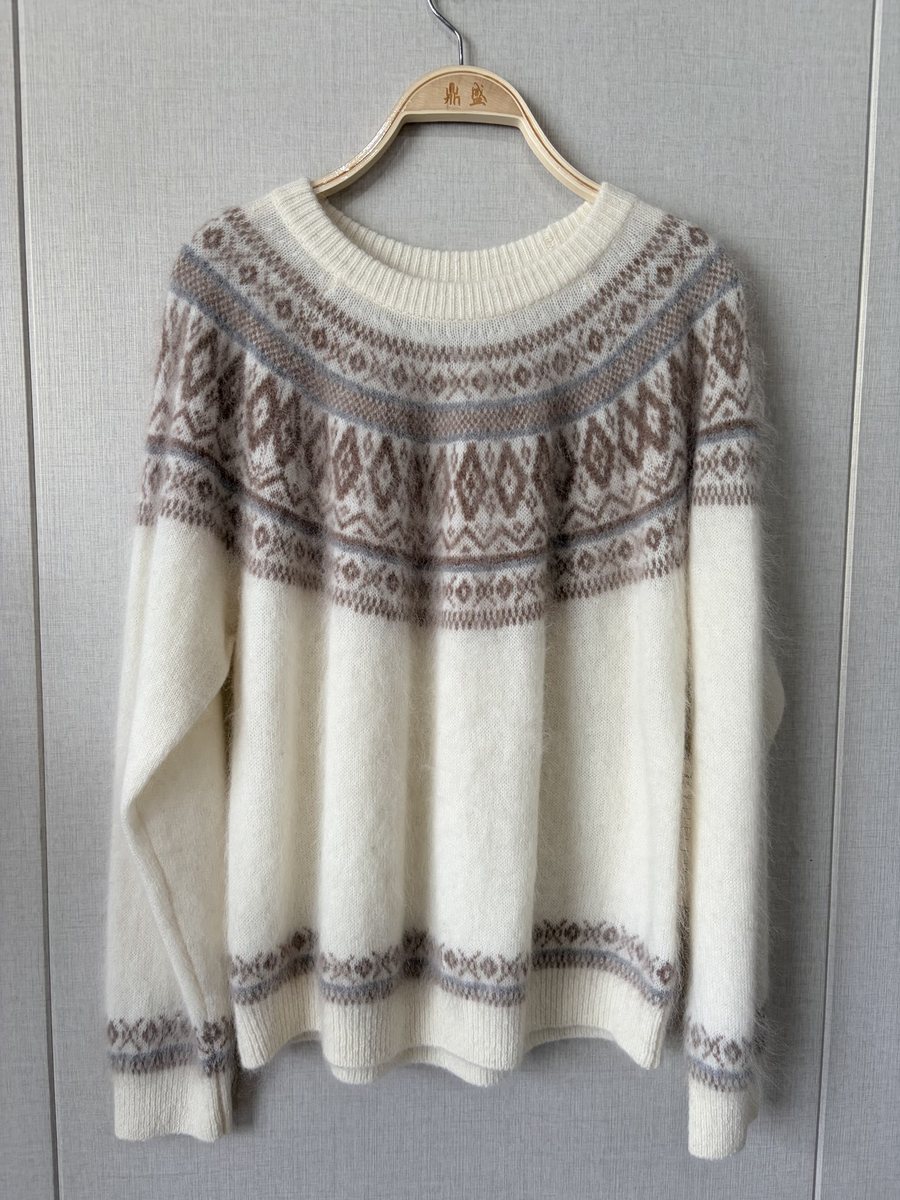
Draw the front, the back and, where useful, the side, to scale. Add callouts for every detail that is not obvious from the sketch: neckline construction, placket width, pocket type and position, button or zip placement, and any embellishment. Close-up sketches or photos of stitch details help more than long descriptions.
Page 3
Yarn and gauge.
This is the heart of a sweater tech pack. Specify:
- Composition, for example 70% wool and 30% cashmere, and whether the yarn must be certified, such as GRS recycled or RWS wool
- Yarn count and ply if you know them, for example 2/48Nm; if not, describe the look and weight you want and we propose a yarn
- Yarn supplier or stock yarn, if you have a preference
- Gauge, the number of needles per inch on the machine
| Gauge | Look and weight | Typical use |
|---|---|---|
| 3–5GG | Chunky, heavy, visible stitches | Winter sweaters, cardigans and knit coats |
| 7GG | Mid-weight | Classic sweaters, cables, most cardigans |
| 12GG | Fine and smooth | Layering knits, knit polos, jacquards |
| 14–16GG | Very fine and light | Fine-gauge tops, cashmere essentials |
We knit from 3GG to 16GG. For help choosing a fibre, read the best yarn for sweaters and our guide to certified yarns.
Page 4
Stitches and patterns.
Name the stitch for every area: the body, the sleeves and each trim. A common set is jersey for the body and 1×1 or 2×2 rib for the cuffs, hem and neckband. For cables, pointelle or textured stitches, mark where they start and end and how many repeats you want across the front.
For jacquard and intarsia, send the artwork as a stitch grid with each colour numbered, not only as a picture. Note whether the back should be a birdseye or another backing, because it changes the weight, the handle and the price. We knit double jacquard in up to four colours. Our guide to how jacquard sweaters are made explains colour limits and constructions.
Page 5
Colours.
Give each colour as a Pantone TCX reference or, better, a physical swatch. Screen colours (RGB or hex) look different on every monitor and cannot be matched reliably. We dye or select yarn to your reference and send lab dips on the actual yarn for approval before sampling.
List the colourways in a small table: colourway name, body colour, contrast colours and the quantity per colour.
Page 6
Measurements and grading.
Give measurements for the base size, and say exactly where each one is taken. Knitwear is measured flat and relaxed, without stretching. These are the points of measure we ask for most often:
| Point of measure | How to define it |
|---|---|
| Body length | From the high point of the shoulder to the hem |
| Chest width | Straight across, a set distance below the armhole, for example 2.5 cm |
| Bottom width | Across the hem, relaxed, above the rib if the rib pulls in |
| Shoulder width | Shoulder point to shoulder point |
| Sleeve length | From the shoulder point, or from the centre back neck for raglan sleeves |
| Armhole and upper arm | Armhole depth measured straight; upper arm width a set distance below the armhole |
| Neck | Neck width edge to edge, front and back neck drop |
| Rib heights | Hem, cuff and neckband height |
Add a tolerance for each point. Knitwear is stretchy, so tolerances are usually a little wider than for woven garments; a common starting point is ±1 cm on widths and ±1.5 cm on lengths, but agree your own before sampling. Then add the grading for each size; we can grade up to 15 sizes per style, or use our size chart as a starting point.
Pages 7 and 8
Trims, labels, finishing and packing.
Trims and labels
- Buttons: size, material, colour and supplier, or a sample; zips: type, length and puller
- Neck label, care label, size label and country-of-origin label: artwork and position
- Hangtags, barcodes and any retailer requirements
Finishing and testing
- Finishing: washing, steaming or milling, and the hand-feel you want
- Tests: pilling, shrinkage and colour fastness, the standard and the lab, if your market requires them
Packing
- Folding size, polybag, carton size and carton marks
See private label knitwear for branding options and knitwear quality control for the checks worth agreeing before bulk.
Common gaps
Seven gaps we see in sweater tech packs.
- No yarn count or weight, only a composition
- Measurements without a definition of where they are taken
- Missing rib heights for the hem, cuffs and neckband
- Colours given as screen colours instead of Pantone TCX or swatches
- Jacquard artwork sent as a photo instead of a stitch grid
- No tolerances
- Trims described as “standard” without size or material
None of these stops a project, but each one adds a round of questions or a revision. Filling them in before the first sample usually saves a week.
No tech pack yet?
What to send if you do not have a tech pack.
You do not need a complete tech pack to start. A sketch or reference photo, the measurements of a sweater you like, your target price, quantity and delivery date are enough for us to propose a yarn, a gauge and a construction. Our design team offers free design support to turn a reference into a production-ready direction.
You can also start from one of our 300+ ODM sweater designs and change the yarn, colours, fit and details. New brands can read knitwear for startups, and if you already have specs, see OEM and ODM.
FAQ
Sweater tech pack questions.
What is a sweater tech pack?
It is the technical document a knitwear factory works from: sketches, yarn, gauge, stitches, colours, measurements, trims, labels, finishing and packing for one style.
Do I need a tech pack to start sampling?
No. A sketch or reference photo, measurements of a sweater you like, a target price and a quantity are enough to start. We confirm the details on the first sample, normally ready 3–5 days after they are agreed.
Which gauge should I choose?
It depends on the look and the season: 3–5GG for chunky winter knits, 7GG for classic mid-weight sweaters, 12GG for fine layering knits and 14–16GG for very fine tops. We recommend a gauge from your reference and target price.
How should I give colours for knitwear?
As Pantone TCX references or physical swatches. We send lab dips on the actual yarn for approval before sampling.
How many sizes can a style have?
Up to 15 sizes per style, graded to your size chart or ours.
Start a project