Quality control guide
Knitwear Quality Control: What to Check from Yarn to Shipment.
Most knitwear quality problems are decided long before the final inspection: by the yarn, the approved sample and the standards written into the order. This guide walks through the checks we run at each stage, the tests worth agreeing before bulk, and what to put in writing so your bulk order matches the sample you approved.
 By Marcia Lee, Business Manager at Knitwear World · Updated October 2026
Where quality is decided
Five checkpoints from development to shipment.
Quality in knitwear is not one inspection at the end. Sweater yarn is dyed before knitting, panels are shaped on the machine, and the garment only reaches its final size after washing and pressing. A problem found at final inspection is expensive to fix, so we check at five points and agree with you what is approved at each one.
| Checkpoint | What we check | Your role |
|---|---|---|
| Development | Lab dips on the actual yarn, a knitted swatch, the first sample in 3–5 days and a washed sample | Approve colour, hand-feel and fit after washing |
| Pre-production | The bulk yarn lot against the approved lab dip, and a pre-production sample when needed | Seal the approved sample and swatch as the bulk standard |
| In-line | Panels off the machine for dropped or wrong stitches, colour at yarn changes and pattern matching; measurements after linking and finishing | Ask for photos or a video check while bulk is running |
| Final | Measurements, appearance, labels, folding and packing against the sealed sample and packing list | Agree the inspection plan and AQL level in advance |
| Verification | Your own check: a video tour booked 1–2 days ahead, a visit, or an inspection by SGS, QIMA or your nominated agency | Release the goods for shipment |
Rule of thumb: nothing goes into bulk on a verbal approval. The sealed sample, the knitted swatch and the written standards are what bulk is checked against.
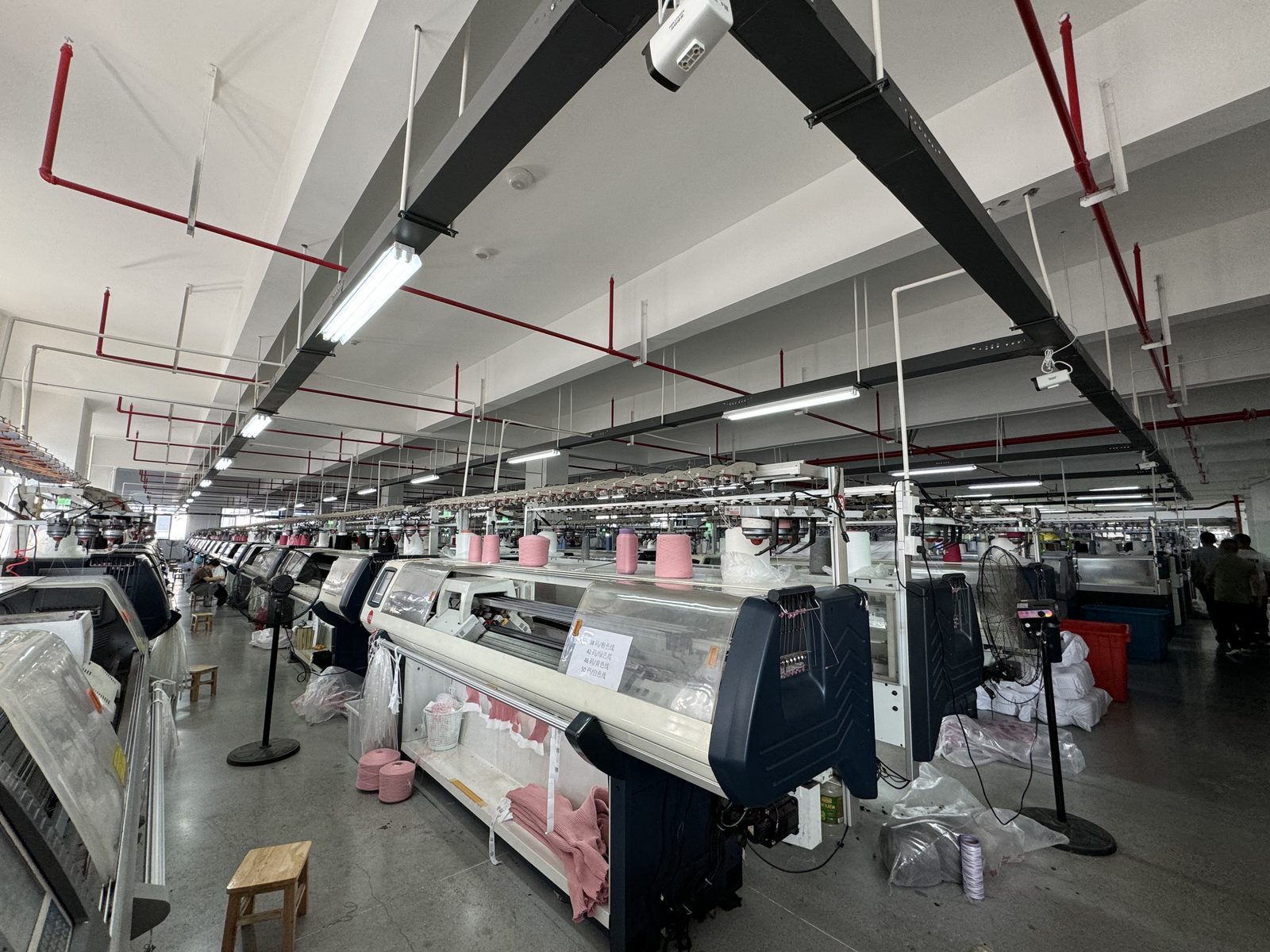


Our knitting floor in Jiaxing and finished sweaters from our production.
Before bulk
Agree these standards before bulk starts.
Most disputes about knitwear quality are really disputes about standards nobody wrote down. These are the standards we agree with buyers before bulk, and how we usually work to them.
| Standard | What it protects | How we usually work |
|---|---|---|
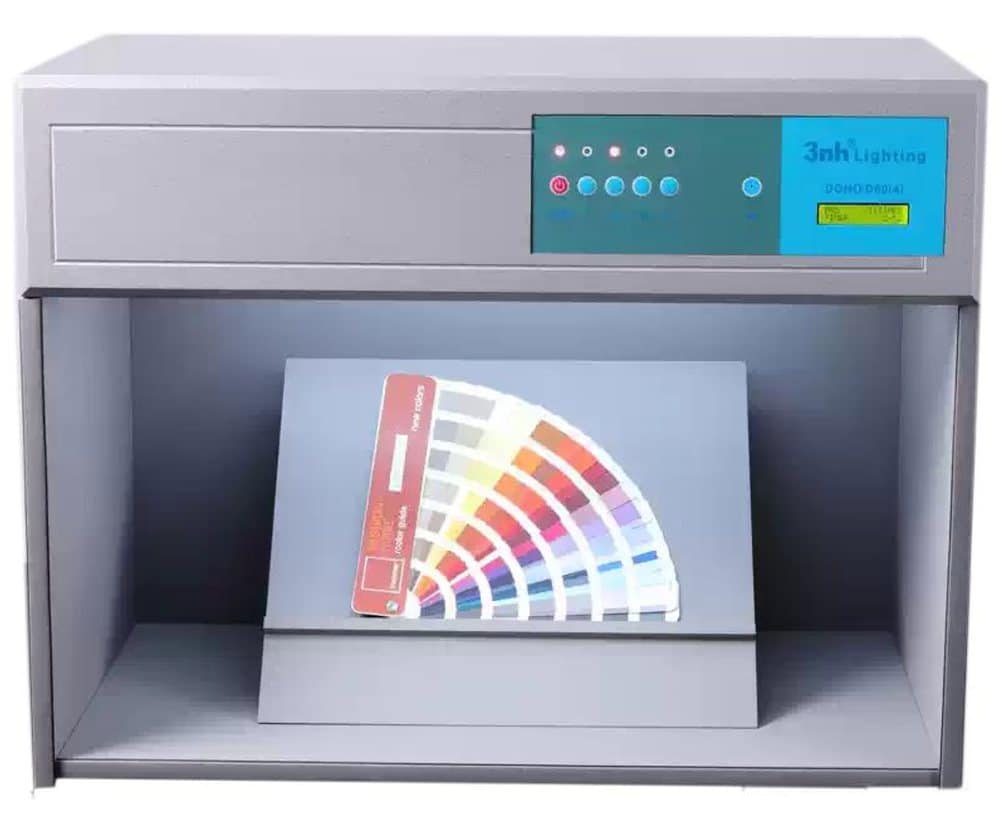
| Colour tolerance | Bulk shade against the approved lab dip, and colours that sit side by side | Lab dips on the actual yarn; tolerance agreed in writing, for example grey scale grade 4 or 3.5 |
| Pilling | How the surface looks after wear | Grade 3–4, reached with singed or plied yarns, the right density and an anti-pilling finish; test method agreed in advance |
| Shrinkage | Size and shape after the first wash | Garments pre-shrunk with a relaxed wash; the washing method fixed on the tech sheet and care label |
| Colour fastness | Dark colours bleeding into light ones | Dark yarns colour-fixed; staining tested to AATCC methods, especially for dark and light jacquards |
| Measurements | Fit across the size range | A size chart with measuring points and tolerances, checked after finishing |
Why the washed sample matters
A sweater straight off the machine is not its final size. Washing, steaming and pressing relax the knit, and different yarns and stitches shrink by different amounts. We wash the sample the way the bulk will be finished, so you approve the size and hand-feel your customer will actually get. For jacquard and striped styles, the washed sample also shows whether patterns twist or move out of line.
In production
What we check at each production step.
Yarn
Composition, colour and lot confirmed; the bulk lot is compared with the approved lab dip before knitting.
Knitting
Panels checked off the machine for dropped stitches, wrong stitches and colour at yarn changes.
Linking
Collars, cuffs and seams linked; stripes and patterns matched across the seams.
Finishing
Washing, steaming and pressing set the final size and hand-feel; measurements checked again.
Inspection
Measurements, appearance, labels and packing checked against the sealed sample.
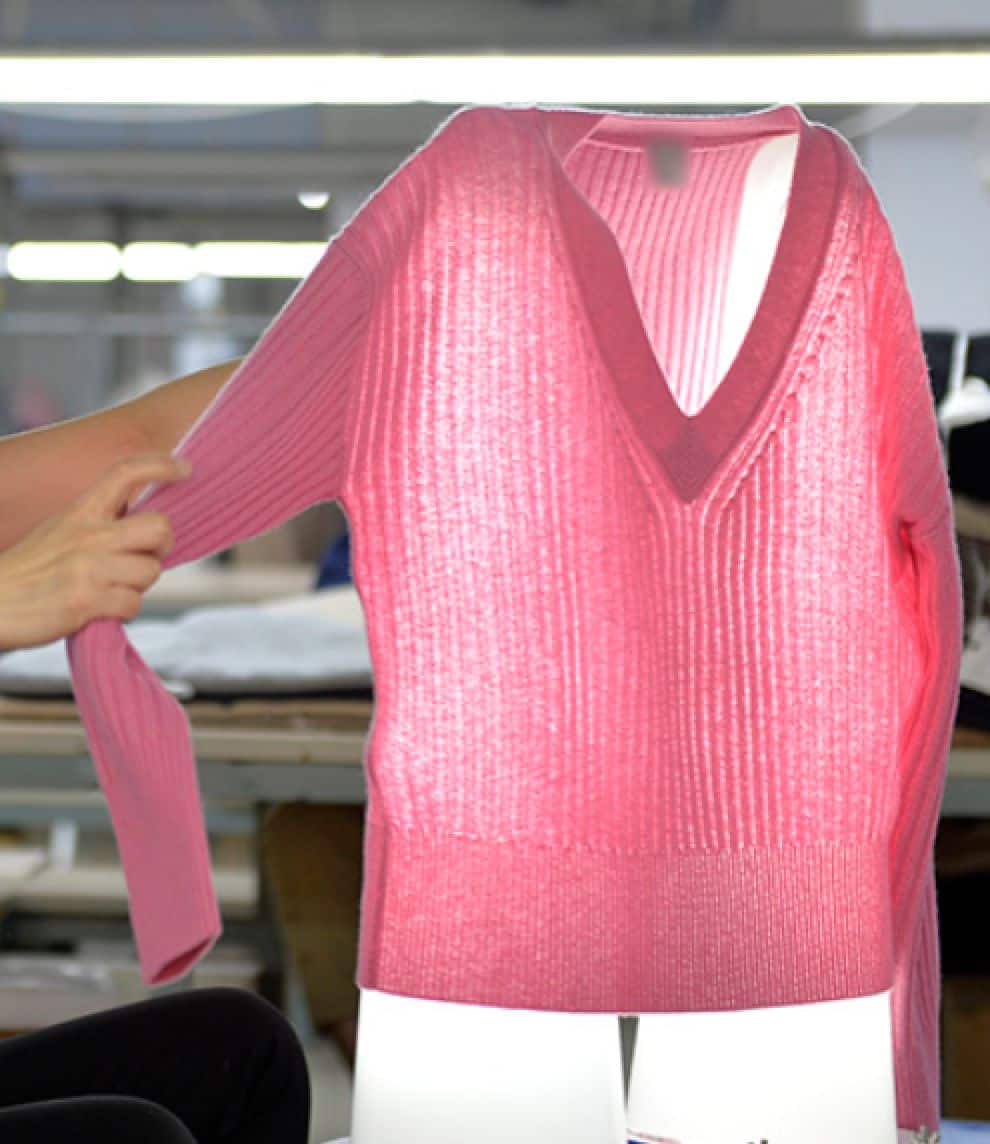
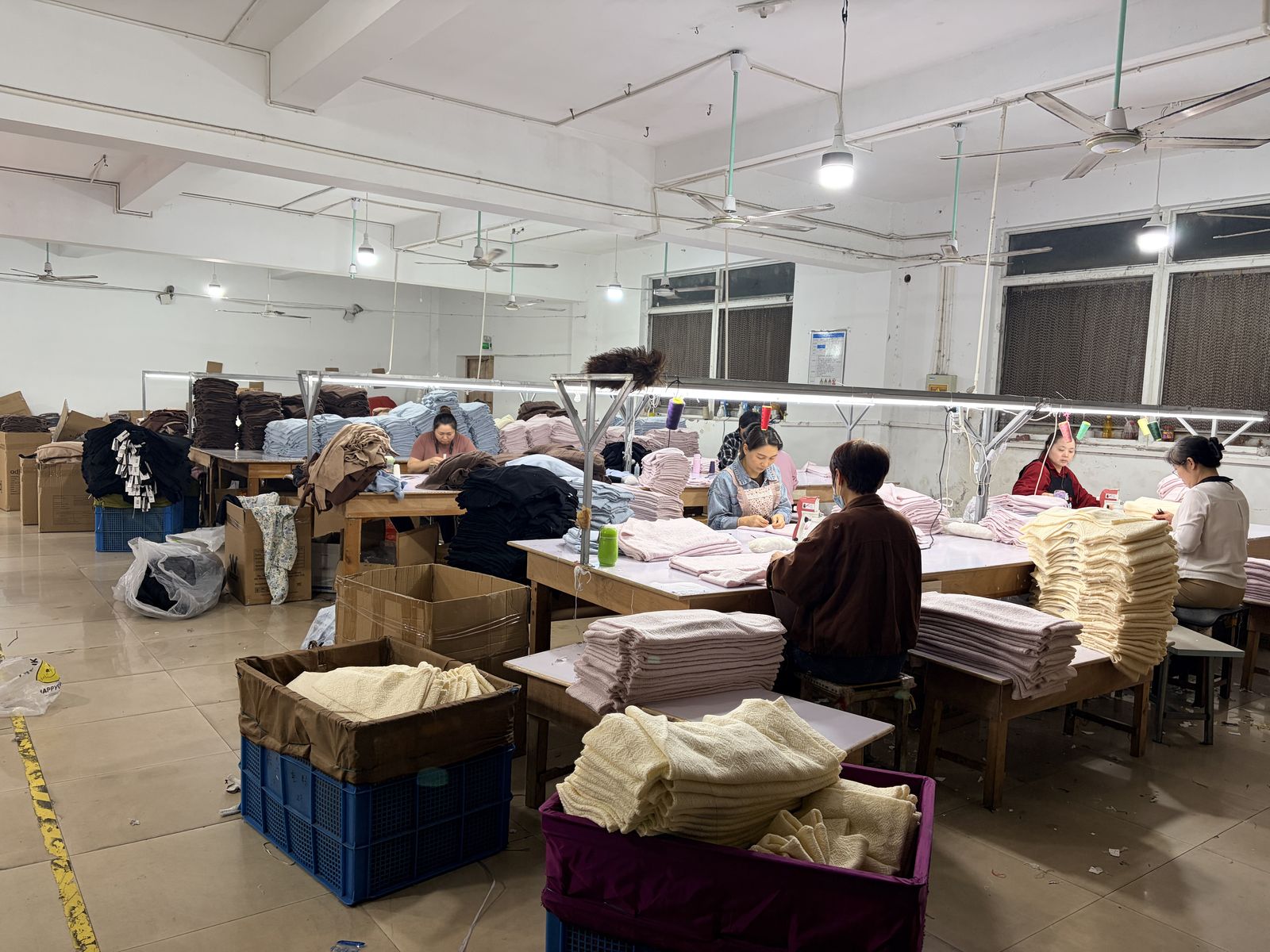
Want to see these steps for yourself? Book a video tour one to two days ahead, and we schedule it while the work is running on the floor.
Before shipment
What the final inspection covers.
Our QC team checks finished goods against the sealed sample, the size chart and your packing instructions before the cartons are closed.
- Measurements at the agreed points, within the agreed tolerance, across the size range.
- Appearance: holes, dropped stitches, stains, loose threads, uneven linking and pilling.
- Colour against the sealed sample, and between pieces from the same lot.
- Labels and trims: main label, size, care and composition labels, hangtags and barcode stickers in the right position.
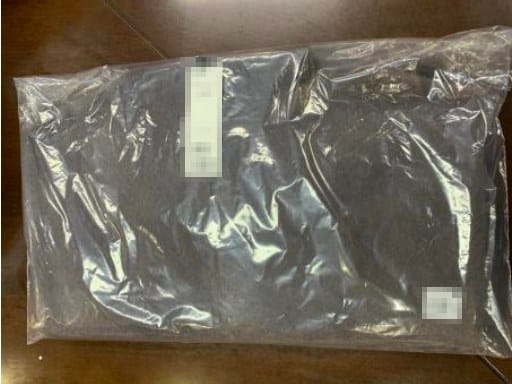
- Packing: folding, polybags, carton marks and quantities against the packing list.
If you work with AQL sampling, tell us the inspection level and acceptance limits you use, and we inspect to the same plan. Independent inspection by SGS, QIMA or your own agency is welcome.
Prevent, don’t inspect
Common knitwear quality problems and how to prevent them.
Final inspection finds problems; it rarely fixes them. These are the issues we see most often, and the decision before bulk that prevents each one.
- Bulk colour differs from the sample. The sample was knitted from a small dye lot. Approve lab dips on the actual yarn, and compare the bulk lot before knitting starts.
- Garments shrink or grow after the first wash. The sample was approved unwashed. Approve a washed sample and fix the washing method on the care label.
- Pilling after a few wears. The yarn or knit density was chosen on price alone. Agree a pilling grade and test method before bulk, and use singed or plied yarns where it matters.
- Stripes and patterns do not meet at the seams. Matching was never specified. Put matching points and tolerances on the tech sheet.
- Bulk feels different from the sample. Yarn, density or finishing changed between sample and bulk. Seal the approved swatch and sample, and ask for any change to be confirmed in writing.
- Dark colours stain light areas. Colour fastness was never tested. Test staining on dark and light combinations, especially in jacquard.
- Bulk is made somewhere else. Samples come from one factory and bulk from an unaudited workshop. Ask where bulk is knitted, linked and finished, and put it in the contract.
Checklist
Quality checklist for your knitwear order.
Copy this list into your tech pack or send it with your inquiry.
- Approved lab dips on the actual yarn, and the colour tolerance in writing
- Sealed sample and knitted swatch as the bulk standard
- Size chart with measuring points and tolerances
- Pilling grade, shrinkage, colour fastness and the test methods
- Washing method on the tech sheet and care label
- Label, hangtag and packing instructions
- Inspection plan: who inspects, when, and to which AQL level
How we work
We agree these standards with you before bulk and check against them at every production step. Our factory has an amfori BSCI audit, conducted by TÜV Rheinland in 2026; audit details are available on request.
See our factory and quality checkpoints →
How sampling works →
Start a project