Yarn guide
Cashmere vs Merino Wool.
How cashmere and merino compare for sweaters: softness, warmth, pilling, care and cost, and how to choose between them, or a blend, for your collection.
 By Marcia Lee, Business Manager at Knitwear World · Published November 2026
The short answer
Cashmere for luxury, merino for everyday wear.
Both are fine animal fibres, and both make warm, soft sweaters. Cashmere is the softer, lighter and more expensive of the two, and brands usually choose it for premium pieces where hand-feel comes first. Merino is a fine sheep’s wool: soft enough to wear next to the skin, more resilient, easier to look after and available across a much wider price range.
For a brand, the real question is not which fibre is better, but which one fits the product, the price point and the customer who will wear and wash it.
Side by side
Cashmere and merino compared.
| Point | Cashmere | Merino wool |
|---|---|---|
| Where it comes from | The soft undercoat of cashmere goats, combed or sheared once a year; China and Mongolia are the largest producers | The fleece of merino sheep, shorn once a year; Australia is the best-known source |
| Fibre fineness | In the US, fibre sold as cashmere must average 19 microns or less | Roughly 12–24 microns; the finest grades come close to cashmere |
| Hand-feel | Very soft and light, with a gentle halo after finishing | Soft and smooth; broader grades feel crisper |
| Warmth | Very warm for its weight | Warm and breathable at a lower cost |
| Pilling and wear | More delicate; pills more easily, especially in loose knits or low-cost qualities | More springy and resilient; also pills, but usually keeps its shape better in daily wear |
| Care | Hand wash or gentle wool cycle, dry flat | Hand wash or wool cycle; some merino yarns are treated to be machine washable |
| Price | Premium: one goat gives only about 150 g of cashmere a year | Wide range, from mid-market to premium |
| Best for | Premium pieces, gifts, fine-gauge layers and soft chunky knits | Everyday sweaters, layering and repeat-wear basics |
Softness and warmth
Why cashmere feels softer.
Softness comes mostly from fibre diameter: the finer the fibre, the less it prickles. Under US labelling rules, fibre can only be called cashmere if its average diameter is 19 microns or less. Merino covers a wider range, roughly 12 to 24 microns, so the finest merino comes close to cashmere while broader merino feels crisper.
Yarn construction matters as much as the fibre. Yarn count, twist, stitch density and finishing all change the handle, the weight and how quickly a sweater pills, which is why we confirm them on a swatch before the first sample.
Both fibres are warm and breathable. Cashmere is prized for warmth at a low weight, which suits light layers and soft chunky knits. Merino gives dependable warmth at a lower cost and springs back well after wear.
Pilling and durability
Which one pills more?
Wool and cashmere both pill naturally, and no knitwear is completely pill-free. Cashmere is usually more prone to it because its fibres are very fine and soft, especially in low-cost qualities or loose knits. Merino is springier and tends to wear better day to day.
The yarn and the knit decide most of the result. We reduce pilling with singed and plied yarns, the right stitch density and soft milling with an anti-pilling finish, and we agree the test method and target grade with you before bulk. Our guide to why sweaters pill and how to prevent it explains the tests and grades.
Care
How each one should be washed.
Both fibres are best washed by hand or on a gentle wool cycle in cool water, then dried flat. Some merino yarns are treated to be machine washable. If your customers expect to machine wash their sweaters, put it in the brief, because it changes the yarn and the finishing.
Whatever the fibre, we approve a washed sample so you see the final handle and size after finishing. The washing method is fixed on the tech sheet and printed on the care label.
Blends
Cashmere blends: the middle route.
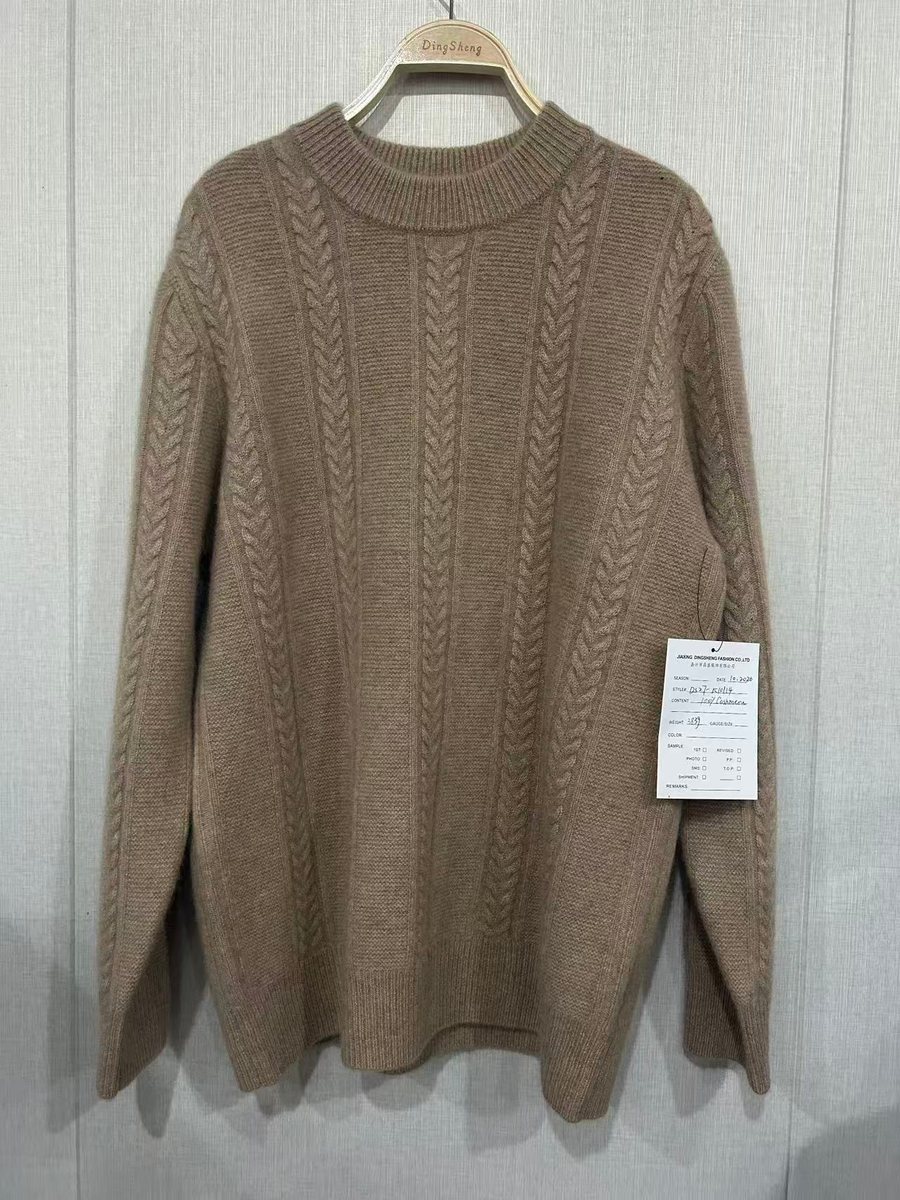
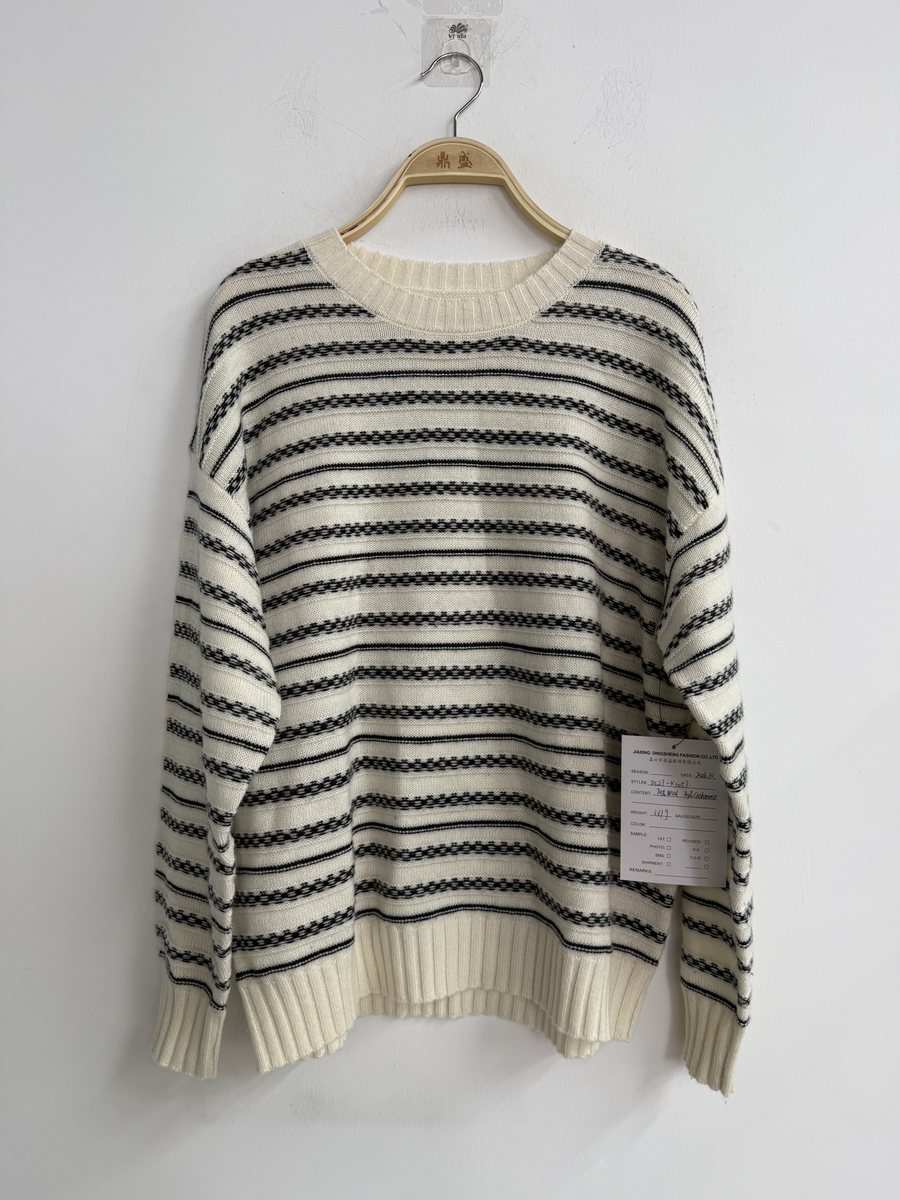
Blending cashmere with wool keeps much of the softness at a lower price and adds resilience. A composition such as 70% wool and 30% cashmere is a common way to bring a cashmere hand-feel into a wider range. Cashmere and silk blends add drape and a soft sheen.
When you compare quotes, compare the full composition and the yarn quality, not just the word cashmere. The fibre content on your label has to match what is in the garment.
For your collection
How to choose for your range.
- Price point: cashmere and high-cashmere blends sit at the premium end; merino and wool blends cover mid-market to upper mid-market ranges.
- Product: fine-gauge layers, gifts and soft chunky knits suit cashmere; sweaters that are worn and washed often suit merino.
- Care: if your customers expect machine washing, say so before sampling.
- Traceability: RWS-certified merino is traceable and popular with sustainability-focused brands in Europe and North America. See certified yarns for knitwear.
- Minimums: our standard MOQ is 300 pcs per style, from 50 pcs per colour. Dyed-to-order yarn can add a mill minimum per colour.
Not sure which to choose? Share your target price, market and the hand-feel you want, and we recommend the yarn and gauge. The first sample is normally ready 3–5 days after the details are confirmed.
Start a project