Yarn guide
What Is Viscose?
Viscose is a rayon: wood pulp dissolved and spun back into fibre. It is soft and cool and drapes like silk, but it is weak when wet and can shrink. Here is how it is made, how it differs from modal, lyocell, cotton and polyester, and how we use it in knitwear.
 By Marcia Lee, Business Manager at Knitwear World · Published November 2026
The basics
How viscose is made.
Viscose is a regenerated cellulose fibre. Its raw material is wood pulp, sometimes bamboo pulp, which is steeped in caustic soda and treated with carbon disulphide. The result dissolves into a thick, viscous solution, which gave the fibre its name. Pushed through the fine holes of a spinneret into an acid bath, the cellulose sets again as filaments. These are washed and either kept as filament yarn or cut into staple fibre and spun.
Because the raw material is a plant but the fibre is made in a chemical process, viscose is often called semi-synthetic. It was first sold as artificial silk, and Courtaulds made the first commercial viscose in Coventry, England, in 1905.
Names
Viscose, rayon, modal and lyocell.
These names cover one family of fibres made from plant cellulose. On US labels the generic name is rayon; the US textile rules also adopt the international ISO 2076 fibre names, so viscose is used on US labels too.
| Fibre | How it is made | What it means in a knit |
|---|---|---|
| Viscose | Cellulose dissolved with caustic soda and carbon disulphide | Soft, fluid drape; weaker when wet and can shrink |
| Modal | A viscose stretched during spinning, usually from beech wood | Keeps its shape better when wet and shrinks less |
| Lyocell (Tencel) | Dissolved in an organic solvent instead of carbon disulphide | Avoids carbon disulphide; costs more |
| “Bamboo” | Usually viscose made from bamboo pulp | In the US it must be labelled rayon or viscose made from bamboo |
Properties
What viscose does well, and where it is weak.
- Soft and cool: smooth fibres with a fluid drape and a soft sheen, which is why viscose was sold as artificial silk.
- Absorbent: a moisture regain of about 11–16%, so it feels comfortable in warm weather.
- Weak when wet: wet viscose keeps only about half of its dry strength, so it needs gentle washing.
- Little recovery: rayon has the lowest elastic recovery of any fibre, so a viscose knit can grow and lose shape unless the stitch or the blend holds it.
- Production: carbon disulphide, used to make viscose, is highly toxic and has harmed rayon workers; lyocell is made without it.
Care
Does viscose shrink?
It can. Regular viscose loses strength and shape when wet, so a warm or rough wash can shrink or distort it. Modal shrinks less, which is one reason it is chosen for knits that are washed often.
Wash viscose knits cool, by hand or on a gentle cycle, without wringing, and dry them flat. For a brand, the safest route is to agree the wash method for the care label and approve a washed sample, measured after washing, before bulk.
Stretch
Is viscose stretchy?
Not much. The fibre springs back poorly, so the stretch in a viscose sweater comes from the knit: rib and other elastic stitches give, and nylon or elastane in the blend helps the fabric recover. For fitted styles, test the stretch and recovery on the sample.
Compare
Viscose vs cotton and polyester.
| Viscose | Cotton | Polyester | |
|---|---|---|---|
| Made from | Wood pulp, regenerated | Cotton plant fibre | Synthetic polymer |
| Feel | Smooth, cool, fluid drape | Soft and matte | Smooth; can feel warm and clammy |
| Moisture | Absorbs a lot | Absorbs well | Absorbs little |
| When wet | About half as strong | Stays strong | Stays strong |
| Care | Cool, gentle wash; can shrink | Easy care; can shrink in a hot wash | Easy care; holds its shape |
In knitwear, viscose is the choice for drape and sheen, cotton for an everyday, breathable hand, and polyester or nylon for strength in a blend.
In our factory
Viscose in our knitwear.
Viscose gives knits drape and a soft sheen, so we use it most in summer tops, cardigans and knit dresses. 79 of the 578 designs in our sample collection contain viscose, mostly blended with nylon, polyester, cotton or wool; one blend we use often is 50% viscose, 30% polyester and 20% nylon.
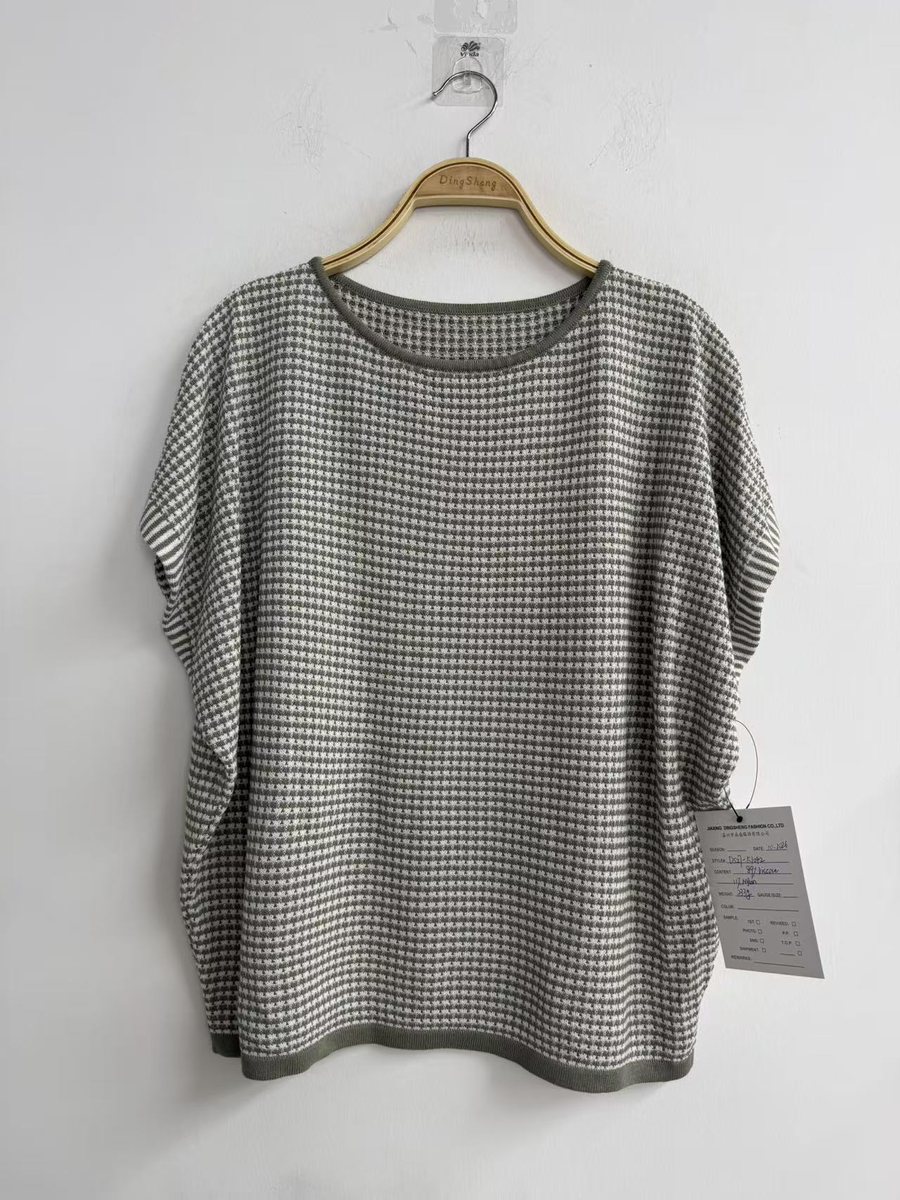
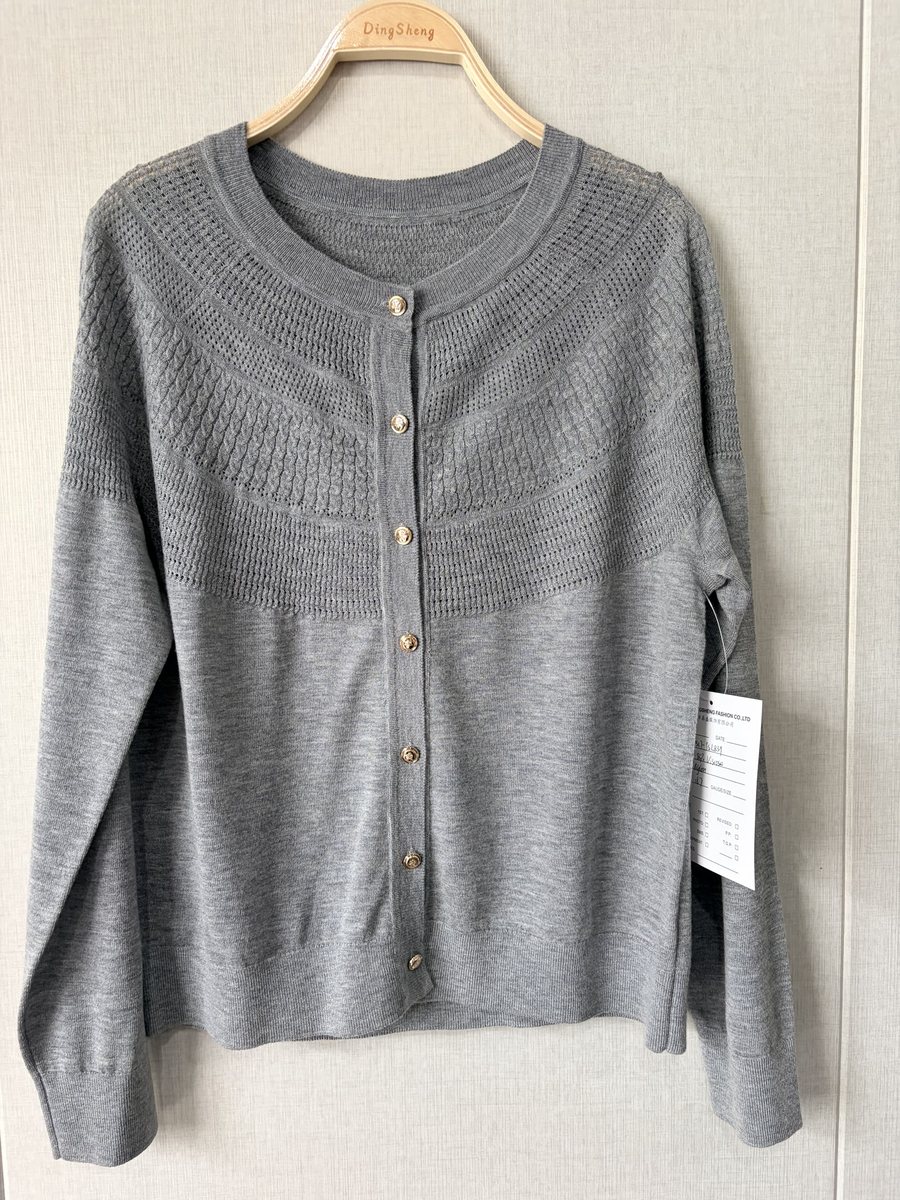
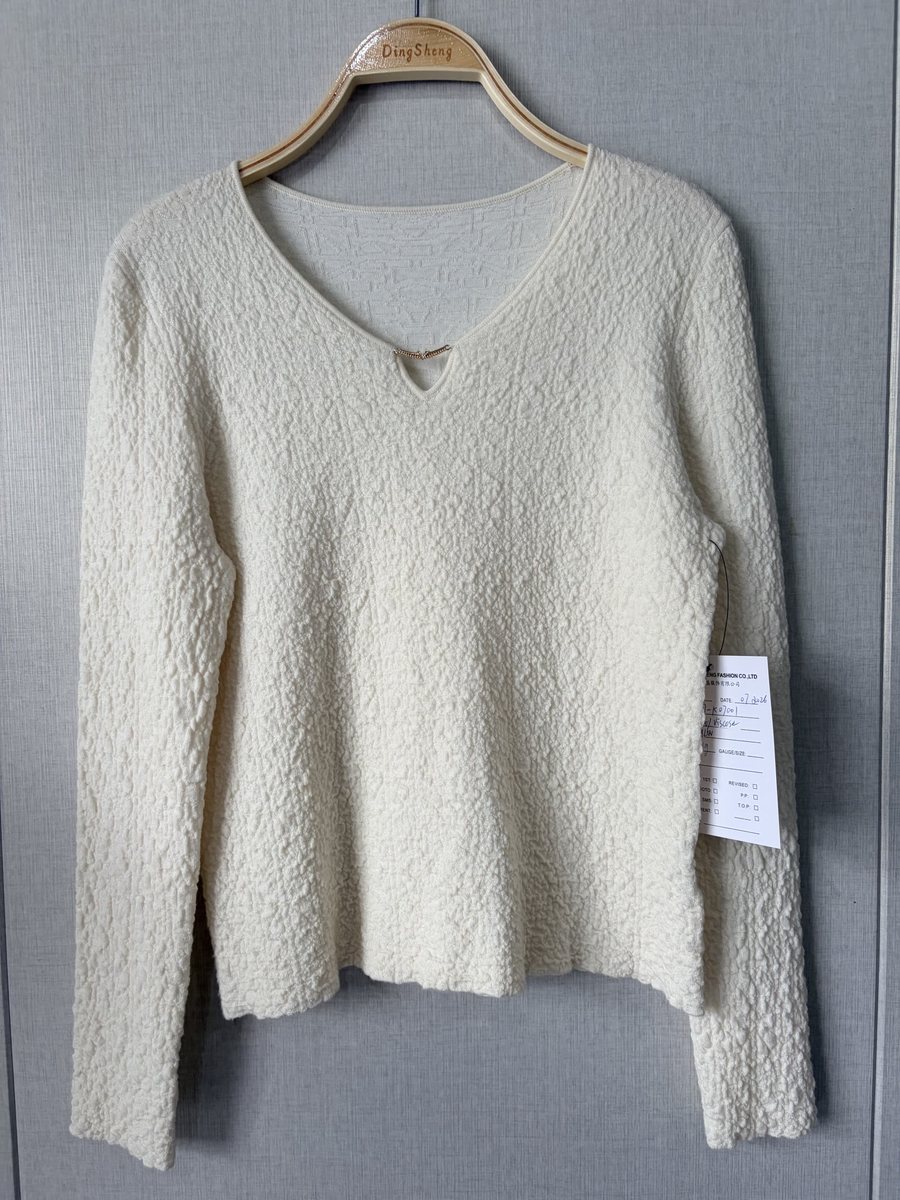
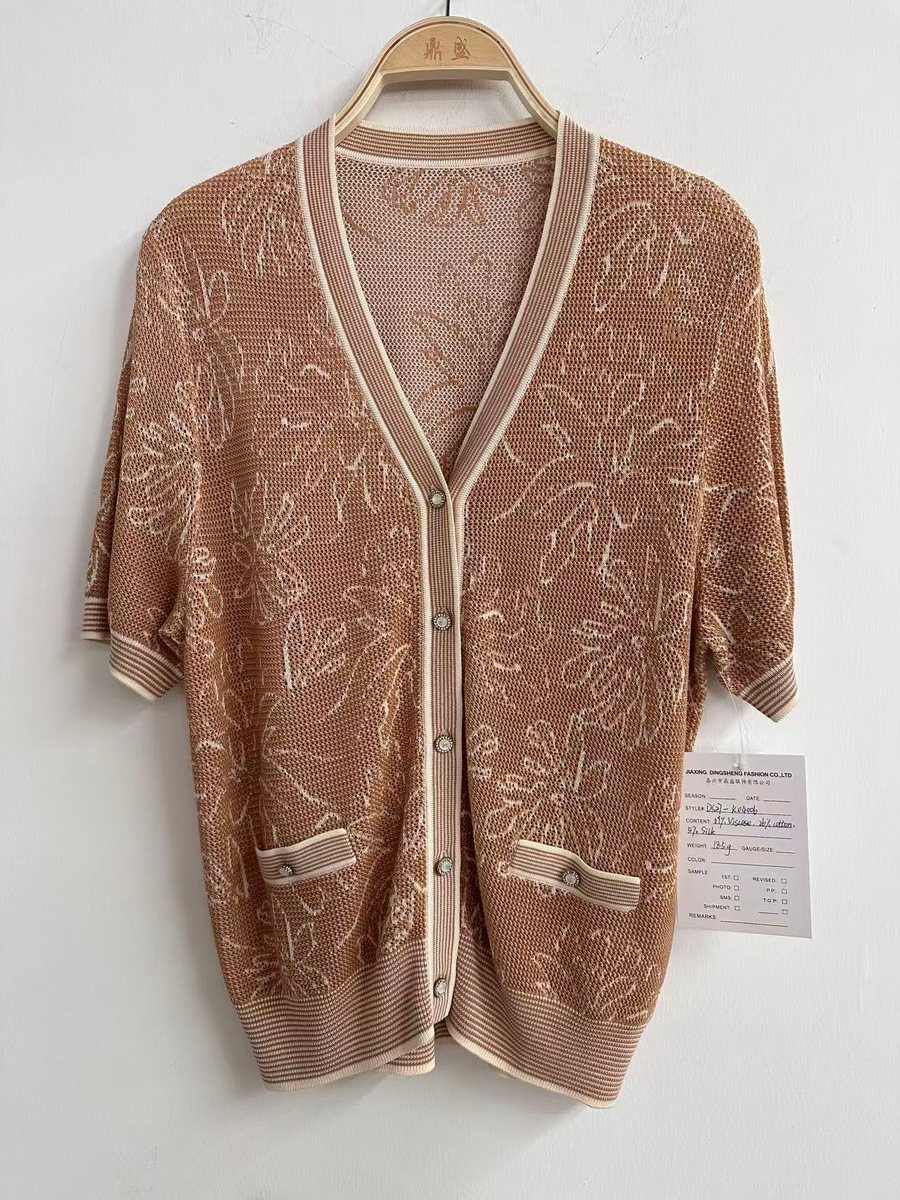
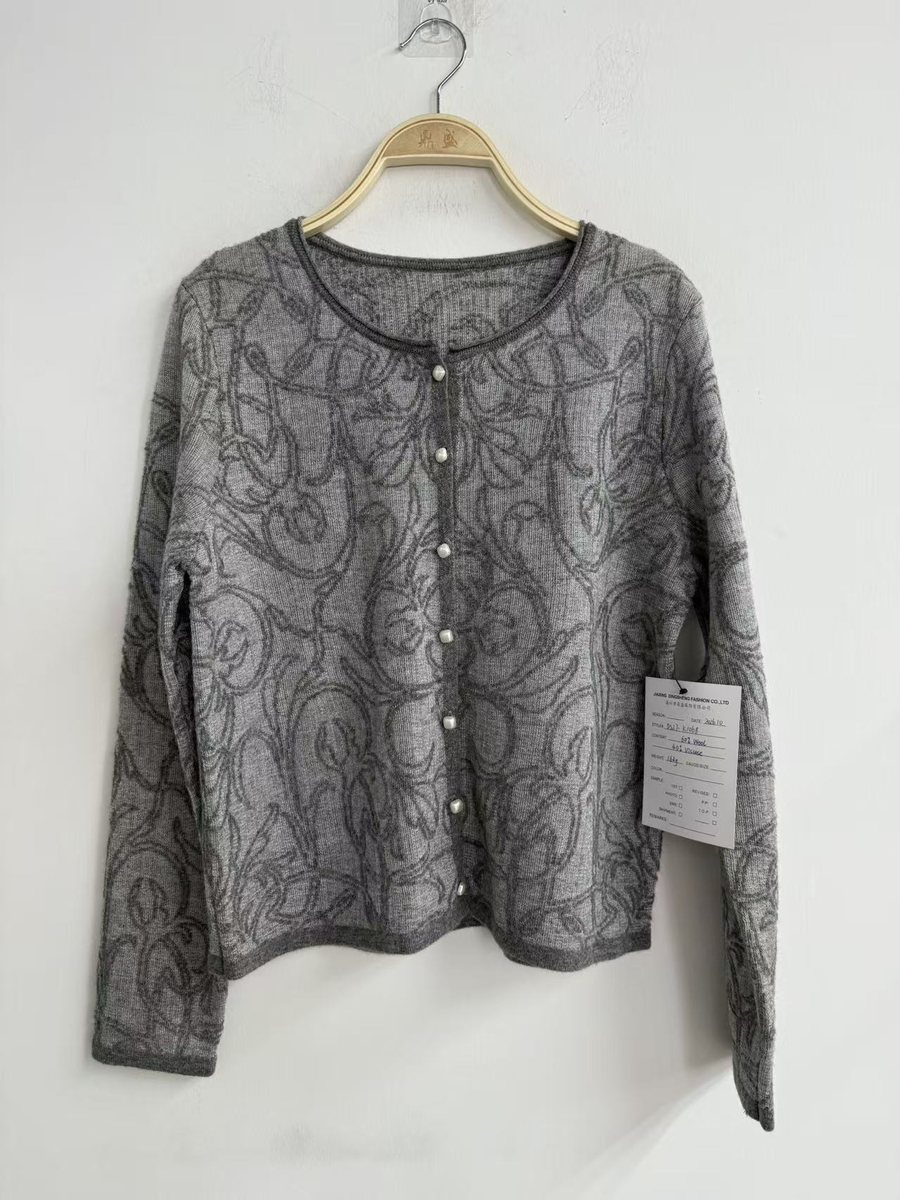
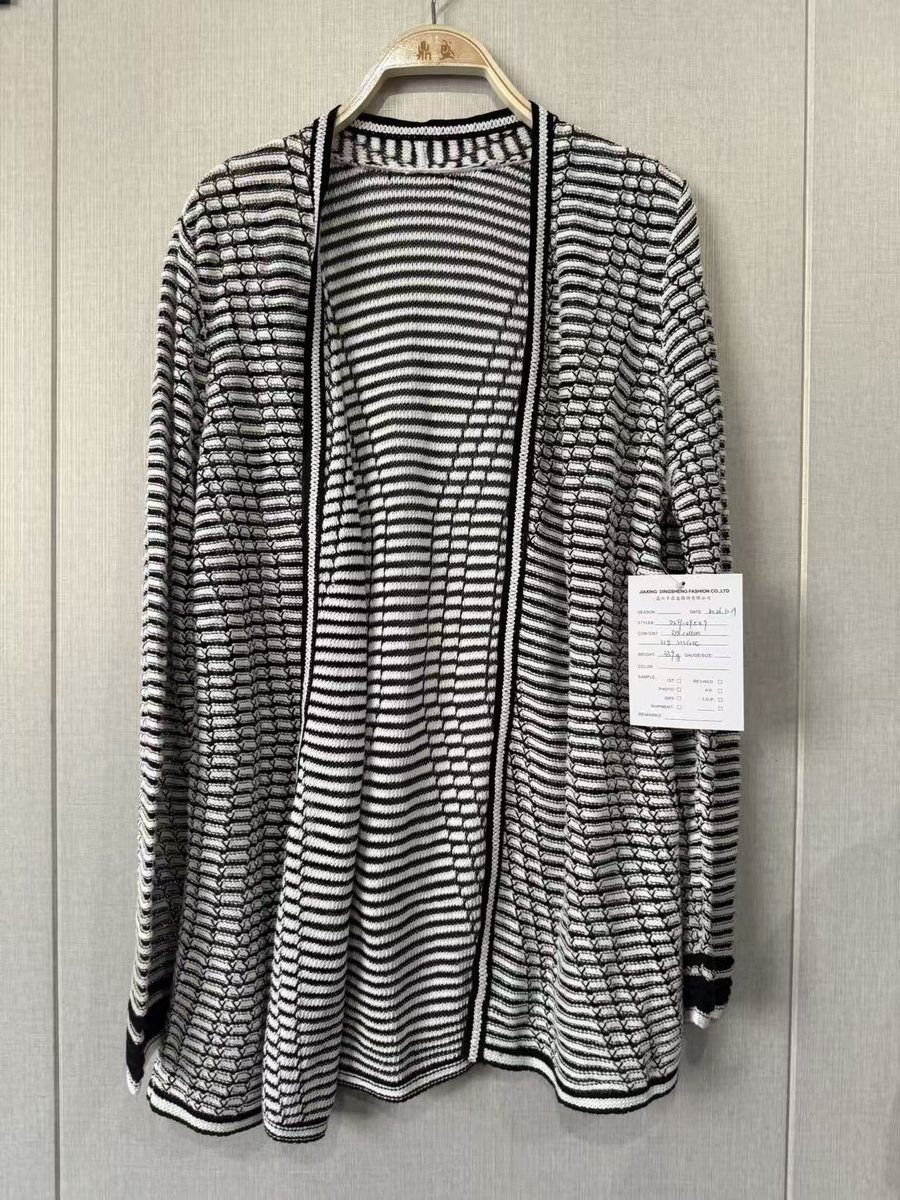
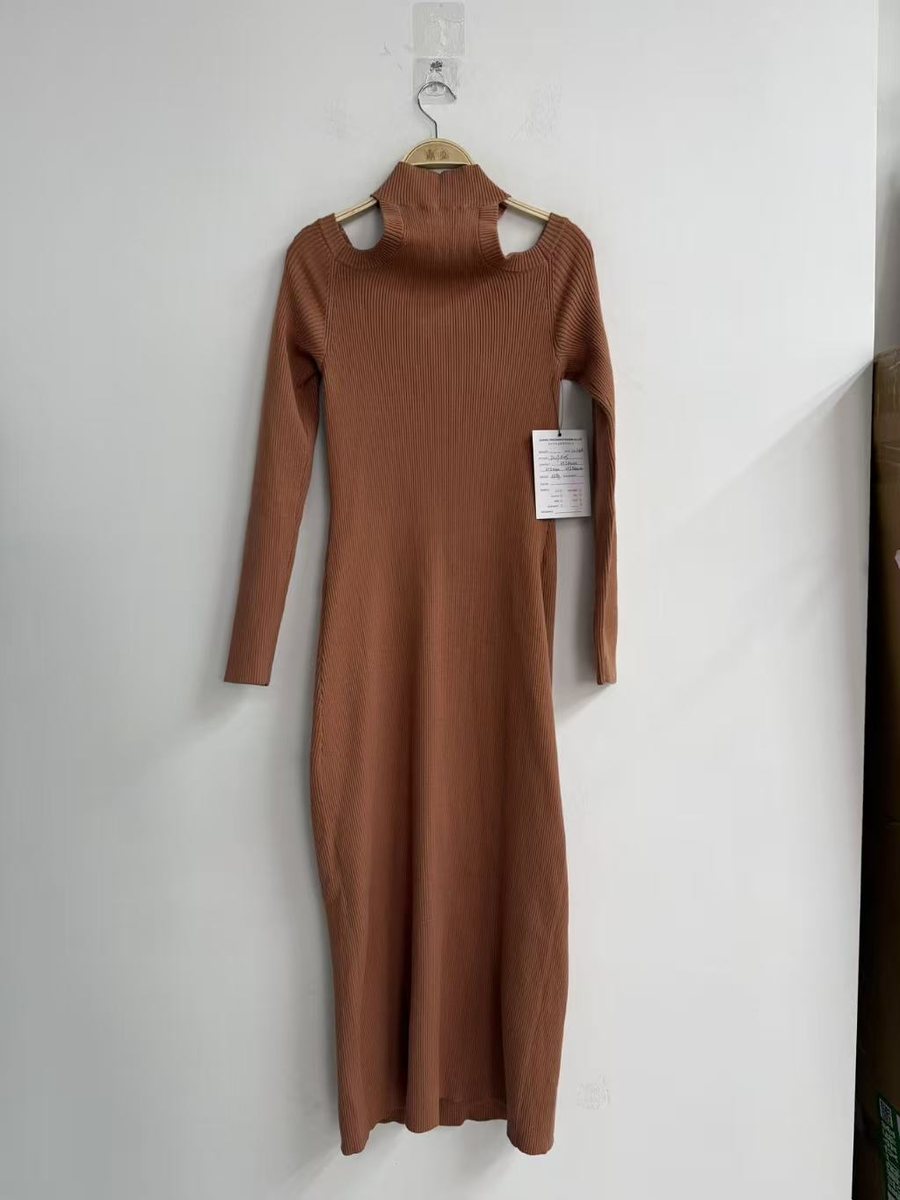
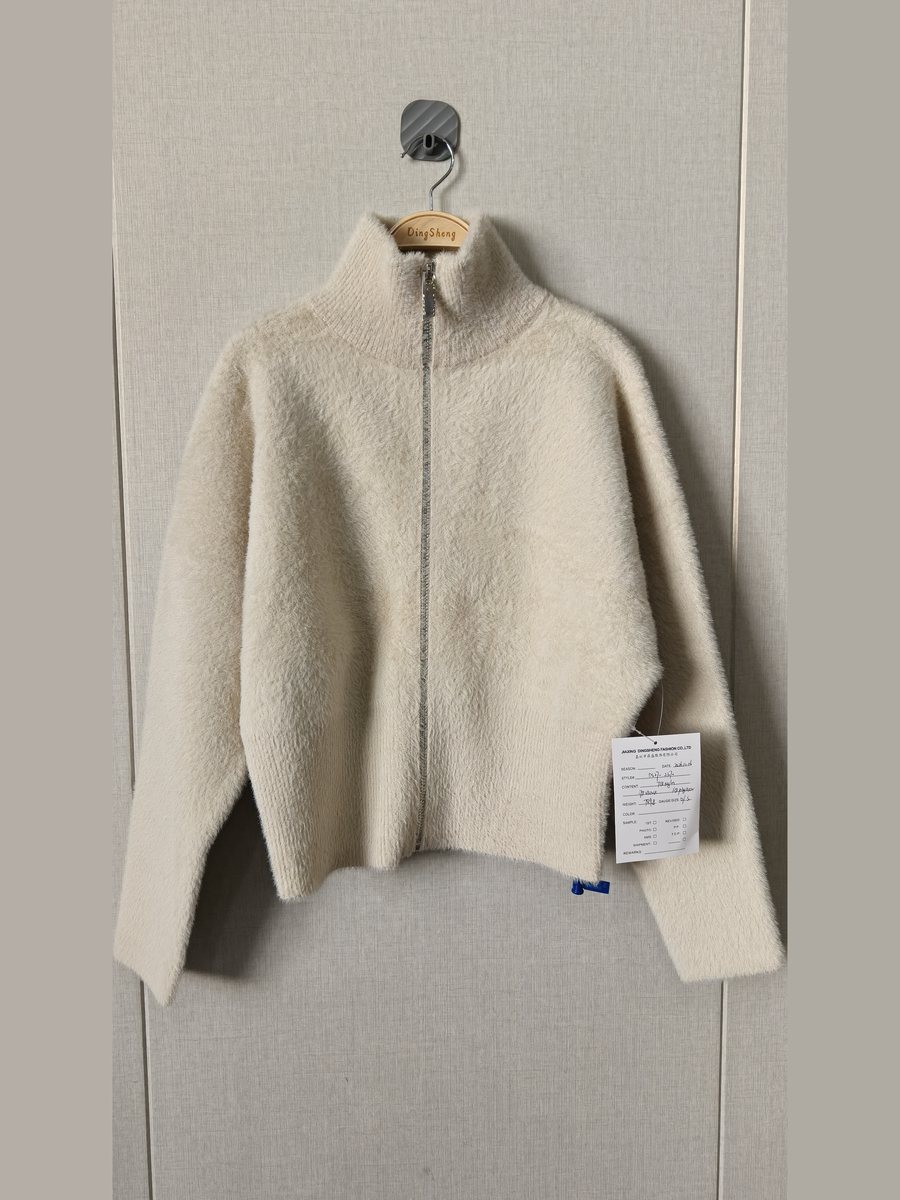
Viscose also carries fancy effects: lurex, sequin and faux-mink yarns in our collection are often built on it. See our fancy yarns guide.
What to agree before bulk:
- Composition and label: the exact blend, and the fibre name for your market (rayon or viscose in the US).
- Washing: the wash method for the care label, checked on a washed sample with its measurements.
- Stretch and recovery: the stitch and blend for fitted styles, tested on the sample.
- Weight and drape: the yarn count and gauge for the drape you want. See sweater gauge explained.
- Fibre choice: modal if the garment must keep its shape through washing, lyocell if you want a cellulose fibre made without carbon disulphide.
FAQ
Viscose questions.
What is viscose made from?
Plant cellulose, usually wood pulp and sometimes bamboo. The cellulose is dissolved with caustic soda and carbon disulphide and spun back into fibre, so viscose is called a regenerated or semi-synthetic fibre.
Is viscose the same as rayon?
Yes. Viscose is a rayon, and the two names are often used for the same fibre. US labels use the generic name rayon and also accept the ISO name viscose. Modal and lyocell are related cellulose fibres made in different ways.
Does viscose shrink?
It can. Regular viscose keeps only about half of its strength when wet and can shrink or stretch out of shape in a warm or rough wash. Wash it cool and gently and dry it flat; modal shrinks less.
Is viscose stretchy?
The fibre has very little elastic recovery. Stretch in a viscose knit comes from the stitch, such as rib, and from nylon or elastane in the blend.
Is viscose better than cotton?
It depends on the garment. Viscose is smoother, cooler and drapes better; cotton is stronger when wet, easier to wash and more matte. Viscose suits drapey tops, cardigans and knit dresses; cotton suits everyday knits.
Sources
Sources.
- Wikipedia, “Rayon” (viscose process, Courtaulds 1905, modal and lyocell, elastic recovery, carbon disulphide). Read
- CAMEO, Museum of Fine Arts Boston, “Viscose rayon” (dry and wet tenacity, moisture regain 11–16.6%). Read
- US Code of Federal Regulations, 16 CFR 303.7 (generic fibre names: rayon, lyocell, ISO 2076). Read
- US Federal Trade Commission, “Bamboo textiles” (rayon or viscose made from bamboo). Read
Keep reading
Start a project