Knitwear MOQ explained
Knitwear MOQ Explained.
How minimum order quantities really work for sweaters: what counts as one style, how colours and sizes can be split, what smaller orders cost, and why a special yarn can set the real minimum.
 By Marcia Lee, Business Manager at Knitwear World · Updated October 2026
MOQ meaning
What MOQ means in clothing manufacturing.
MOQ stands for minimum order quantity: the smallest order a factory will accept for one product. In knitwear it is usually set per style and per colour, because every new style needs its own machine programme, sample and set-up, and every colour needs its own yarn lot. Below we explain how our MOQ works and how smaller orders are handled.
The basic unit
MOQ starts with a style, not the whole order.
Our standard MOQ is 300 pcs per style. A style is one design: the same construction, pattern, gauge and workmanship. A collection of five styles therefore starts at 5 × 300 pcs, not 300 pcs in total.
Why a minimum at all? Every new style needs a knitting program, machine set-up, yarn changes and first-piece adjustments before the machines run smoothly. Those fixed steps are spread across the pieces in the order. The fewer pieces, the more each one has to carry.
Mixing colours and sizes.
Yes, you can split a style across colours and sizes. This is common practice in export knitwear, and these are the rules we work with:
| Rule | Our standard |
|---|---|
| Per style | 300 pcs |
| Per colour | At least 50 pcs. Below that, changing yarn carriers, clearing yarn and resetting the machine waste too much time and yarn. |
| Sizes | Split freely, for example S/M/L/XL as you need, as long as each colour reaches 50 pcs. |
| Jacquard and intarsia | 80–100 pcs per colour recommended, because frequent colour and yarn-carrier changes take a lot of machine time. |
Example: 300 pcs of one plain-knit style in four colours could be 90 black, 80 navy, 70 grey and 60 cream, with sizes split freely within each colour.
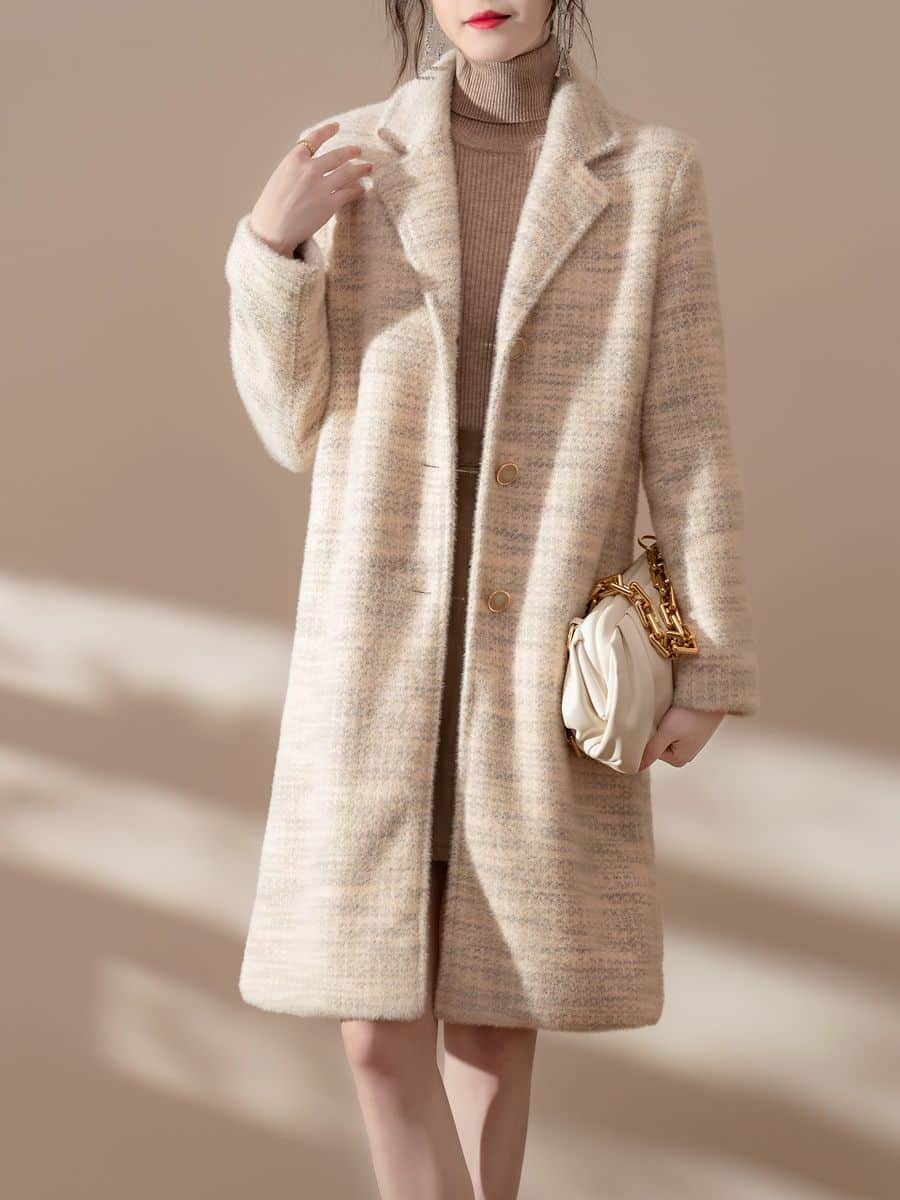
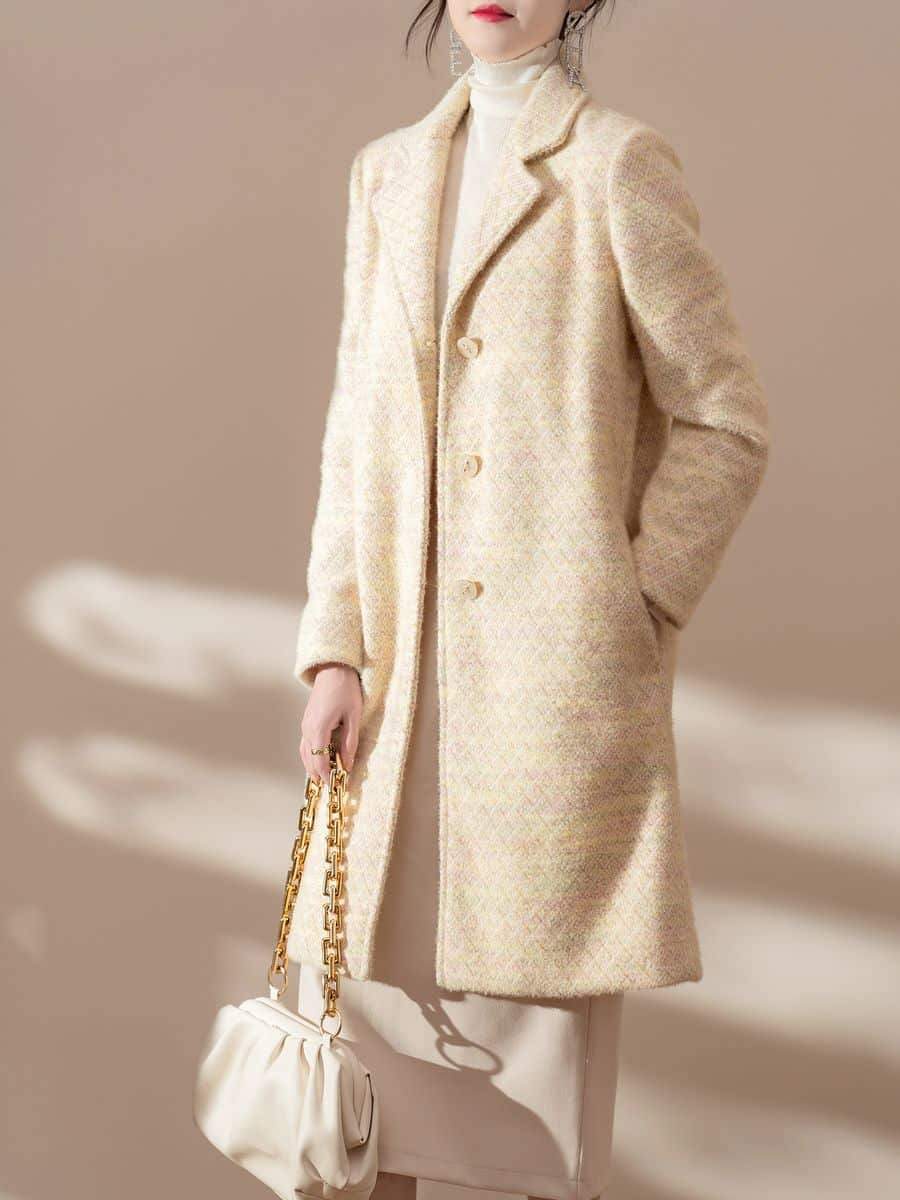
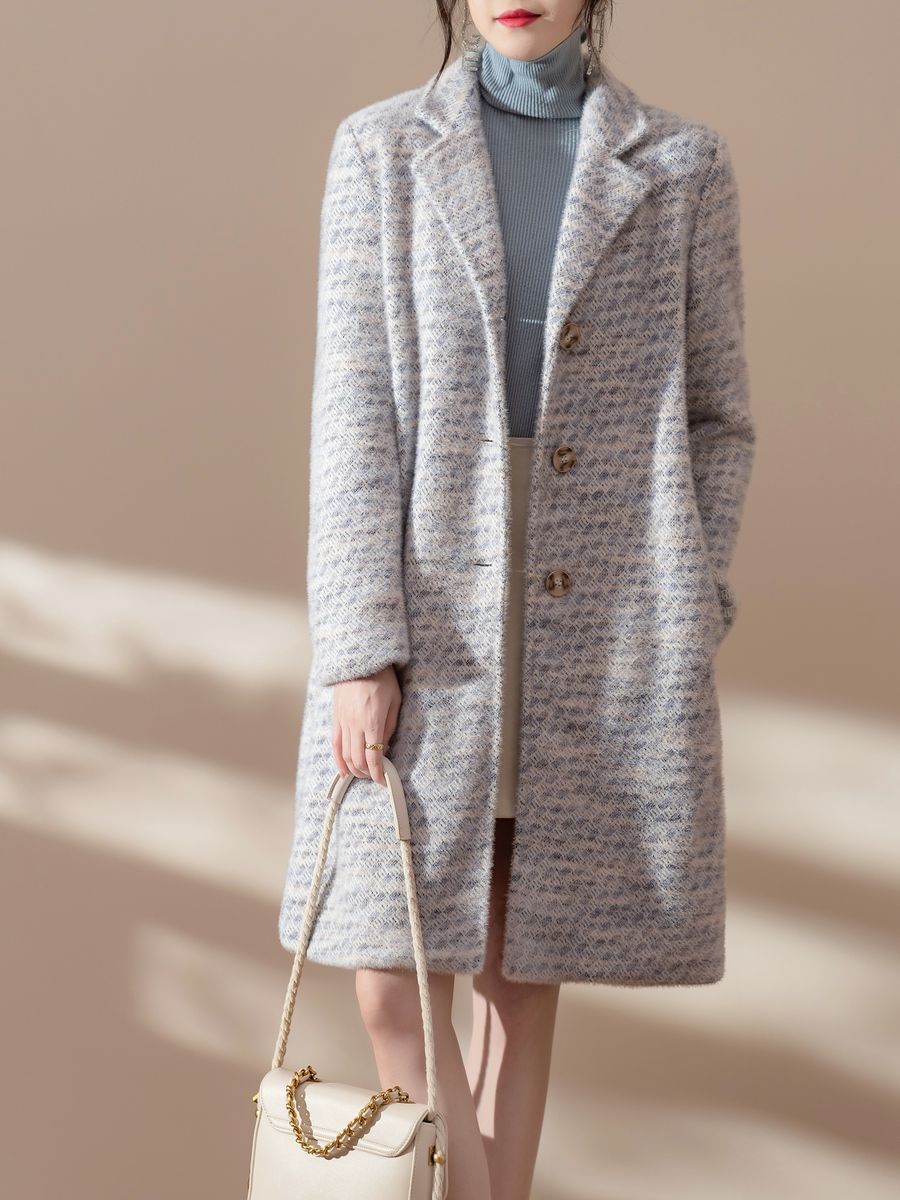
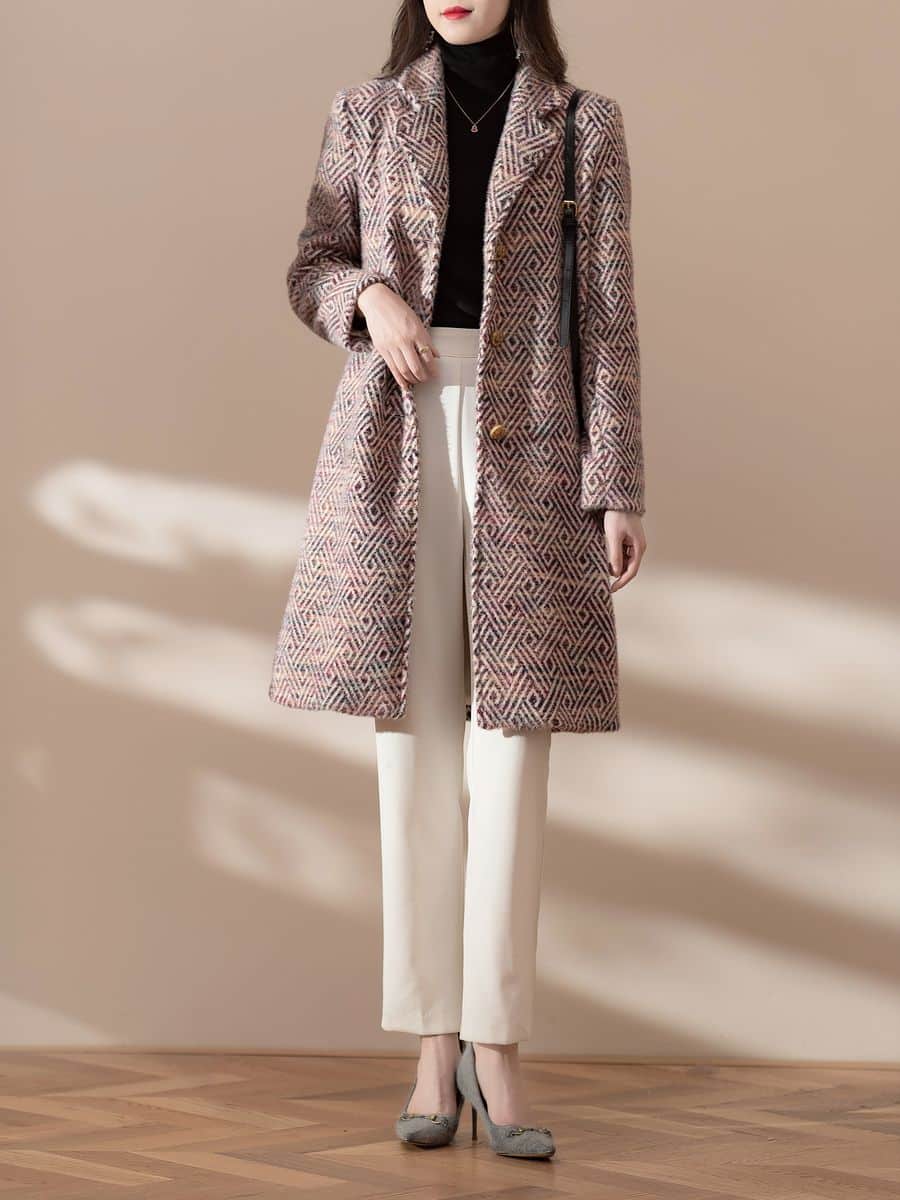
Four knit coat styles from one collection. Our standard MOQ of 300 pcs applies to each style.
Smaller orders
Ordering fewer than 300 pieces.
Trial orders below 300 pcs are welcome. The unit price rises, but not because the yarn costs more: programming, machine set-up, yarn changes and first-piece adjustments are spread over fewer pieces. Smaller orders therefore carry a higher unit price, and we quote them according to the quantity per style and colour, the construction and the yarn. Jacquard and intarsia are affected more than plain knits, because their set-up takes longer.
Whatever the quantity, ask whether programming and machine set-up fees are charged separately. Many factories charge them on top of the unit price and do not refund them later, so make sure they appear on the quotation before you start sampling.
Starting a new label? Our page for startups and small brands shows how to plan a first collection around these minimums.
Special yarns
Special yarn can set the real minimum.
When you choose a stock yarn, the yarn itself rarely limits the order. When you specify a special yarn, the yarn mill’s own minimum often becomes the real limit, not the knitting factory’s. This applies to special blends, dyed-to-order colours, GRS recycled yarns, coloured cashmere and fancy yarns.
- Yarn mills commonly sell dyed-to-order or special yarns in lots of 25 kg, 50 kg or 100 kg.
- A sweater uses roughly 0.2–0.4 kg of yarn, so 50 kg makes only about 125–250 sweaters.
- If you need 200 sweaters in a dyed-to-order yarn, you still have to buy the mill’s minimum lot.
Leftover yarn can be shipped to you or kept at our factory for a repeat order. Either way, it is a cost, and we explain it before you confirm the order.
What to ask
Four questions make an MOQ discussion useful.
Per style?
Confirm what counts as one style.
Per colour?
Ask about practical colour splits.
Mixed sizes?
Share the expected size ratio.
Trial option?
Discuss sampling or a smaller trial.
Checklist
What to send for an accurate MOQ quote.
- Number of styles
- Colours per style and the quantity per colour
- Size ratio, for example 1:2:2:1
- Yarn: stock yarn or a specific composition and colour
- Construction: plain knit, jacquard or intarsia
- Target price and delivery date
Not sure yet? Send what you have. Our design team can help simplify a direction before sampling, and we confirm MOQ, unit cost and colour split for the actual yarn and construction in the quotation. For patterned styles, see our jacquard guide; for yarn choices, read how to choose the best yarn for sweaters.
Start a project